




DoorDash? You’ve probably used it to get your favorite meal delivered—hot, fast, and without picking up the phone.
Today, it’s valued at over $100 billion, operates in 7,000+ cities, and completes millions of deliveries every day.
But it didn’t start that way!
In 2013, it was just a test site—PaloAltoDelivery.com—run by four Stanford students, taking orders manually and delivering food themselves. No drivers. No app. Just handwritten menus, a basic website, and a sharp idea.
So, what got them through the door at Y Combinator?
A clear problem, a working MVP, and a pitch that showed real traction—fast.
In this article, I’m breaking down the original DoorDash pitch deck—the same one that helped raise their first $120K in seed funding—to figure out exactly what made it work.
About DoorDash (then vs. now)
In 2013, DoorDash started as PaloAltoDelivery.com when a group of Stanford students—Tony Xu, Stanley Tang, Andy Fang, and Evan Moore found a clear gap in the market for on-demand food delivery, particularly for local businesses and students.
Surprisingly, in the beginning, all they had was one scrappy little website to test the idea. No grand vision for national expansion. No sleek app. Just a simple goal: Solve one local problem well.
Initially, they manage deliveries on their own, balancing logistics during the day and schoolwork at night. But soon they got traction, and in the summer of 2013, they secured $120,000 in seed funding using this pitch deck from Y Combinator.
Fast forward to today, the DoorDash market is valued at over $101.18 billion. It dominates the U.S. food delivery market and continues to expand rapidly on the international front. What started as a side project is now a full-scale logistics platform powering restaurants, groceries, and even retail.
But here’s the part that matters for us:
Their early pitch deck worked before the headlines, funding rounds, or hype. It worked because it was grounded, clear, and showed that even small-scale traction—done right—can lead to something massive.
Detailed DoorDash pitch deck analysis (slide-by-slide)
Now that we know where DoorDash started, it’s time to dig into the pitch deck that helped kick it all off. I’ll walk you through what each slide covers, why it works, and key takeaways to apply to your deck.
Let’s dive in.
Slide 1: Introduction
The first slide keeps things incredibly simple. Just the company name—DoorDash—paired with a single, clear quote:
“We enable every restaurant to deliver.”
No flashy visuals. No dense text. Just one focused message.
And I think that’s exactly what makes it effective. Right away, the quote frames the problem they’re solving and who they’re solving it for—restaurants. Not customers. Not drivers. Restaurants.
It tells us this isn’t just another food delivery app—it’s a logistics solution for businesses that previously had no way to deliver. It’s subtle but powerful.
Takeaway:
If you can capture the core value of your startup in one sentence, you’re off to a strong start. This kind of clarity not only tells investors what you do—it tells them who you’re doing it for, and why it matters.
Slide 2: Problem
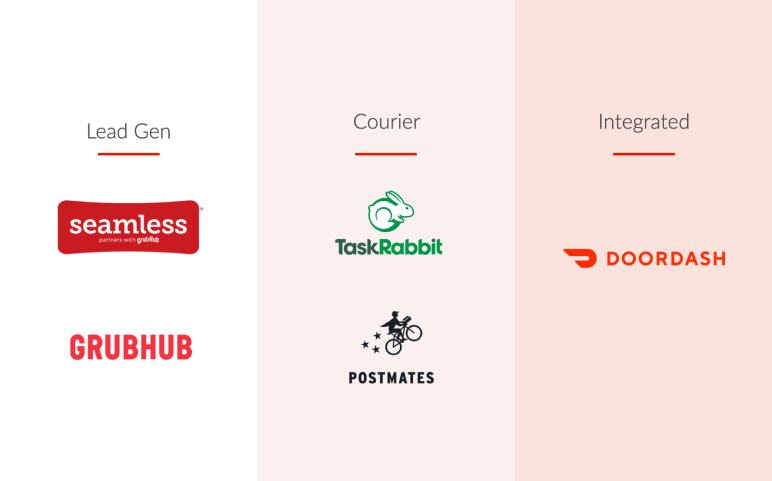
This slide lays out the food delivery landscape at the time, split into three columns:
Lead Gen (like Seamless and Grubhub), Courier (TaskRabbit and Postmates), and finally, Integrated, where DoorDash positions itself.
What they’re doing here is smart. Instead of just stating the problem outright, they frame the gap in the market through comparison. Lead generation platforms only show menus—they don’t handle delivery. Courier apps do the delivery but aren’t built for food and don’t partner directly with restaurants.
DoorDash introduces itself in that third column as the integrated solution that bridges both sides.
Takeaway:
You don’t always need to spell out the problem with a paragraph of text. Sometimes, showing where existing solutions fall short—and where you fit in—can be even more effective. Especially if it makes investors think, “Wait, why doesn’t this exist already?”
Ditch your old-school pitch deck creation methods
Make compelling pitch decks in minutes with AI
Plans starting from $14/month

Slide 3: Solution
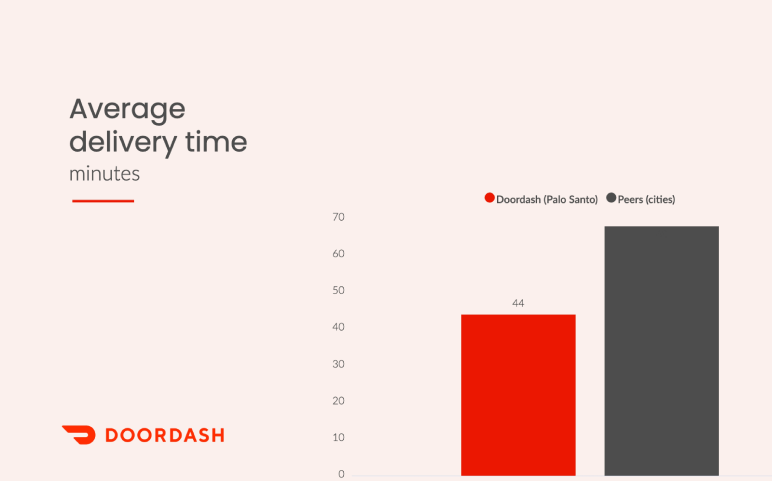
Here’s where DoorDash shows how it solves the problem—and they do it with real numbers.
The slide highlights a key stat: DoorDash cut average delivery times by 24 minutes in Palo Santo compared to similar cities. That alone is a powerful, early validation of their model. It proves that their approach isn’t just different—it’s faster and more efficient.
But I noted that the real strength of this slide is in how it quietly explains the system behind it. Orders are pushed directly to restaurants via iPads, and their logistics software makes it dead simple for any driver to jump in and start delivering.
It’s a full-stack solution: One that benefits customers, restaurants, and drivers alike.
Takeaway:
Your solution slide shouldn’t just say what you do—it should show how you do it better. When you can back it up with clear results (like faster delivery times) and tie that to a smooth, scalable process, you build real confidence with investors.
Slide 4: Traction and growth
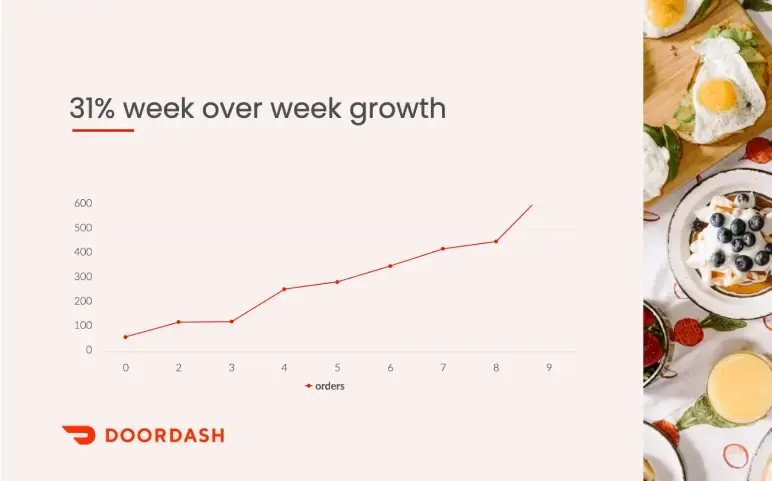
This is where DoorDash starts showing real proof that their idea is working.
The slide features a simple graph showing 31% week-over-week growth—a clear indicator that users are engaging and the model is scaling.
It’s a sharp, focused way to show early traction without overexplaining, and it signals that DoorDash isn’t just gaining users—they’re building real momentum.
What makes this slide effective is how focused it is. No fluff, no vanity metrics—just clean, early indicators that the business is gaining traction.
Takeaway:
Early traction doesn’t have to mean millions of users or huge revenue. What matters is showing a pattern—steady growth, real usage, and customer behavior that proves your solution has legs.
Slide 5: Market opportunity

Instead of going the traditional route with TAM/SAM/SOM breakdowns or flashy market sizing charts, DoorDash keeps it practical.
They show $1.5 million in annualized restaurant sales—real revenue, from just one test market.
At first glance, this might seem like a traction metric, but it does something more important: It hints at the size of the opportunity. If they can generate that kind of volume from one small area like Palo Alto, the potential at a national scale becomes obvious.
Takeaway:
Your market opportunity slide doesn’t always need to be packed with projections. Sometimes, real results from a small slice of the market speak louder. If you can show traction tied to an underserved audience, investors will naturally see how big this can get.
Ditch your old-school pitch deck creation methods
Make compelling pitch decks in minutes with AI
Plans starting from $14/month
Slide 6: Product
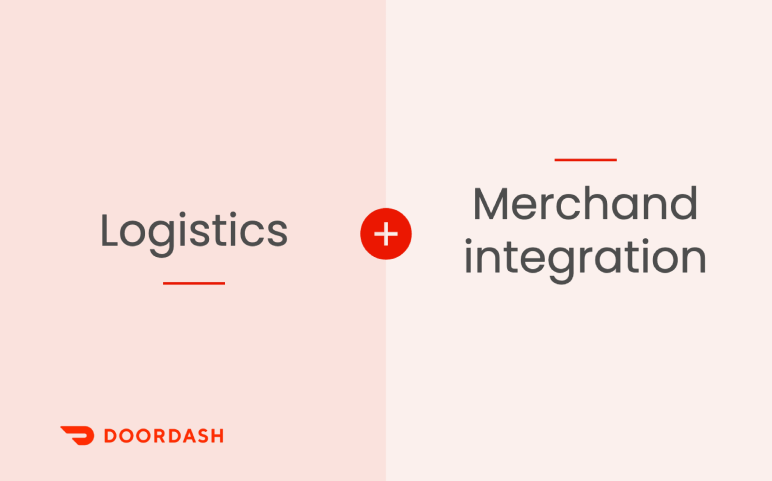
This slide breaks the product into two key parts: logistics and merchant integration.
On the logistics side, DoorDash manages routing, dispatch, and delivery in-house—giving them full control over speed and reliability.
For merchants, orders go straight to an in-store iPad, making onboarding easy with no extra staff or software needed.
Here, I must say: It’s a clean, scalable system that works seamlessly for both sides.
Takeaway:
Your product slide isn’t just about listing features—it’s about showing how your system works to deliver value. In a two-sided marketplace, explain how each side benefits and how your tech brings it all together.
Slide 7: Future vision

DoorDash wraps things up with a bold comparison: Becoming the “FedEx of local delivery”—not just food, but anything local and on-demand.
It’s a powerful hint at how their logistics engine could expand far beyond restaurants. They’re not just building a food delivery app—they’re building infrastructure.
Takeaway:
End high. Your final slide should lift the ceiling—showing investors you’re not just solving today’s problem, but building for tomorrow’s scale.
Remember, creating a pitch deck can be a complex process, so feel free to start with a ready-to-use DoorDash pitch deck template to simplify the work. It will help you save time and effort.
What did I like the most about this deck?
This pitch is over a decade old, but it delivers exactly what early-stage investors want to see, without trying too hard.
Here’s what stood out to me:
- They framed the problem through market gaps, not buzzwords. Instead of talking in vague terms, they showed exactly what existing services lacked and where DoorDash fits in.
- The solution was proven, not hypothetical. With faster delivery times and working operations in place, they didn’t just pitch an idea—they showed it working.
- Early revenue proved real demand—it wasn’t just an idea, it was working.
- The product was built with scale in mind, addressing both merchants and delivery logistics.
- The vision looked beyond food delivery, positioning the company for broader market potential.
The whole deck stayed sharp, focused, and easy to follow. It didn’t try to oversell—it just made a strong, confident case. That’s what makes it memorable.
Perfect your deck and pitch using Upmetrics
The breakdown of DoorDash’s pitch deck shows how a simple, structured approach can effectively communicate an idea to investors. From highlighting the problem to showing traction, each slide plays a specific role.
If you’re preparing a deck for your startup, Upmetrics can help. It’s an advanced business planning tool that assists you in building solid plans and clear, confident presentations.
Moreover, you can use our AI business plan creator to shape your story and make things a lot easier. Or work with our pitch deck consultant if you want expert support from start to finish.
Either way, you’ll be one step closer to a deck that gets results.