




Executive Summary
Maple and Hearth Café will open at 719 East Mercer Street, Suite 106, in Seattle’s Capitol Hill. We will serve coffee, wood-fired pastries, and a short brunch menu made with local food. Capitol Hill has steady foot traffic. Many residents work from home, so they visit nearby cafés often, and a lot of residents are regular coffee drinkers. We feel this area is a good spot for a morning café that keeps things simple, warm, and friendly.
The café is owned by Olivia Tran (70%) and Marco Villarreal (30%). Olivia is a pastry chef with wood-fired baking experience. Marco has experience in café work and cost tracking. Together, we want to build a steady, friendly café that customers enjoy each day.
At Maple and Hearth Café, our mission is to offer high-quality coffee, warm wood-fired pastries, and a comfortable neighborhood space that fits our customers’ daily routines, remote-work needs, and weekend brunch habits while keeping service consistent and simple.
Location and Service Model
The café is about an eight-minute walk from Volunteer Park. The area stays busy. Commuters pass through each day, and students move through the neighborhood. Many nearby residents walk the same streets often.
The service style is counter-based. The café will offer dine-in, grab-and-go, and wood-fired pastries baked in small batches from the morning. This gives customers fresh items during peak hours. We keep our menu small with a clear purpose, as it helps to support fast service and steady workflow during busy times.
Opportunity
Capitol Hill is one of Seattle’s busiest places to live. The area has many people in a small space. The median household income is close to $100,657. And around 62% of residents visit cafés three to five times a week.
Many people on Capitol Hill work from home. This creates steady daytime demand for cafés. People need good seating, along with good, quality food choices. The neighborhood has many students and young workers. They look for warm meals and quality coffee. They also want a place to sit for short study or work sessions.
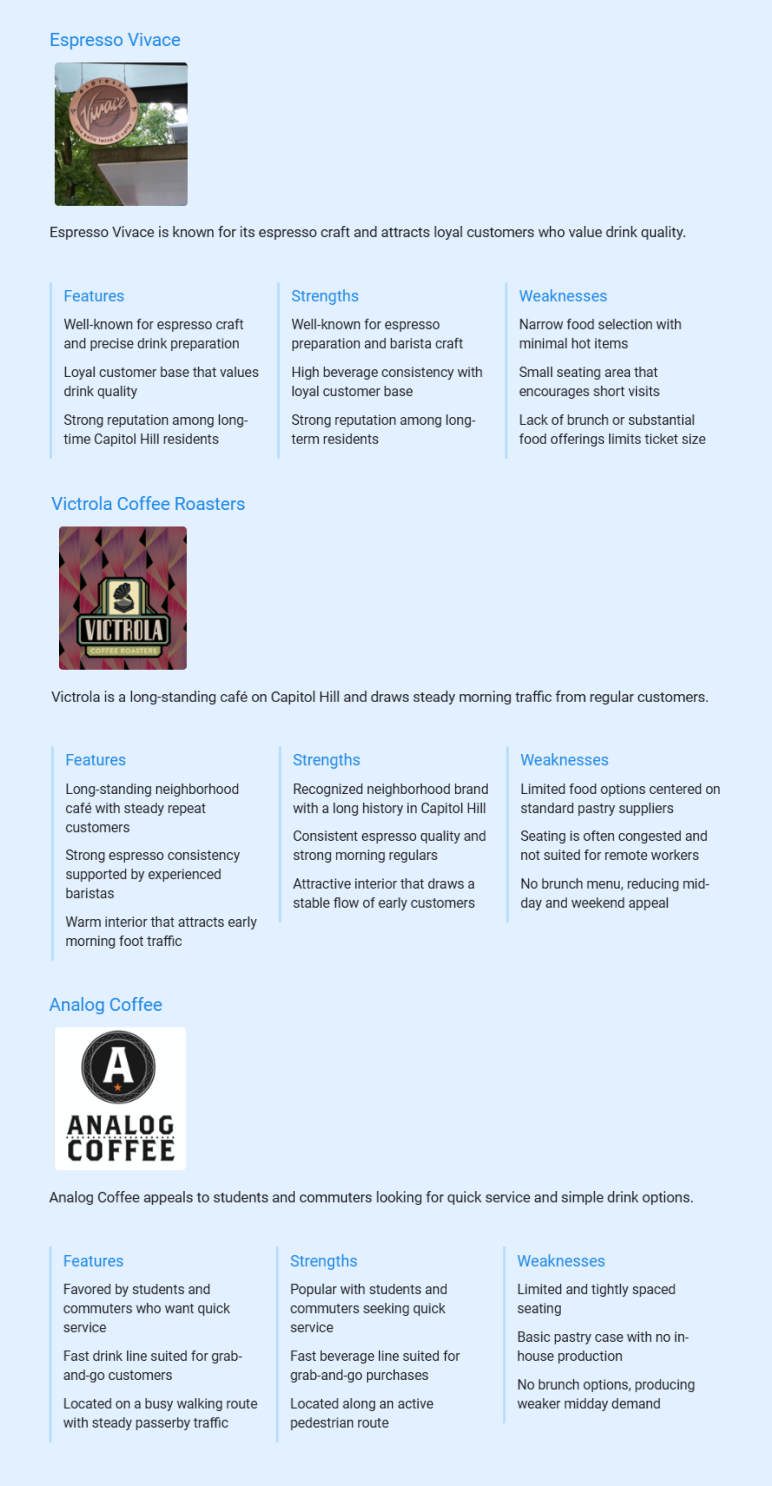
Nearby cafés such as Victrola, Espresso Vivace, and Analog Coffee draw steady traffic. Their focus is mostly on espresso drinks. Maple and Hearth serve a different group. It pairs specialty coffee with fresh wood-fired pastries and simple brunch plates. This gives customers a wider food option than typical coffee-only shops.
Target Customers
The café will primarily serve:
- Ages 22–45
- Apartment residents, remote workers, and students
- Customers seeking morning coffee, warm snacks, and weekend brunch
- People looking for a quiet place to work or study during mid-day hours
The setup includes two-top tables, device outlets, strong Wi-Fi, and a back seating area designed for longer stays.
Funding Requirement
Maple & Hearth Café requires a total project budget of $463,000. This will be funded through $385,000 SBA 7(a) loan from Wells Fargo’s Seattle Broadway East branch, along with $78,000 owner equity contribution.
Use of Funds
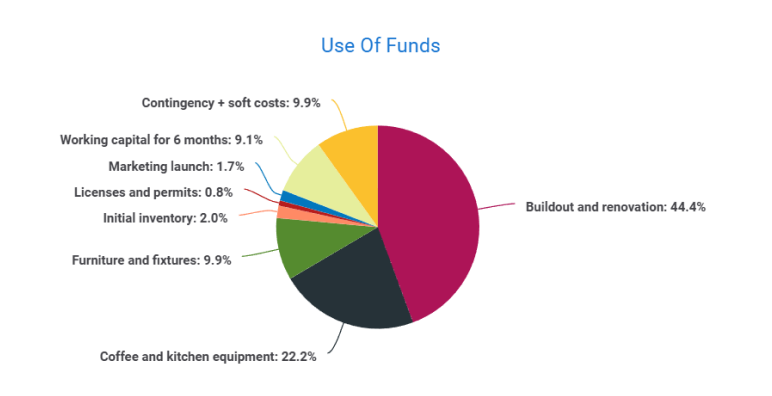
| Category | Amount |
|---|---|
| Buildout and renovation | $170,000 |
| Coffee and kitchen equipment | $85,000 |
| Furniture and fixtures | $38,000 |
| Initial inventory | $7,500 |
| Licenses and permits | $3,200 |
| Marketing launch | $6,500 |
| Working capital for 6 months | $35,000 |
| Contingency + soft costs | $38,800 |
| Total project cost | $463,000 |
Financial Highlights
In Year 1, the café brings in $576,000. The year still ends with a loss of $96,657. The team is learning the day-to-day work and getting a sense of what customers want.
In Year 2, revenue goes up to $696,000. The loss gets smaller and comes down to $23,257. More people stop by, and the work starts to feel easier for the staff.
In Year 3, revenue reaches $816,000. The café finally turns a profit of $23,143. Customer numbers grow, and the team settles into a steady routine.
| Category | Year 1 | Year 2 | Year 3 |
|---|---|---|---|
| Startup Cost (one-time) | $463,000 | — | — |
| Revenue | $576,000 | $696,000 | $816,000 |
| Net Profit | -$96,657 | -$23,257 | $23,143 |
Break-even Position
The café needs about $59,000 a month to cover its main costs. With an average sale of $7.25, that works out to roughly 271 orders a day.
Early in Year 1, the café is below this break-even point. It gets closer later in the year as more people show up. By early Year 2, the café should reach break-even as traffic grows and the staff settles into a steady routine.

Company Description
Legal Structure and Formation Details
Maple & Hearth Café will operate as a Washington State Limited Liability Company. This structure protects the owners’ personal assets, keeps tax reporting simple, and allows profits to be shared according to the ownership split.
The LLC formation will be completed before the lease is signed to support all required steps for permits, health inspections, utility setup, and SBA 7(a) loan processing. The structure is practical for a small foodservice business because it offers legal protection without the complexity of a corporation.
Vision
To become a neighborhood café known for warm pastries, steady service, and a welcoming space where locals return throughout the week.
Business Address and Site Description
The café will sit at 719 East Mercer Street, Suite 106, Seattle, Washington 98102. It is in the middle of Capitol Hill. This area is known for busy housing, steady walking traffic, and a strong café scene. The spot is close to apartments, small shops, and bus lines. These bring steady morning and mid-day movement past the door.
Early walkers, dog owners, and remote workers often pass through here. Many stop for coffee or brunch.
Large front windows make the café easy to notice from the street and help bring in walk-in customers. Further, our café layout involves:
- A compact kitchen and brunch station
- A dedicated wood stone pastry oven area
- A full espresso bar
- Mixed seating, including two-tops, four-tops, and a quiet work zone at the back
The layout is designed for a quick-moving front counter near the entrance and a calmer seating area deeper inside, matching how Capitol Hill residents use cafés for both short and extended visits.
Core Café Concept and Value Proposition
Maple & Hearth Café is built around three main ideas. These ideas shape the daily customer experience. They also define how the café fits into Capitol Hill.
- Specialty coffee
Coffee is made on a La Marzocco Linea PB. The espresso station is set up in a simple, direct layout that allows baristas to work quickly during the morning rush. This setup keeps drink quality steady even when customer volume is high.
- Wood-fired pastry baking
Pastries are baked in small batches throughout the morning using the Wood Stone Fire Deck oven. The fresh smell helps draw customers from the street. Very few cafés in Capitol Hill make their pastries in their own kitchen. Maple & Hearth does this daily, which attracts customers who want warm, freshly made items.
- Seasonal brunch program
The café offers a small brunch menu. The dishes are simple and use fresh ingredients from local suppliers. The team can prepare everything quickly, so service stays steady when more people come in. This helps during mid-day hours when workers and weekend visitors stop by.
The café focuses on fresh items, steady service, and comfortable seating for guests who stay longer. Many people in Capitol Hill switch between cafés each week. Maple & Hearth gives them a reason to come back: warm pastries, steady drinks, and a calm place to sit or meet.
Ownership Breakdown and Leadership Roles
Maple & Hearth Café will be jointly owned by:
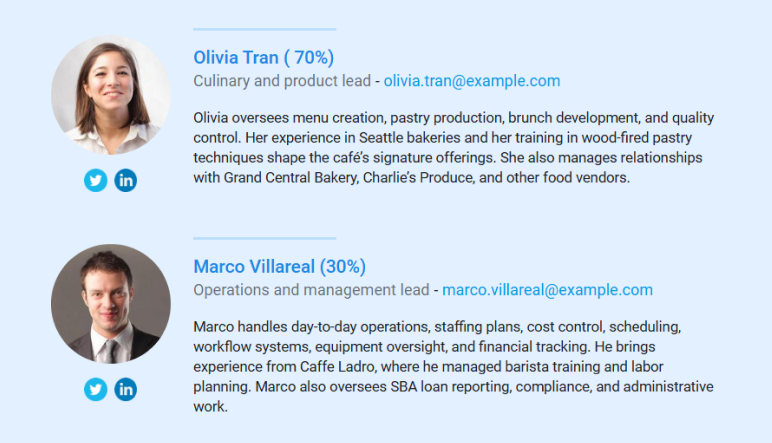
Each owner handles the work they already know well. Olivia manages the menu and product quality because she is a trained pastry chef, and Marco takes care of daily operations, staffing, and finances because he has experience running cafés.
Revenue Model
Maple & Hearth makes money through four main sources:
- Beverage sales
Lattes, Americanos, pour-overs, cold brew, and milk upgrades. This category provides strong margins and steady morning volume.
- Pastry sales
Wood-fired croissants are baked in small batches. These support impulse buys and lift average ticket size when paired with drinks.
- Brunch and mid-day food
Seasonal toast, breakfast sandwiches, and granola bowls. These items drive revenue after the morning rush and support longer seated visits.
- Weekend brunch plate
A higher-priced plate offered only on weekends when traffic is strongest, helping lift weekend averages without adding new ingredients.
This model keeps costs predictable because ingredients overlap, vendors are local, and no item requires complex equipment.
Business Goals (1–3 years)
Year 1 goals
- Establish a strong neighborhood presence in the city.
- Reach a steady average of 200–230 transactions per day.
- Build a base of regular customers from nearby apartments and transit flow.
- Maintain consistent product quality and predictable service during the morning rush.
Year 2 goals
- Strengthen the brunch segment and increase weekend revenue.
- Improve operational efficiency as staffing stabilizes.
- Introduce limited seasonal specials to keep the menu fresh.
- Grow monthly revenue closer to the projected Year 2 average.
Year 3 goals
- Explore catering opportunities for small offices in the town.
- Add a light wholesale pastry program to select local shops (if capacity allows).
- Maintain stable staffing and lower labor fluctuation.
- Reach the projected financial performance shown in the SBA forecast.
These goals focus on consistent execution rather than rapid expansion, which is appropriate for a neighborhood café model.
Market Analysis
Global Market Overview
The global café market continues to expand as people increasingly spend time in coffee shops to work, meet friends, or take a short break. People drop in for all sorts of small things, sometimes to work for a bit, other times just to rest or pick up something to go.
In 2025, the world’s cafe and bar market is expected to sit somewhere around $793 billion. If growth continues, it could reach about $1.3 trillion by 2030.
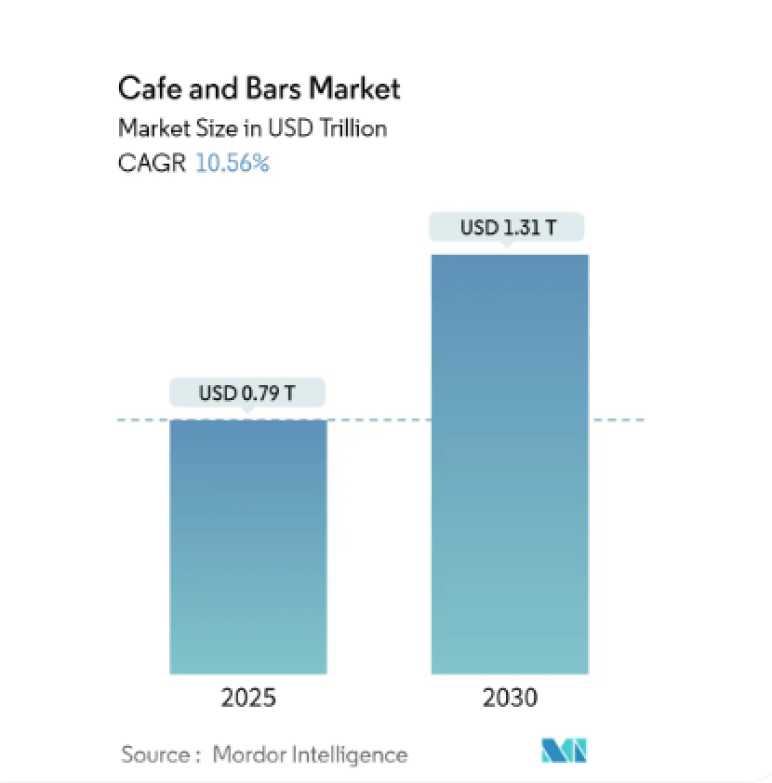
People in many developing regions are earning more, so café visits are rising. Demand for good coffee stays steady, and delivery orders keep growing. This shows how firmly cafés are now part of everyday life.
Segment Analysis
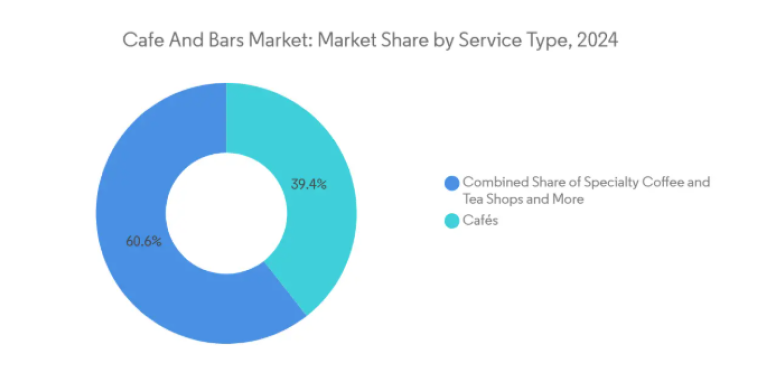
From that report, we can say cafés hold the largest share of the market at 39.41% in 2024.
Cafés are expected to have the largest part of the market, standing at 39.41%. Their continued popularity comes from the fact that customers order coffee on the go, meet up with friends, or work on their laptops for a couple of hours.
The market for specialty coffee and tea shops is expanding the fastest at a predicted rate of 12.80% yearly until 2030. The reason is that customers are willing to spend extra for a premium drink.
The growth of bars and pubs is slow due to changes in alcohol regulations. Obtaining a permit for a bar or pub can cost between $3,000 to $14,000, which can be a huge challenge for a small business owner.
The market for juice and smoothie bars is expanding as well due to the high demand for healthier options. Customers are looking for clean, simple ingredients in their drinks along with added proteins, vitamins, etc.
Global Café and Bars Market Trends and Insights
The café and bar industry is growing for a few clear reasons.
- Many cafés use a theme or a simple idea. These shops do well in busy cities. This trend is also growing fast.
- People want healthier food and drink choices. This started in North America and Europe.
- Social media helps cafés grow fast. Working with influencers brings quick attention and more sales.
- Eco-friendly habits matter more now. Customers want less waste and cleaner café practices.
- Hybrid cafés are also growing. These places mix coffee service with co-working, small events, or retail. They grow mainly in big cities.
All of these trends show how cafés are changing and growing over the next few years.
Local Market Overview: Seattle
The local market in Seattle fits well into this picture and has long been known for its strong coffee culture. There are about 804 coffee shops in Seattle as of October 2025. This number is almost the same as it was in 2023.
As per the report, 359 shops (about 45%) are small, single-owner cafés, and 445 shops (about 55%) belong to bigger chains or multi-store brands.
The habit of regular coffee drinking has been part of the city for many years. With so many shops and steady buying, the coffee scene stays busy and competitive. These explain why Seattle still stands out as one of the country’s main coffee cities.
Target Market
Maple & Hearth Café serves customers between the ages of 22 and 45, including:
- Young professionals
- Remote workers
- Students
These groups are common in Capitol Hill; they have strong habits around daily coffee trips. They also enjoy weekend brunch. The area’s median household income is about $100,657, as mentioned earlier. This supports steady spending on premium coffee and café meals.
Local Consumer Behavior Patterns
Café usage in Capitol Hill is frequent, with many residents visiting local cafés several times a week. This behavior creates a steady and dependable baseline for daily traffic.
Here’s a simple view of our café’s daily customer pattern:
- Morning purchases during the 7:00 to 10:00 AM rush
- Remote workers settling in for longer stays with multiple beverage orders
- Weekend brunch traffic that peaks between late morning and early afternoon
- Light afternoon demand until closing
Maple & Hearth’s menu mix fits these patterns by offering quick coffee items, fresh pastries that sell consistently through the morning, and brunch plates that support mid-day volume.
Stop searching the internet for industry & market data
Get AI to bring curated insights to your workspace
Competitive Landscape
Direct Competitors
Maple and Hearth competes with established cafés that already operate in the Capitol Hill area.
Indirect Competitors
Several nearby businesses indirectly compete with the café and influence customer choices:
- Coworking spaces pull in remote workers who spend long hours there instead of sitting in a café.
- Big chains like Starbucks compete by serving people fast, which attracts customers who want speed more than craft coffee.
- Full-service brunch restaurants also affect weekend traffic, because some groups pick a full dining setup instead of a counter-style café visit.
These businesses shape customer behavior, but none combine wood-fired pastries, a focused brunch program, and a calm, remote-friendly seating layout the way Maple & Hearth does.
SWOT Analysis
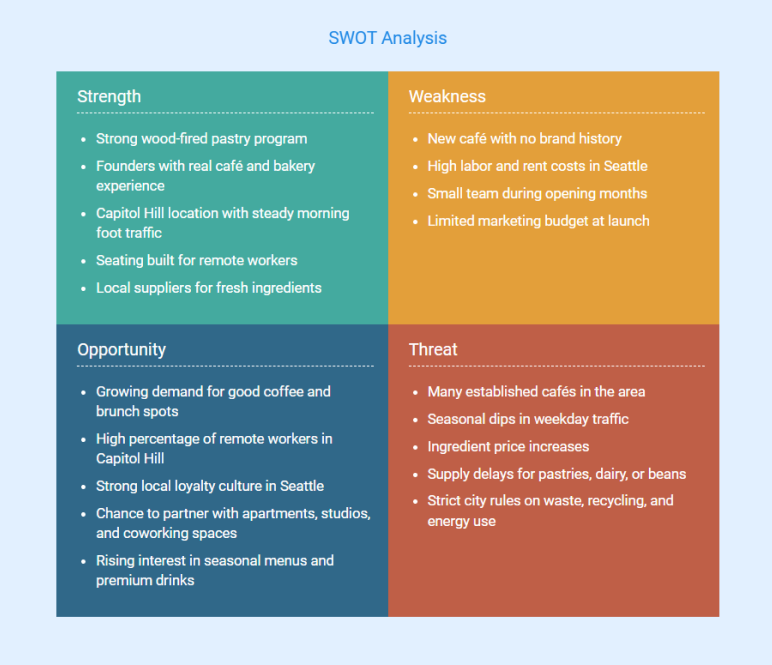
The SWOT analysis provides a clear look at Maple & Hearth’s strengths, the internal challenges it must manage, the opportunities created by the Capitol Hill market, and the competitive risks that come from nearby cafés and other food options.
Competitive Edge
Maple and Hearth sits between two common options in Capitol Hill: cafés that focus mostly on drinks and full-service restaurants that require a longer visit.
The neighborhood lacks a place that offers high-quality coffee, fresh pastries, and a simple brunch menu without the formality or wait times of a restaurant.
The café fills this gap by offering:
- Wood-fired pastries made in small batches from the morning
- A small seasonal brunch menu that works for mid-day customers
- Comfortable seating that suits remote workers
- Local sourcing to keep the menu consistent and fresh
This position fits well with how people in the area use cafés. Capitol Hill has high café visit frequency, strong morning commuter traffic, and steady weekend brunch interest, but limited options that combine good coffee with a quick, fresh meal.
Sample Menu
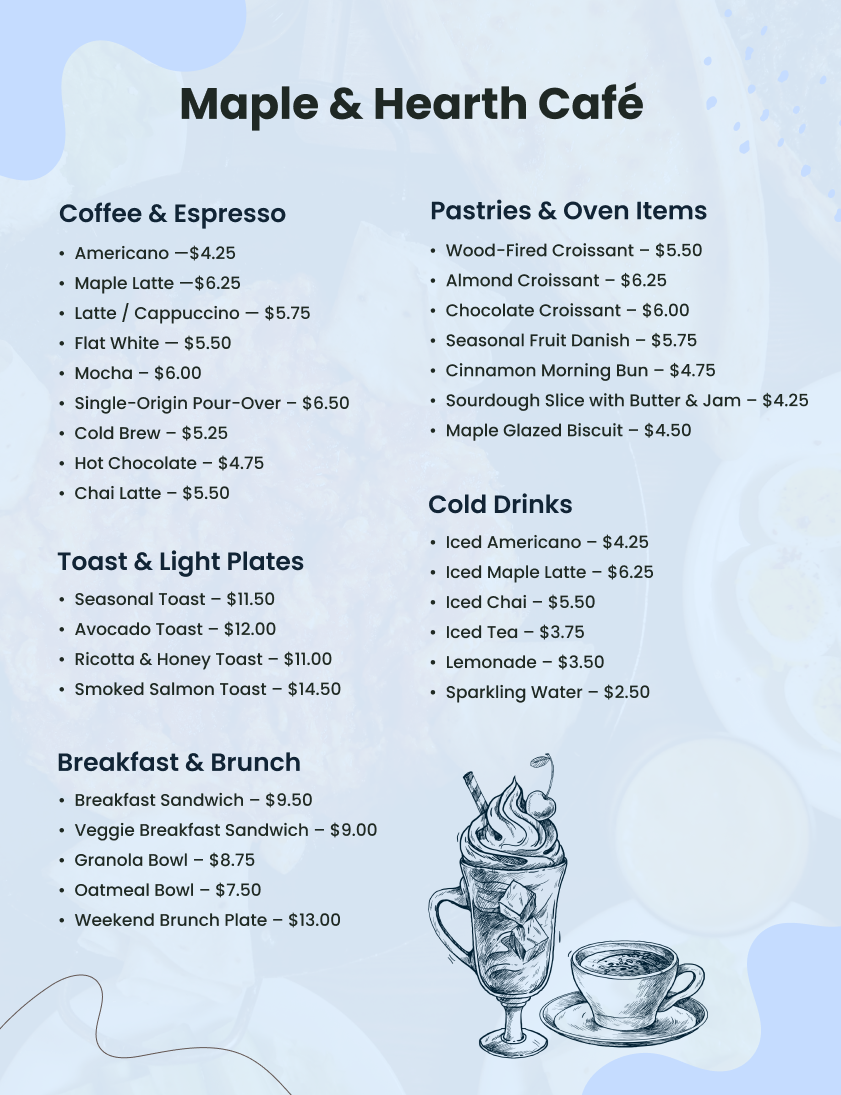
The menu is built around what the team can prepare steadily inside a small workspace using three main stations: the espresso bar, the wood-fired oven, and a small brunch line. Items stay limited so the team can work at a steady pace, keep food fresh, and avoid waste.
Menu Overview
The menu follows the café’s daily flow:
- Morning (7 AM–11 AM): Quick drinks and pastries for commuters and early remote workers
- Mid-Day (11 AM–2 PM): Simple brunch plates for seated customers
- Weekend Add-On: One brunch plate for Saturday and Sunday traffic
The menu stays focused so staff can keep quality steady during busy periods.
Marketing & Sales Strategy
Maple & Hearth Café’s marketing approach is built around how people in Capitol Hill actually choose cafés. Many residents walk to nearby spots for morning drinks, remote work, or weekend brunch.
Our plan focuses on reaching these groups at the moment they decide where to go. Instead of broad advertising, we concentrate on steady visibility inside the neighborhood and simple actions that bring people back more than once.
Most of our marketing is based on three things we see daily in this area:
- High morning foot traffic from apartment clusters
- Remote workers looking for quiet seating and strong Wi-Fi
- Weekend groups choosing cafés with good food options, not just coffee
The strategy focuses on three goals:
- Build steady visibility inside Capitol Hill, especially among residents within a 5–7 minute walk.
- Capture high-intent searches from people looking for coffee spots near their homes or workplaces.
- Turn first-time visitors into repeat customers through consistent service and small incentives.
Marketing Channels
Maple & Hearth Café uses targeted channels that match how people in Capitol Hill discover new cafés.
| Channel | Budget % | Description |
|---|---|---|
| Instagram & TikTok content | 35% | Short videos showing the wood-fired pastry process, weekend brunch plates, and the quiet work area. Posts are timed early morning and mid-day because those are peak browsing hours for local residents. |
| Google Local Search + Maps Ads | 30% | Targets people searching “coffee Capitol Hill,” “brunch Capitol Hill,” or “near me” within a one-mile radius. Most decisions in this area come from Google Maps, so this channel reaches customers ready to visit immediately. |
| Flyers in nearby apartment buildings | 10% | Distributed to buildings on East Mercer, Boyd Place, and Broadway. These complexes have dense foot traffic and residents who visit cafés multiple times per week. |
| Local partnerships (yoga studios, coworking spaces) | 15% | Simple cross-promotions with studios on 15th Ave and coworking spaces on Harvard Ave. These groups bring steady morning and mid-day traffic. |
| Capitol Hill weekend events & vendor booths | 10% | Pop-up pastry booth at neighborhood events, farmers markets, and local weekend gatherings. Helps introduce the café to residents who rarely explore side streets. |
This marketing mix focuses on reaching people who already live or work on Capitol Hill and are most likely to become regular customers.
Customer Acquisition Plan
The café uses a few simple methods to bring in new customers and keep them coming back.
1. Loyalty programs
Customers earn points with every drink or pastry. Square’s built-in app sends simple offers like:
- Free pastry after 7 drinks
- Bonus points on slow days
This keeps customers returning without complex promotions.
2. Daily remote worker specials
Capitol Hill has a high number of remote workers. The café builds repeat visits through:
- Mid-day drink discounts
- Seasonal toast add-ons
- Quiet seating arrangement
- Free pastry sample tray at 11:00 AM
These offers bring long-stay customers who often buy multiple items.
3. Brunch weekends with a limited seasonal menu
Weekend brunch is a major driver of foot traffic in this neighborhood. At Maple & Hearth, rotating toast toppings and a weekend-only brunch plate help create a sense of anticipation and repeat visits.
Promotions
Maple & Hearth follows a simple promotional approach designed to bring in more customers without discounting too often.
Launch Week Specials
“Buy any drink, get a pastry 50% off” for the opening week. This builds awareness of the wood-fired croissant — the café’s signature item.
Seasonal Spotlight Week
A week highlighting the Maple Latte and maple granola bowl, using short videos and daily posts.
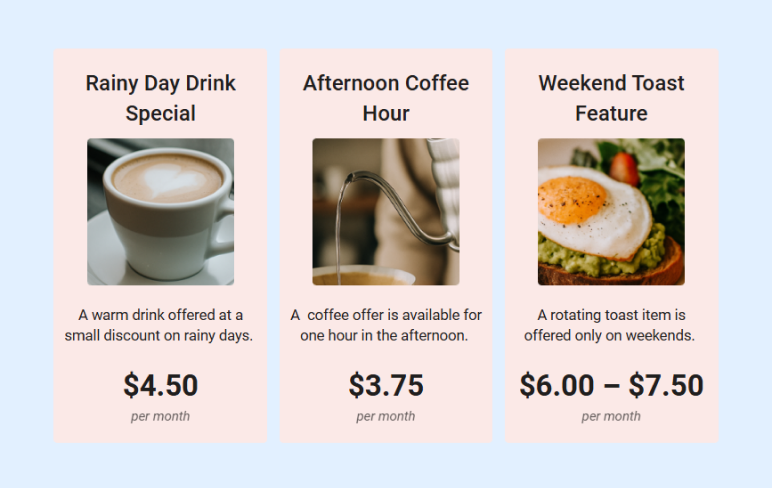
Occasional Specials
These will be operated on slow periods and special occasions:
Lead Conversion Process
Unlike advisory firms, cafés don’t have long sales cycles. Instead, Maple & Hearth uses a 3-step conversion process built around first impressions, loyalty, and consistent service.
- Awareness to first visit
Customers discover the café through:
- Instagram and TikTok posts
- Google Maps searches
- Flyers and partnerships
- Event booths
Once they visit, the goal is to give them a smooth experience: warm pastry aroma, quick service, and a friendly greeting.
- First visit to repeat visit
Within the first three visits, baristas encourage customers to join the Square loyalty program, which sends simple rewards and reminders.
Examples:
- A reward after a certain number of drinks
- A message when a customer hasn’t visited in a while
- Birthday specials
- Repeat visit to long-term regular
Regulars often come from establishing habits:
- Remote workers who sit for hours
- Weekend brunch visitors
- Local residents walking by
Maple and Hearth keeps regular customers returning by giving them the same reliable experience every time they visit, with fresh pastries, steady quality, and friendly service.
Operations Plan
Facility
Maple & Hearth Café is located at 719 East Mercer Street, Suite 106, Seattle, WA 98102, in the Capitol Hill neighborhood. The space sits in a walkable residential area filled with apartment buildings, young professionals, students, and remote workers who regularly visit cafés multiple times per week.
The café is eight minutes from Volunteer Park and close to several transit lines, which creates steady morning foot traffic.
The leased space is sized for a compact but efficient service model. It includes space for the espresso bar, pastry oven area, a single brunch prep station, a small dishwashing zone, and seating designed for remote workers who tend to stay longer. The café layout uses an open front-of-house design so customers can see pastry activity and bar flow, which helps generate impulse orders from walk-ins.
The location supports the café’s identity as a neighborhood spot for coffee, pastries, and light brunch without requiring high-capacity cooking infrastructure. Its proximity to dense housing ensures reliable weekday traffic and strong weekend activity.
Working Hours
Maple & Hearth Café is open 7 days a week, from 7:00 AM to 7:00 PM.
These hours support morning coffee demand, daytime traffic, and early evening visits.
Buildout and Layout
The buildout is designed to support fast service, small-batch pastry production, and efficient mid-day prep without crowding staff. The layout places the espresso bar at the front, the Wood Stone oven behind the counter, and the brunch prep station near the reach-in refrigerators. This keeps movement simple and short.
Weekly Operations Workflow
Maple & Hearth Café follows a predictable weekly flow that balances prep, service, ordering, and cleaning. The schedule keeps operations organized, reduces waste, and matches vendor delivery cycles.
| Day | Main Focus | Key Activities |
|---|---|---|
| Monday | Restock & prep | Dairy delivery check, produce inspection, syrup replenishment, and pastry dough planning for the week. |
| Tuesday | Ordering & pastry cycle | Confirm bean levels, place bakery and produce orders, and plan weekend pastry volume. |
| Wednesday | Mid-week review | Adjust pastry batches, rotate stock, check cold brew supply, update prep notes. |
| Thursday | Weekend readiness | Increase dough prep, schedule brunch station ingredients, and confirm seating layout. |
| Friday | Peak prep | Prepare seasonal toast toppings, increase pastry cycles, and ensure full inventory ahead of brunch. |
| Saturday | Brunch service | Execute brunch plate production, manage steady seating, and maintain pastry flow. |
| Sunday | Reset & reduce | Use remaining ingredients carefully, plan Monday restock, and deep clean surfaces. |
The café’s traffic is consistent each week, so a fixed routine reduces stress on staff, prevents stockouts, and ensures weekend service runs smoothly when brunch demand is highest.
Vendor and Partner Management
Vendor relationships are central to how the café maintains consistency. Each partner supports a specific part of the menu and delivers on predictable schedules.
| Vendor | Role | How the café works with them |
|---|---|---|
| Elm Coffee Roasters | Coffee beans | Weekly orders, stable roast profiles, direct delivery to maintain freshness. |
| Smith Brothers Farms | Dairy | Weekly deliveries, predictable supply without overstocking the small cold storage. |
| Grand Central Bakery | Pastry dough, sourdough | Multiple deliveries per week to support fresh pastry batches and brunch toast demand. |
| Charlie’s Produce | Fruits and vegetables | Fresh produce for seasonal toast and garnish ingredients. |
| Good Start Packaging | Compostable goods | As-needed orders based on storage space and waste requirements in Seattle. |
Vendor management approach
- Weekly order scheduling
- keeping a minimal but reliable stock
- Adjusting pastry dough volume based on forecasted foot traffic
- using overlapping ingredients to avoid waste
This approach keeps the café steady even if one vendor faces a delay because most dishes use shared components.
Quality Control and Food Safety Program
This café follows a basic food safety and quality routine to make sure all drinks, pastries, and brunch items are prepared safely and consistently. The food safety program includes:
- Seattle-King County food service permit compliance
- Daily temperature checks for reach-ins
- Oven and espresso machine cleaning logs
- Grease trap maintenance on schedule
- Strict composting and waste separation
- Allergen awareness for dairy and bread items
- proper handwashing and glove use in the prep station
Product quality controls
- Pastries are baked in small batches every 45–60 minutes
- Cold brew is brewed overnight with fixed ratios
- Toast toppings are prepared daily and checked for freshness
- Espresso quality is maintained through consistent grind checks
This ensures the café’s food quality stays stable and predictable every day.
Technology and Tools
The café uses a small but effective set of digital tools to manage orders, scheduling, and basic reporting.
| Function | Tool | Purpose |
|---|---|---|
| POS & Payments | Square Register | Handles orders, payments, receipts, and simple reporting |
| Staff Scheduling | Homebase or Square Team App | Scheduling, timekeeping, shift coordination |
| Inventory Tracking | Manual logs + vendor invoices | Tracks dairy, beans, dough, produce |
| Accounting | Accountant + QuickBooks | Bookkeeping, payroll |
| Digital Presence | Google Business Profile | Maps visibility, search discovery |
This lightweight tech stack keeps operations organized while staying cost-friendly and easy for staff to learn.
Staff Training and Onboarding
The café follows a simple training and onboarding process so new staff can learn the menu and daily routines quickly.
- Orientation
Overview of café mission, menu, safety rules, allergen procedures, and waste requirements.
- Shadow shifts
New staff follow experienced team members during the morning rush and brunch service.
- Skill checks
Baristas must demonstrate proper espresso extraction, milk steaming, and POS speed.
- Ongoing coaching
Manager reviews performance weekly for the first month, then monthly.
This structured onboarding ensures consistency, reduces mistakes, and accelerates new staff confidence.
Risk and Mitigation
Risk: Fluctuating foot traffic
Impact: Slower sales during certain hours or days, especially outside the morning rush.
Response: Seating is arranged to support remote workers so customers stay longer, order additional drinks, and help stabilize mid-day sales. Breakfast bundles are used to lift morning upsells.
Risk: High labor cost
Impact: Payroll rises quickly due to Seattle’s wage environment.
Response: Staff are cross-trained, so one person can handle both bar and pastry tasks when needed. Small-batch pastry baking reduces labor strain.
Risk: Seasonal revenue dips
Impact: Cold months or holiday travel periods can slow daily sales.
Response: Seasonal menus, holiday pastries, and small-scale office catering help support revenue during slower periods.
Risk: Supplier shortages
Impact: Delays in beans, dairy, or pastry inputs can disrupt menu consistency.
Response: The café keeps multiple vendors for key items so it can switch sources quickly if one supplier falls behind.
Key Milestones
Maple & Hearth Café has a clear launch plan that moves from formation to opening day in organized steps. Each milestone builds a stable foundation for daily operations, loan readiness, and long-term growth in the Capitol Hill neighborhood.
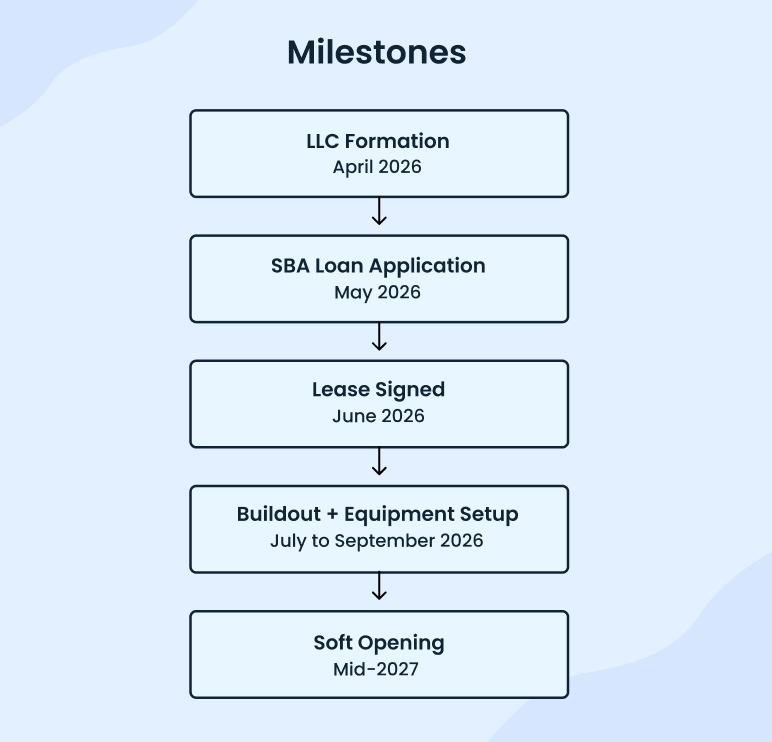
These milestones move the café from formation to full operation in an organized sequence. Each stage supports the SBA loan structure, ensures regulatory compliance, and prepares the business for early revenue stability and long-term neighborhood presence.
Financial Plan
This financial plan outlines Maple & Hearth Café’s projected revenue, expenses, and funding needs. All figures reflect the operating conditions of Capitol Hill, including Seattle labor costs, equipment investment, and typical café traffic patterns.
Startup funding totals $463,000, supported by $385,000 in SBA financing and $78,000 in owner equity. The projections include depreciation, interest, and full operating expenses to show a complete three-year financial picture.
The café starts below break-even in Year 1, moves closer to break-even toward the end of the year, and is expected to reach profitability in early Year 2 as customer volume and workflows stabilize.
Funding Summary Table
| Source | Amount |
|---|---|
| SBA Loan | $385,000 |
| Owner Equity | $78,000 |
| Total Funding | $463,000 |
Startup Costs
| Startup Category | Amount |
|---|---|
| Buildout and renovation | $170,000 |
| Coffee and kitchen equipment | $85,000 |
| Furniture and fixtures | $38,000 |
| Initial inventory | $7,500 |
| Licenses and permits | $3,200 |
| Marketing launch | $6,500 |
| Working capital (first 6 months) | $35,000 |
| Contingency and soft costs | $38,800 |
| Total project cost | $463,000 |
Spreadsheets are exhausting & time-consuming
Build accurate financial projections w/ AI-assisted features
Important Assumptions
These assumptions form the base of the café’s revenue and cost projections. They combine lender requirements, industry benchmarks, and real costs associated with Seattle’s food-service environment. Each figure aligns with SBA loan standards and realistic café operating conditions.
| Parameter | Updated Assumption |
|---|---|
| Loan Amount | $385,000 SBA 7(a) at 9.5%, 10-year term |
| Owner Equity | $78,000 |
| COGS | 37% of revenue |
| Gross Margin | 63% |
| Average Ticket Size | $7.25 |
| Daily Transactions (Year 1 average) | 200–230 |
| Break-even Revenue | $59,000 per month |
| Daily Transactions at Break-even | 271 per day |
| Monthly Fixed Costs | $37,130 |
| (includes labor, rent, utilities, software, insurance, composting, maintenance) | |
| Rent | $5,800 per month |
| Labor Cost | $279,260 per year |
| Working Capital Coverage | 6 months included in startup budget |
| Depreciation | $41,857 per year |
| (straight-line across equipment, furniture, and buildout) | |
| Interest Expense | Based on SBA amortization, declining from $32,800 in Year 1, to $29,400 in Year 2, and $26,000 in Year 3. |
Staffing Costs
| Role | Annual Pay | Count | Total |
|---|---|---|---|
| Café Manager | $52,000 | 1 | $52,000 |
| Baristas | $43,000 | 3 full-time + 1 part-time | $150,500 |
| Pastry Cook | $44,000 | 1 | $44,000 |
| Prep Cook PT | $21/hr (15 hrs/week) | 1 | $16,380 |
| Dishwasher PT | $18/hr (15 hrs/week) | 1 | $14,040 |
| Accountant (Contract) | $2,200 | — | $2,200 |
| Total Labor Cost | — | — | $279,260 |
Operating Expenses
| Category | Annual Cost |
|---|---|
| Rent | $69,600 |
| Utilities | $10,000 |
| POS & Software | $7,200 |
| Insurance | $4,200 |
| Waste/Compost | $2,400 |
| Maintenance | $3,300 |
| Total Fixed Costs | $96,700 |
| Labor (Adjusted staffing) | $279,260 |
| Marketing (Launch + ongoing) | $8,920 |
| Total Operating Expenses | $384,880 |
Profit & Loss Statement (3 years)
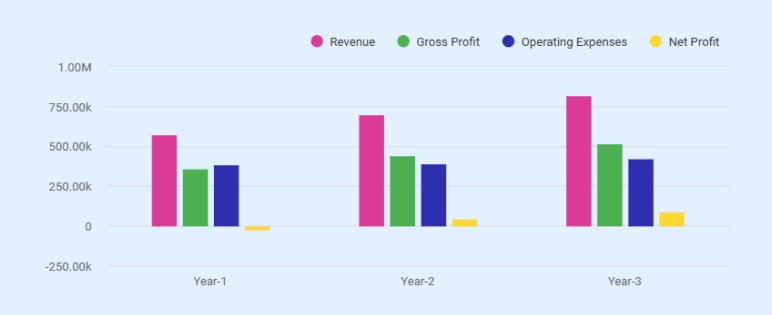
The Profit and Loss Statement shows how Maple & Hearth Café performs financially across its first three years. Revenue grows steadily as customer traffic strengthens, weekend brunch activity increases, and daily routines become more consistent.
In Year 1, the café generates $576,000 in revenue and records a net loss of $96,657, which reflects full staffing, initial operating costs, and loan interest. By Year 2, revenue rises to $696,000, and the net loss narrows to $23,257 as operations stabilize. In Year 3, revenue reaches $816,000, and the café moves into a net profit of $23,143 as fixed costs remain stable and customer volume increases.
| Category | Year 1 ($) | Year 2 ($) | Year 3 ($) |
|---|---|---|---|
| Revenue | 576,000 | 696,000 | 816,000 |
| COGS (37 percent) | -213,120 | -257,520 | -301,920 |
| Gross Profit | 362,880 | 438,480 | 514,080 |
| Operating Expenses | -384,880 | -390,480 | -423,080 |
| EBITDA | -22,000 | 48,000 | 91,000 |
| Depreciation | -41,857 | -41,857 | -41,857 |
| Interest | -32,800 | -29,400 | -26,000 |
| Net Profit | -96,657 | -23,257 | 23,143 |
Cash Flow Statement (3 years)
| Category | Year 1 ($) | Year 2 ($) | Year 3 ($) |
|---|---|---|---|
| Cash Inflow | |||
| Revenue | 576,000 | 696,000 | 816,000 |
| Total Cash Inflow | 576,000 | 696,000 | 816,000 |
| Cash Outflow – Cost of Sales | |||
| COGS (37 percent) | -213,120 | -257,520 | -301,920 |
| Subtotal: COGS | -213,120 | -257,520 | -301,920 |
| Cash Outflow – Operating Costs | |||
| Labor | -279,260 | -279,260 | -279,260 |
| Rent | -69,600 | -69,600 | -69,600 |
| Utilities | -10,000 | -10,000 | -10,000 |
| POS & software | -7,200 | -7,200 | -7,200 |
| Insurance | -4,200 | -4,200 | -4,200 |
| Waste & compost | -2,400 | -2,400 | -2,400 |
| Maintenance | -3,300 | -3,300 | -3,300 |
| Marketing | -8,920 | -8,920 | -8,920 |
| Other operating costs | -300 | -5,600 | -38,200 |
| Subtotal Operating Costs | -384,880 | -390,480 | -423,080 |
| Cash Outflow – Financing | |||
| Loan payment (principal + interest) | -60,360 | -60,360 | -60,360 |
| Add back depreciation | +41,857 | +41,857 | +41,857 |
| Principal portion included above | (27,560) | (30,960) | (34,360) |
| Subtotal Financing Impact | -18,503 | -18,503 | -18,503 |
| Net Cash Flow | -82,360 | -12,360 | 30,640 |
| Opening cash | 35,000 | -47,360 | -59,720 |
| Ending Cash | -47,360 | -59,720 | -29,080 |
Balance Sheet
| Category | Year 1 ($) | Year 2 ($) | Year 3 ($) |
|---|---|---|---|
| Assets | |||
| Net Fixed Assets | 421,143 | 379,286 | 337,429 |
| Cash | -47,360 | -59,720 | -29,080 |
| Prepaid Items + Inventory | 17,200 | 17,200 | 17,200 |
| Total Assets | 390,983 | 336,766 | 325,549 |
| Liabilities | |||
| SBA Loan Balance | 357,440 | 326,480 | 292,120 |
| Total Liabilities | 357,440 | 326,480 | 292,120 |
| Equity | |||
| Owner Equity | 78,000 | 78,000 | 78,000 |
| Accumulated Profit (Loss) | -44,457 | -67,714 | -44,571 |
| Total Equity | 33,543 | 10,286 | 33,429 |
| Liabilities + Equity | 390,983 | 336,766 | 325,549 |
Break-Even Analysis
The café must reach approximately $59,000 in monthly revenue to cover fixed and variable operating costs. At an average ticket size of $7.25, this equals about 271 daily transactions. Maple & Hearth operates below break-even early in Year 1, moves closer to break-even late in Year 1, and is expected to reach break-even in early Year 2.
| Metric | Value |
|---|---|
| Monthly labor | 23,272 |
| Rent | 5,800 |
| Other fixed costs | 8,058 |
| Total fixed monthly cost | 37,130 |
| Gross margin | 63 percent |
| Break-even revenue | 59,000 per month |
| Average ticket | 7.25 |
| Daily transactions needed | 271 per day |
| Break-even timeline | Late Year 1 to early Year 2 |
The Quickest Way to turn a Business Idea into a Business Plan
Fill-in-the-blanks and automatic financials make it easy.
