




Executive Summary
In Northeast Raleigh, Riverside Community Wellness & Learning Center will function as a nonprofit hub that provides youth programming, senior assistance, career training, exercise classes, and reasonably priced event space. It will fill the void left by crowded or expensive options in the neighbourhood and primarily assist households with low to moderate incomes.
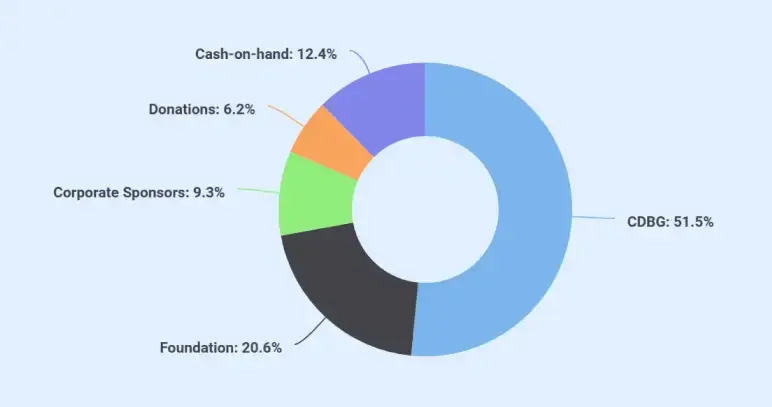
With additional funding from sponsors and community fundraising, we are asking the City of Raleigh (CDBG) for $250,000 and the Triangle Community Foundation for $100,000, for a total of $485,000. Renovations, ADA modifications, furniture, equipment, and initial operational expenses will all be covered by this financing.
Early in 2027, the center is scheduled to open. Giving young people, elders, and working adults a place to study, keep active, and stay connected is our straightforward mission. Riverside is designed to serve the community for many years to come with stable leadership, well-defined activities, and a sound financial plan.
Problem
Northeast Raleigh’s Riverside district includes many residents living with financial constraints. Raleigh overall has 8.55% of residents below the poverty line (datausa.io), and within our local radius, many families fall into low-to-moderate income brackets.
Youth access to structured learning and supervised after-school time remains limited — nationally, 22.6 million children are locked out of after-school programs, with 3 children waiting for every available slot. Local parent feedback mirrors this gap.
Adults seeking digital skills and career advancement also face barriers due to cost and lack of access, reflecting the broader U.S. “digital divide”. This translates into reduced job competitiveness and economic mobility.
Seniors on fixed incomes often experience isolation and limited access to wellness or social engagement opportunities, which contributes to declines in mental and physical health.
Community groups, small entrepreneurs, and local organizers consistently lack affordable gathering spaces. Public facilities remain heavily booked, and private options are cost-prohibitive.
Overall, Riverside residents lack a central, accessible community space offering affordable education, wellness, support services, and meaningful social connections. That is the gap we are filling.
Our Solution
The Riverside Community Wellness & Learning Center will offer a single and easily accessible location for learning, connecting, and thriving for families, adolescents, adults, and seniors. In order to remove financial obstacles, we will provide free:
- Tutoring
- Inexpensive STEAM (Science, Technology, Engineering, Arts, and Mathematics) programs
- Reasonably priced exercise
- Job-readiness training
- Senior social events
Moreover, to maintain solid relationships with local organizations and schools, our center will remain open during crucial times and provide affordable space rents for community organizations. We are constructing a hub that will provide everyone in the Riverside district with wellness, education, and connection.
Our Mission
We aim to offer a non-discriminatory community facility whereby youth, adults, and seniors can access learning, wellness, support, and opportunities without any consideration of income. Our mission is to work towards making families stronger, developing capabilities, enhancing health, and giving a sense of belonging to the Riverside district. We undertake to do business with integrity, affordability, and true community collaboration.
Revenue Model
We will operate as a nonprofit but run with a disciplined financial structure and diversified revenue streams. Our earned revenue will come from three primary sources:
- Program fees from adult fitness, ESL (English as a Second Language), STEAM (science, technology, engineering, arts, and mathematics) labs, and low-impact senior fitness
- Facility rentals for the multipurpose room, conference room, and community kitchen
- Corporate sponsorships and small business partnerships
Alongside earned income, we will maintain ongoing grant and donor support through:
- Municipal funding (CDBG and related programs)
- Local foundation grants
- Annual fundraising campaigns
Individual community donors
Digital literacy, career training, and youth tutoring will continue to be free and funded by grants so that everyone may take advantage of them. Adult fitness programs and space leases are examples of reasonably priced solutions that contribute to operational expenditures. This well-balanced approach fosters long-term financial stability while maintaining our mission’s accessibility.
Financial
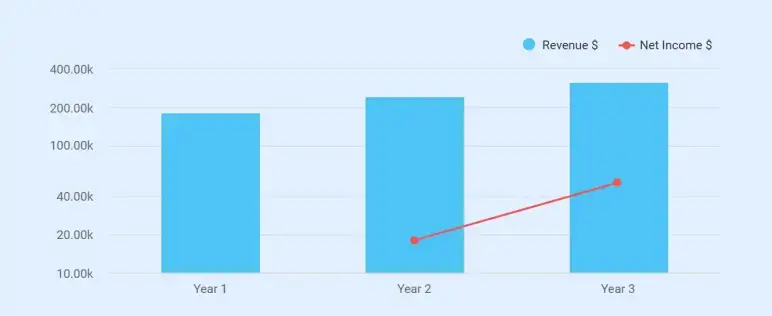
We require $485,000 in initial funding to complete renovation, equipment installation, and first-year program operations. The startup project costs a total $336,900, with the remaining funds providing an operating reserve for the first 12 months. We expect Year 1 revenue at approx. $182,000, with intentional early deficits common in nonprofit launch years.
By Year 2, we expect operational break-even powered by earned income from programs and facility rentals. By Year 3, we project a surplus of $51,000, which we will reinvest into expanded services and community programming.

Don’t spend weeks on your first draft
Complete your business plan in less than an hour
Organization Overview
We are a 501(c)3 North Carolina-based non-profit, and all state and federal regulations on charitable organizations are adhered to. That arrangement allows us to take grants, tax-deductible donations, and local funding and make our operations transparent and responsible.
Maria DeSoto is our executive director who supervises the planning, programs, and relationships of the center with the community. We are located at 1427 Riverside Drive in Raleigh in an eclectic and expanding community where families are dependent on education, cultural venues, and support services that are available and close.
The surrounding neighborhood includes the Northeast Raleigh–Riverside district. Mixed-income area with rising housing density, limited access to low-cost recreational and educational programs.
Our community center currently offers:
- Classroom space for workshops
- A multipurpose hall for community events
- A computer and resource area
- Meeting rooms for counseling, mentoring, and support groups
- Outdoor/nearby space for wellness and fitness
Governance
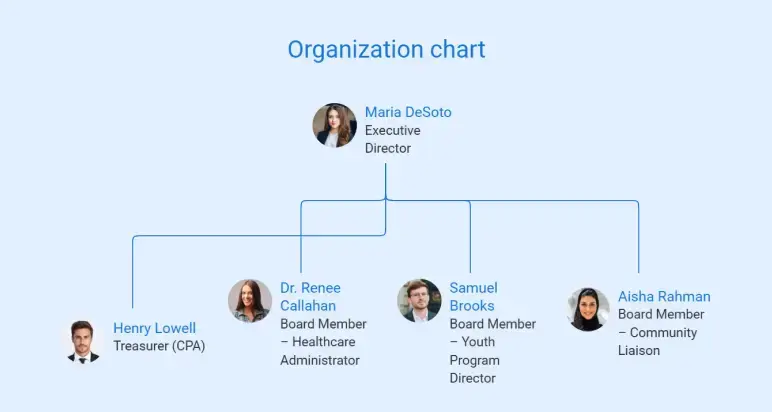
Our organization is guided by a strong governance structure that ensures transparency, accountability, and mission-driven decision-making. We operate under the leadership of our Executive Director and the Board of Directors, who provide strategic oversight, financial stewardship, and program guidance.
| Position | Name | Responsibilities | Relevant Experience |
|---|---|---|---|
| Executive Director | Maria DeSoto | Leads organization, strategic development, oversees programs, fundraising, and partnerships | 15+ years in nonprofit leadership & community program development |
| Board Treasurer | Henry Lovell (CPA) | Financial oversight, budgeting, accounting, compliance, and fiscal reporting | 20+ years in financial management and nonprofit accounting |
| Board Member | Dr. Renee Callahan | Advises on health-related programs, senior wellness, and mental health support | Healthcare administrator with expertise in community health initiatives |
| Board Member | Samuel Brooks | Guides youth programs, education, tutoring, and curriculum design | Retired teacher and former Youth Program Director |
| Board Member | Aisha Rahman | Strengthens outreach, builds community relationships, supports cultural inclusion | Community engagement specialist with multicultural outreach experience |
Community Commitments
Serving the Riverside district means showing up every day with consistency and accountability. Programs stay affordable, relationships stay personal, and decisions put the community first. We listen before we plan and invite residents to help shape programs and priorities. Success shows up in more than attendance—it shows in who feels welcome, supported, and connected.
Startup Summary
Start-up Expenses:
| Category | Amount |
|---|---|
| Renovation + ADA upgrades | $210,000 |
| Computer lab buildout | $38,000 |
| Fitness equipment | $26,000 |
| Furniture + fixtures | $19,500 |
| Kitchen certification + appliances | $28,000 |
| Security + cameras | $7,400 |
| Licensing + legal fees | $4,600 |
| Insurance | $3,400 |
| Total Start-up Expenses | $336,900 |
Start-up Assets:
| Asset | Amount |
|---|---|
| Working capital reserve (Year 1 operating cash) | $30,000 |
| Cash-on-hand | $60,000 |
| Total Start-up Assets | $90,000 |
Start-up Capital & Total Project Cost:
| Item | Amount |
|---|---|
| Total Start-up Expenses | $336,900 |
| Total Start-up Assets | $90,000 |
| Total Project Requirement | $426,900 |
Funding Sources Summary
| Funding Source | Amount |
|---|---|
| City of Raleigh – CDBG Grant | $250,000 |
| Triangle Community Foundation Grant | $100,000 |
| Corporate Sponsorships | $45,000 |
| Private Donations & Fundraising | $30,000 |
| Cash on Hand | $60,000 |
| Total Funding | $485,000 |
Want a blueprint like this sample plan for your nonprofit?
Let Upmetrics help you generate a complete business plan in minutes
Services & Activities
Riverside Community Wellness & Learning Center’s programs are all created with the same objective in mind: To improve the quality, health, and togetherness of community life. Every single program, from senior health courses to after-school tutoring, directly addresses the actual needs of our community. In an approachable, safe environment where participation is simple, inexpensive, and meaningful, residents develop their talents, receive support, and form relationships. This section describes how our services connect, educate, and promote wellness throughout our entire community.
Our Core Activities & Pricing
Youth Programs & Pricing
| Service | Price | Notes |
|---|---|---|
| After-school Tutoring | Free | Subsidized for qualifying households; grant-funded |
| STEAM Lab (Coding & Computer Access) | $20/month | Low-cost, encourages tech literacy and problem-solving |
| Summer Camp (8-week program) | $50/week | Sliding scale fees to maintain accessibility |
Adult Programs & Pricing
| Service | Price | Notes |
|---|---|---|
| Fitness & Wellness Classes (Yoga, Zumba, Strength) | $35/month | Affordable group classes to promote health |
| Career Readiness Workshops | Free | Focus on job skills, resumes, and interview prep |
| Computer Literacy Classes | Free | Basic to intermediate digital skills training |
| ESL Classes | $35/month | Language skills for employment and integration |
Senior Programs & Pricing
| Service | Price | Notes |
|---|---|---|
| Social Mornings (Crafts, Games, Discussion) | Free | Encourages socialization and mental wellness |
| Low-impact Fitness Classes | $25/month | Promotes physical health and mobility |
| Transportation Assistance for Medical Visits | Free | Partnership with GoWake Access ensures mobility |
Community/Facility Rentals
| Facility | Capacity / Size | Price | Notes |
|---|---|---|---|
| Multipurpose Room | 70 people | $45/hour | Ideal for events, workshops, and community gatherings |
| Conference Room | 8–12 people | $22/hour | Suited for meetings, small trainings, and counseling sessions |
| Community Kitchen | N/A (commercial-grade) | $18/hour | Licensed for food entrepreneurs and nutrition classes |
Service Delivery Approach
Programs are based on a model of being accessible, trustworthy, and directly engaging communities. The locals are also able to participate in most activities at minimal or no cost, and the registration is purposely easy with no qualification paperwork no qualification barriers that intrude. Local schools, clinics, and senior networks partnerships allow us to target the individuals who will benefit most.
Volunteers and staff members make programs individualistic and connection-oriented so that each member of the program feels appreciated and acknowledged. The center is flexible with its programs and schedules, having direct input from the community.
Community Insights
There are about 148,143 people living in Northeast Raleigh, a varied mix of working folks, families, and seniors. The necessity for accessible, reasonably priced programs is highlighted by the fact that about 36% of households have low-to-moderate incomes (LMI).
Within 5 years, the senior population is likely to increase by 18.3%, raising demand for opportunities for social interaction and wellness.
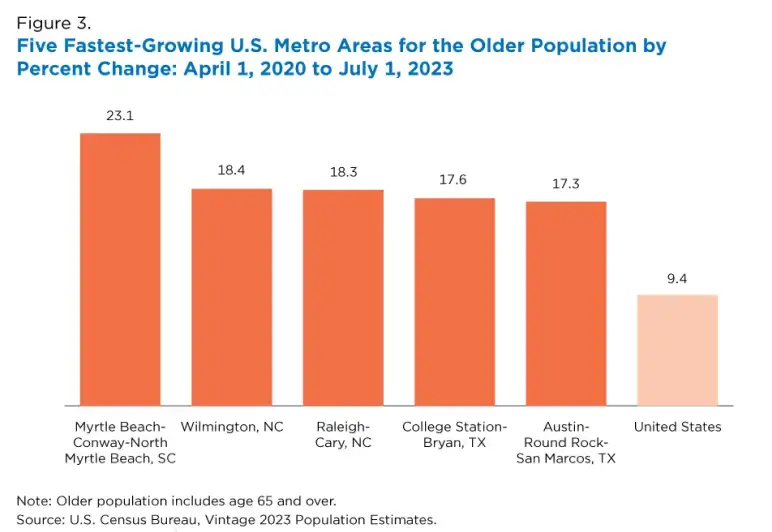
Despite this need, the Buffaloe Road Center, the sole public community center in a nearby radius, is usually full. This highlights the need for a new community center that serves people of all ages and leaves a glaring service vacuum.
Key Trends
Rapid Population Growth
Raleigh added 33,000 residents from 2020 to 2024, surpassing 500,000. More residents mean higher demand for community programs and shared spaces.
Aging Population
The 65+ age group is growing faster than most U.S. metros. This creates an increased need for senior wellness, social, and transportation services.
Rising Demand for Wellness & Recreation
Participation in fitness and community programs is surging. Residents are actively seeking accessible wellness, fitness, and educational activities.
Economic & Demographic Shifts
Housing pressures and migration bring more low- and moderate-income families needing affordable programs. This highlights the need for sliding-scale or free community services.
Existing Facility Strain
Buffaloe Road Center and other local facilities are frequently at capacity. It shows a clear gap and opportunity for a new, fully accessible community hub.
Our Target Audience
| Audience Segment | Needs / Interests | Program Relevance |
|---|---|---|
| Youth (ages 6–18) | After-school care, tutoring, weekend activities, and STEAM programs | After-school tutoring, STEAM Lab, Summer Camp |
| Seniors (ages 55+) | Socialization, wellness, low-impact fitness, transportation support | Social Mornings, Low-impact Fitness, Medical Visit Assistance |
| Low-Income Families | Affordable or free programs, educational support, wellness access | Sliding-scale programs, free tutoring, wellness classes |
| Remote Workers / Small Groups | Affordable, flexible meeting and training spaces | Multipurpose Room, Conference Room rentals, Community Kitchen |
Our Competitors
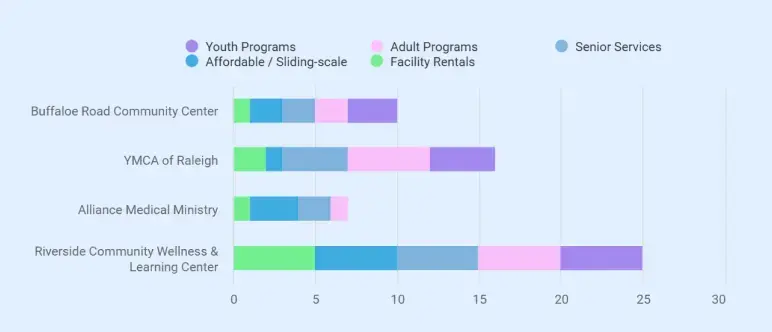
Here’s a look at the main community centers in the area and how they compare in programs, affordability, and access.
| Category | Buffalo Road Community Center | YMCA of Raleigh | Alliance Medical Ministry | Riverside Community Wellness & Learning Center |
|---|---|---|---|---|
| Youth Programs | Moderate | Strong | None | Strong |
| Adult Programs | Limited | Strong | Very Limited | Strong |
| Senior Services | Limited | Strong | Limited | Strong |
| Accessibility & Affordability | Limited | Low for LMI households | High | High |
| Facility Rentals | Limited | Limited | None | Strong |
Differentiation
Riverside Community Wellness and Learning Center has a unique presence in the local scene due to the provision of universal, free, and localized programs. We cover a wide range of services catering to the youth, adults, and seniors, unlike other centers in the region that offer only one type of service. Important distinguishing factors are:
1) All-in-One Hub
Integrates youth programs, adult fitness training, senior wellness programs, and co-learning laboratories into one facility.
2) Free After-School Tutoring
Promotes further education of the youngsters without charges. Mentorship, homework assistance, and practical learning experiences are also gained by students, which establish confidence and curiosity.
3) Affordable Room Rentals
The low charge on multipurpose and conference spaces can be utilized by the community. This offers modular spaces to conduct workshops, meetings, and local events, which strengthen the connection between the community.
4) Community Kitchen Access
Certified kitchen to be used in nutrition education and food entrepreneurship classes. It gives the residents the power to learn culinary skills, start small food enterprises, and attend practical nutrition lessons.
5) Strong Local Partnerships
Partnerships with local schools, clinics, and health providers would make sure that the programs can be accessible to individuals who need them the most.
6) High Local Demand
There is only a single public community center in a 3.5-mile radius (Buffaloe Road Center), which often becomes crowded. This indicates a definite necessity for increased services.
Marketing and Sales Plan
We rely on direct community engagement rather than expensive advertising. Residents discover us through local networks, school referrals, neighborhood groups, and city listings. Every initiative focuses on reaching the families, seniors, and workers who benefit most, ensuring people find programs that feel welcoming, helpful, and relevant to their needs.
Marketing Channels
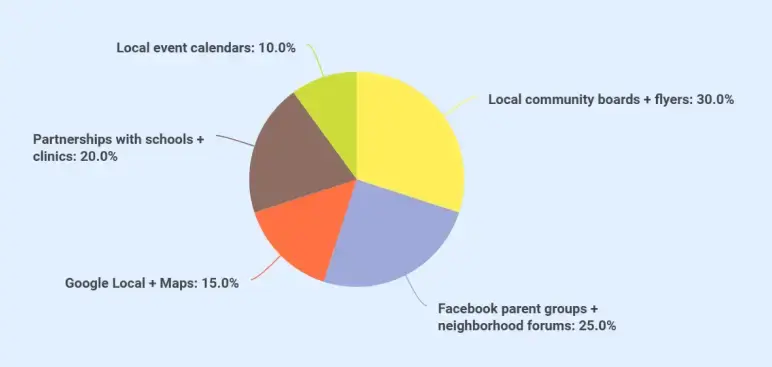
We’re allocating $18,000 toward marketing for the first 12 months, and here’s how we’ll distribute it across the core channels that actually drive local enrollment:
| Marketing Channel | % of Budget |
|---|---|
| Local community boards & flyers | 30% |
| Facebook parent groups & neighborhood forums | 25% |
| Google Local & Maps | 15% |
| Partnerships with schools & clinics | 20% |
| Local event calendars | 10% |
Messaging Strategy
Our communication is based on conciseness, social worth, and convenience. Each campaign promotes three pillars, namely, affordability, inclusiveness, and actual results. It can be to parents, seniors, or local partners, but the point is to make an impact in a brief time frame and in simple language.
Core message
“A secure, cost-effective, and friendly environment where all ages will be able to study, socialize, and develop.”
All our outreach is anchored on this message. It captures what families, the elderly, and local partners are most concerned about: a place that is trustworthy, inclusive, and actually useful. Be it after-school assistance, gymnastics, meeting venue, or community gathering area, the worth is evident, and all people will feel at home and will have access to activities that enhance their day-to-day life.
Sales Strategy
Our sales approach focuses on visibility, trust, and consistent community engagement. We’re not selling a product—we’re building relationships. Each initiative is designed to bring residents into the space, experience our programs, and return as regular participants.
Customer Acquisition Plan
1) Free community launch event
A high-visibility kickoff that introduces families, seniors, and local leaders to our space and services.
2) School partnerships for after-school referrals
Nearby elementary and middle schools help funnel students into tutoring, enrichment, and weekend programs.
3) Senior outreach through clinics and churches
Healthcare providers and faith-based groups connect us with seniors seeking wellness, mobility, and social programs.
4) Monthly “Try-a-Class Free Week” promotions
A low-barrier entry point that lets residents test fitness classes, workshops, or youth sessions before committing.
Stop Googling competitors for hours
Community Operation
Our operations are structured to support steady program flow, flexible room rentals, and consistent access for youth, adults, and seniors. Hours are set to match community patterns—after-school needs on weekdays and family availability on weekends.
Community Location
We have our center in East Raleigh, North Carolina, in the Brentwood-Starmount neighborhood transit. It is placed between the large residential groups and the major community contact points, and therefore, families, seniors, and youth can easily access us without having to travel a long distance or use complicated transport routes.
The reason we have picked this location is to serve communities that require low-cost, organized programming and be near partners that will be able to refer youth and seniors regularly. It makes the center a more convenient resource that belongs to the community and not a place that people need to make plans to visit.
Hours of Operation
Monday–Friday: 8:00 AM – 8:00 PM
Covers school-day programs, evening fitness, and adult workshops.
Saturday: 9:00 AM – 5:00 PM
Ideal for community events, rentals, and senior wellness sessions.
Sunday: Closed
Reserved for occasional community events or partner-led programs as scheduled.
A Day at Riverside Community Wellness & Learning Center
Morning (8:00 AM – 12:00 PM)
It starts with senior wellness and low-impact fitness, and then open community hours. Staff help in setting up classes and common rooms when no one is home, and residents come to have access to computers, job search assistance, or to study quietly. Community kitchen assists with pre-arranged nutrition education and food preparation workshops.
Midday (12:00 PM – 3:00 PM)
Midday specializes in adult programs and rentals. Workshops on careers, ESL classes, and digital literacy programs are offered along with small meetings and non-profit rentals. This is a low traffic period where administrative personnel are involved in registration, referrals, and coordinating partners.
Afternoon (3:00 PM – 6:00 PM)
The busiest time of the year is after-school hours. Youth come to be tutored, visit STEAM labs, and have organized recreation. Check-in, homework support, and learning under supervision are handled by volunteers and coordinators. This block of the day is directed by safety, engagement, and consistency.
Evening (6:00 PM – 8:00 PM)
Evenings are accommodating to working adults and families. Classes on fitness, community meetings, and renting of multi-purpose rooms are held as staff reset the spaces and prepare next day. The emphasis is on interrelation, health, and affordable programming to those who used to be inaccessible.
Close-Out & Readiness
Prior to the closing, personnel check attendance, clean communal areas, equipment, and document feedback that has been received throughout the day. These notes will make a direct impact on scheduling and program adjustments.
Our Vendors
Choosing reliable vendors ensures that our programs run smoothly and safely. Equipment must withstand daily use, furniture must support varied community activities, and our technology must stay dependable for both learning and administration. Here’s our trusted network of suppliers who help keep the center functional, welcoming, and ready for everyday use:
| Category | Vendor/Brand | Reliability Note |
|---|---|---|
| Fitness Equipment | REP (Rapid Engineered Products) Fitness & Body-Solid | Durable commercial-grade equipment built for high-usage environments |
| Computer Lab Hardware | Dell OptiPlex (20 desktops) | Proven enterprise-level reliability and long-term serviceability |
| Software & Productivity Tools | Microsoft 365 Nonprofit + Zoom Pro | Discounted nonprofit licensing enables communication, admin, and virtual learning |
| Furniture & Seating | BTOD (Beyond The Office Door) + National Public Seating | Ergonomic, high-capacity community furniture designed for group settings |
Regulatory and Compliance
Running a community center requires meeting several state and local regulations to ensure safety, accessibility, and proper operations. Below is a breakdown of the key licenses and compliance requirements we will obtain and maintain.
1) Zoning & Land Use Approval
We will obtain assurance on the part of the City of Raleigh that the property is in compliance with community-center or assembly-use zoning. This ascertains that the youth classes, fitness, elderly activities, community meetings, and event rentals are in accordance with city ordinances.
2) Certificate of Occupancy (CO)
The CO will be acquired based on the inspections to make sure that fire safety, structural integrity, and ADA accessibility are fulfilled. This ensures the building is free of any harm to the people and in accordance with the standards of the municipality.
3) Fire Safety Compliance
The facility will undertake the fire inspections annually, keep extinguishers and the emergency exit free. During high-traffic programs and rental events, compliance will make the programs safe.
4) Liability Insurance Protection
General liability, property cover, and participant cover will be upheld. This ensures the organization against accidents, damage to equipment, or injury claims.
5) Background Checks of Staff and Volunteers
Background checks will be done for all the staff and volunteers involved in work with the youth at the state and national levels. This is stipulated to ensure the safety of children and adherence to the stipulations of youth protection.
6) Kitchen Health and Safety Hygiene
In the case of the community kitchen, we will adhere to the Wake County food-handling standards. Food entrepreneurs and partner instructors will be in compliance with ServSafe or other similar certifications.
7) ADA Accessibility Compliance
The facility will comply with the ADA requirements of ramps, signage, restrooms, and routes of access. This provides fair availability to the elders, individuals with disabilities, and the entire community members.
8) Nonprofit Reporting & Governance (where appropriate)
To ensure transparency, annual reports like Form 990, state charitable registration renewal, and board governance compliance will be kept.
Management and Staffing
Riverside Community Wellness & Learning Center’s each member brings hands-on experience in youth development, senior services, nonprofit management, and community engagement. Together, they ensure the center runs smoothly, programs stay impactful, and every resident who walks through our doors feels supported and welcomed.
Organizational Chart
Staff Planning and Compensation (Year 1)
A strong community center depends on consistent leadership, skilled program staff, and reliable support roles. Our team structure balances full-time staff for daily operations with part-time and contract roles for flexibility and cost efficiency. Volunteers supplement core services, especially in youth programs and community events.
| Position | Employment Type | Compensation | Primary Function |
|---|---|---|---|
| Executive Director (Maria DeSoto) | Full-Time | $72,000/year | Leads all operations, fundraising, program strategy, and partnerships. |
| Program Manager | Full-Time | $48,000/year | Coordinates programs, supports staff, and manages scheduling and reporting. |
| Youth Coordinator | Full-Time | $37,000/year | Runs after-school programs, tutoring, STEAM lab, and youth engagement. |
| Senior Services Coordinator | Part-Time | $21/hour | Facilitates senior fitness, social programs, and external partnerships. |
| Fitness Instructors | Contract | $35/class | Lead fitness sessions including yoga, Zumba, and strength training. |
| Front Desk & Admin Assistant | Full-Time | $32,000/year | Handles registration, communication, scheduling, and daily admin tasks. |
| Custodian | Part-Time | $15/hour | Maintains cleanliness, supports event setup, and oversees facility upkeep. |
| IT Technician | Contract (Quarterly) | $1,000 per quarter | Maintains computers, Wi-Fi, software, and tech troubleshooting. |
| Volunteer Base | Volunteer | 12 rotating volunteers | Supports tutoring, events, youth programs, and community outreach. |
A business plan shouldn’t take weeks
Milestone & Timeline
Our development plan follows a structured path—from formal registration to full program launch—ensuring the center opens on time and operates sustainably. Below is our month-by-month timeline leading into our break-even goal.
| Milestone | Target Date | Description |
|---|---|---|
| Nonprofit Registration | January 2026 | File and receive 501(c)(3) status and state incorporation. |
| Board Formation | February 2026 | Recruit and confirm board members with diverse expertise. |
| CDBG Application Submitted | March 2026 | Submit Community Development Block Grant (CDBG) application to secure program funding. |
| Foundation Grant Submitted | April 2026 | Send grant proposals to regional foundations. |
| Notifications of Awards | June–July 2026 | Receive funding decisions and finalize initial operating budget. |
| Lease Signing | August 2026 | Secure facility in the Riverside neighborhood. |
| Renovation & Buildout | Sept–Dec 2026 | Complete classrooms, multipurpose room, kitchen, and accessibility upgrades. |
| Program Staffing | December 2026 | Hire core program, admin, and facilities staff. |
| Soft Opening | January 2027 | Limited public access for orientation, enrollment, and testing programs. |
| Full Program Launch | February 2027 | All youth, adult, senior, and rental programs are fully operational. |
Financial Milestone
| Goal | Timeline | Notes |
|---|---|---|
| Break-Even Point | Q3 2028 | Achieved through steady program enrollment, rentals, and grant-funded operations. |
Financial Plan
Riverside Community Wellness & Learning Center will start with a strategic funding strategy, aimed at a good start and growth. The total capital amount will be 485,000 dollars, which will fund the renovation of facilities, equipment to run the program, and the necessary start-up operations.
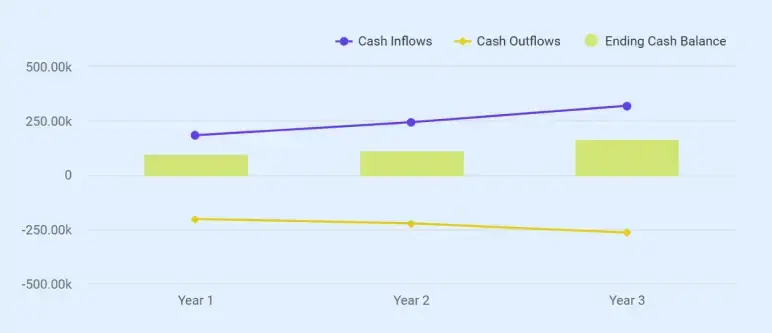
Although Year 1 indicates the average start-up deficit as programs gain momentum, Year 2 and 3 foresee positive operating outcomes as pegged revenues and diversified sources of funding. The plan is economically sound and shows long-term sustainability, balancing the role of the community and financial viability.
Revenue Forecasts (Annual)
| Year | Annual Revenue (USD) | Net Income (USD) |
|---|---|---|
| Year 1 | $182,000 | – $22,000 |
| Year 2 | $242,000 | $18,000 |
| Year 3 | $318,000 | $51,000 |
Monthly Projections—Year 1
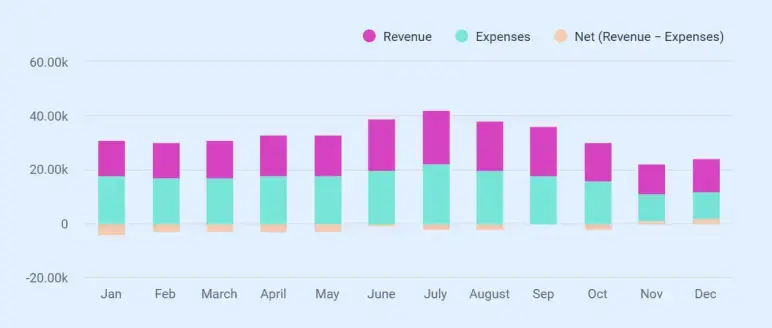
The table below breaks down expected revenue and expenses month by month for the first year of operations. It provides a clear view of cash flow patterns and helps track progress toward financial sustainability.
| Month | Revenue | Expenses | Net (Revenue – Expenses) |
|---|---|---|---|
| Jan | $13,000 | $18,000 | -$5,000 |
| Feb | $13,000 | $17,000 | -$4,000 |
| Mar | $14,000 | $17,000 | -$3,000 |
| Apr | $15,000 | $18,000 | -$3,000 |
| May | $15,000 | $18,000 | -$3,000 |
| Jun | $19,000 | $20,000 | -$1,000 |
| Jul | $20,000 | $22,000 | -$2,000 |
| Aug | $18,000 | $20,000 | -$2,000 |
| Sep | $18,000 | $18,000 | $0 |
| Oct | $14,000 | $16,000 | -$2,000 |
| Nov | $11,000 | $10,000 | $1,000 |
| Dec | $12,000 | $10,000 | $2,000 |
| Total / Year 1 | $182,000 | $204,000 | -$22,000 |
Profit & Loss Statement
| Item / Year | Year 1 | Year 2 | Year 3 |
|---|---|---|---|
| Revenue | 182,000 | 242,000 | 318,000 |
| Operating Expenses | |||
| Personnel (salaries + taxes/benefits) | 120,000 | 150,000 | 185,000 |
| Program supplies & materials | 15,000 | 18,000 | 20,000 |
| Rent & utilities | 24,000 | 24,000 | 24,000 |
| Marketing & outreach | 12,000 | 14,000 | 16,000 |
| Insurance (annual) | 3,400 | 3,800 | 4,000 |
| IT & contracted services | 4,000 | 5,000 | 5,000 |
| Maintenance & custodial | 8,000 | 6,000 | 6,000 |
| Professional fees (accounting, legal) | 4,600 | 3,200 | 4,200 |
| Misc/contingency | 13,000 | 0 | 3,800 |
| Total Operating Expenses | 204,000 | 224,000 | 267,000 |
| Net Income (Revenue – Expenses) | -22,000 | 18,000 | 51,000 |
Notes:
- Year-to-year expense growth reflects staffing scale-up, program expansion, and modest inflation.
- Year 1 loss reflects common nonprofit startup dynamics and is covered by capital funding and operating reserves.
Balance Sheet (Year End — 3 Years)
| Assets | Year 1 | Year 2 | Year 3 |
|---|---|---|---|
| Current Assets | |||
| Operating Cash Balance | $96,100 | $114,100 | $165,100 |
| Prepaid Expenses (insurance, licenses) | $6,000 | $6,000 | $6,000 |
| Other Current Assets (supplies, deposits) | $2,000 | $2,000 | $2,000 |
| Total Current Assets | $104,100 | $122,100 | $173,100 |
| Fixed Assets (Net of Depreciation) | |||
| Building Renovations & ADA Improvements | $205,000 | $195,000 | $180,000 |
| Furniture & Fixtures | $48,000 | $44,000 | $40,000 |
| Fitness & Program Equipment | $38,000 | $34,000 | $30,000 |
| Computer Lab & Technology | $22,000 | $18,000 | $15,000 |
| Security & Access Systems | $7,000 | $9,000 | $15,000 |
| Total Fixed Assets (Net) | $320,000 | $300,000 | $280,000 |
| TOTAL ASSETS | $424,100 | $422,100 | $453,100 |
| Liabilities | Year 1 | Year 2 | Year 3 |
|---|---|---|---|
| Accounts Payable | $0 | $0 | $0 |
| Short-Term Debt | $0 | $0 | $0 |
| Long-Term Debt | $0 | $0 | $0 |
| Total Liabilities | $0 | $0 | $0 |
| Net Assets (Equity) | Year 1 | Year 2 | Year 3 |
|---|---|---|---|
| Opening Net Assets (Grant & Capital Funding) | $446,100 | $428,100 | $377,100 |
| Annual Surplus / (Deficit) | – $22,000 | $18,000 | $51,000 |
| Ending Net Assets | $424,100 | $422,100 | $453,100 |
| Year 1 | Year 2 | Year 3 | |
| Total Liabilities + Net Assets | $424,100 | $422,100 | $453,100 |
Projected Cash Flow (3 Years)
| Cash Flow Item | Year 1 | Year 2 | Year 3 |
|---|---|---|---|
| Beginning Cash Balance | $118,100 | $96,100 | $114,100 |
| Cash Inflows | |||
| Program Fees & Service Revenue | $82,000 | $118,000 | $170,000 |
| Facility & Room Rentals | $40,000 | $52,000 | $68,000 |
| Grants & Community Funding (Operating) | $60,000 | $72,000 | $80,000 |
| Total Cash Inflows | $182,000 | $242,000 | $318,000 |
| Cash Outflows | |||
| Staff Salaries & Wages | $118,000 | $126,000 | $148,000 |
| Program Costs & Supplies | $26,000 | $32,000 | $39,000 |
| Facility Costs (rent, utilities, insurance) | $34,000 | $36,000 | $40,000 |
| Administrative & Marketing Expenses | $18,000 | $20,000 | $24,000 |
| Maintenance, IT & Miscellaneous | $8,000 | $10,000 | $16,000 |
| Total Cash Outflows | $204,000 | $224,000 | $267,000 |
| Net Operating Cash Flow | -$22,000 | $18,000 | $51,000 |
| Ending Cash Balance | $96,100 | $114,100 | $165,100 |
Sustainability & Long-Term Continuity Plan
Riverside Community Wellness & Learning Center aims to remain a long-standing anchor for families, youth, and seniors in Northeast Raleigh. Long-term continuity relies on stable funding, strong leadership, and community partnerships that deepen year after year.
We maintain a diversified revenue model—grants, affordable program fees, room rentals, and corporate sponsorships—to reduce reliance on any single source. A reserve fund strategy ensures that at least three months of operating expenses remain protected as the center grows. Leadership continuity is guided by an active board, annual governance reviews, and a clear succession plan for key staff roles.
Partnerships with schools, clinics, senior agencies, and local businesses strengthen program longevity and keep services responsive to local needs. As demand increases, Riverside plans to add new programs, expand training offerings, and invest in technology that keeps the center relevant and accessible.
The overall goal is simple: Build an organization that the community can depend on for decades, regardless of changes in funding cycles or leadership transitions.
The Quickest Way to turn a Business Idea into a Business Plan
Fill-in-the-blanks and automatic financials make it easy.
