




Executive Summary
Ridgeview Equine Training & Performance operates a professional horse training and rider instruction facility based in South Carolina. It’s own and led by Harper Sloan, a well-experienced equine professional with a strong background in horse development, rider coaching, and competitive program management. Operations are conducted on privately controlled acreage designed for equine training, allowing for safe, consistent, and uninterrupted use of arenas, turnout areas, and training spaces.
Ridgeview Equine Training & Performance provides programs such as:
- Foundation training
- Behavior correction
- Show preparation
- Structured rider instruction for horse owners
Moreover, the programme specializes in young and green horses, problem behaviors, and riders preparing for English and western disciplines. The operation limits horse volume to ensure high-quality training, measurable progress, and strong client retention.
The global equestrian training services market size is projected to reach $4,694 million by 2031. This growth signals a strong and expanding demand for professional equestrian training services.
Thus, the business seeks $38,000 in equipment financing to complete arena footing upgrades and training infrastructure, allowing Ridgeview Equine Training & Performance to meet rising demand safely, operate efficiently, and scale services in line with market growth. The owner contributes additional personal capital of $27,000 to support startup costs and working capital, maintaining a conservative debt position.
Ridgeview bridges the divide between the specialty trainers and the high-volume barns by providing programs, transparent pricing, and frequent updates on the progress of its clients. The sources of revenue include monthly training packages, individual and semi-lessons, clinics, and show coaching.
The break-even point in terms of monthly revenue is around $10,003, which can be realized with a reasonable amount of training horses and a stable lesson schedule. The financial projections, according to conservative estimates, indicate positive cash flow and increasing profitability in Year 2.
Target Audience
The business is supported by horse owners (ages 28–65) in the Lexington area who look for consistent, safety-focused training for young, green, or behavior-challenged horses. Riders preparing for local hunter, jumper, and western pleasure shows are served, along with adults returning to riding after time away.
A steady flow of interest is also expected from youth riders (ages 8–18) involved in 4-H and regional circuits, where structured lessons and reliable show preparation remain in demand.
Owners who value clear communication, regular progress updates, and a quieter, low-volume training environment are naturally drawn to the program. Most clients are expected to live within a 30–40 minute radius, where boarding barns operate near full capacity, and waitlists are common.
Mission
Ridgeview Equine Training & Performance exists to provide safe, structured horse training and rider instruction in a low-volume setting. We focus on building well-mannered horses and confident riders through consistent methods, clear communication, and responsible care. Our programs prioritize safety, steady progress, and the long-term well-being of both horse and rider.
Financials
The startup costs are estimated to amount to $65,000, and the costs are associated with footing upgrades, round pen, fencing work, equipment, tack, insurance, and working capital. It has been budgeted to receive funding consisting of a combination of owner capital and equipment loan, which will enable the operation to get off with reasonable debt and already have the necessary infrastructure in place. First of all, the revenue will be produced by monthly training programs that will be backed by lessons, clinics, and show coaching.
The annual revenue is estimated at $126,560 during the first year of operation, which will then grow over time as the number of clients grows and seasonal demand improves. The operating margins have been maintained at a low level in order to represent the reality of a training-oriented business.
The breakdown is estimated to break even at around $10,003 monthly, something achieved by having a limited number of training horses and a regular lesson program. There will be seasonal variations in the cash flow, but the reduction of cash flow during winter will be compensated for by the clinics and behavior-based programs.
All in all, the financial perspective is defined by a realistic capacity, local demand, and disciplined operating costs.
Want a professional plan like this sample?
Upmetrics AI generate a complete, investor-ready plan for you
Plans starting from $14/month

Company Summary
The Ridgeview Equine Training & Performance operates from 2143 Ridgeview Farm Road in Lexington, South Carolina, positioned in a semi-rural equine corridor west of town.
Our location offers a natural advantage, surrounded by small farms, boarding barns, and active show circuits. Moreover, the area attracts riders who look for structured training and reliable horse development services. Easy trailer access via South Carolina-6 supports year-round client flow from nearby communities.
The company functions as a South Carolina LLC, maintaining a clear legal and operational structure. This structure allows the business to remain efficient, consistent, and aligned with established training standards.
We work on one purpose: To develop horses and riders through safe, structured, and skill-based programs. Ridgeview Equine delivers training that builds confidence, improves performance, and respects the long-term well-being of every horse in its care.
Ownership
The business is 100% owned by Harper Sloan, who acts as the Head Trainer, in charge of all training programs, activities, and standards of the facility. This form of ownership ensures that the decision-making process remains the same and the business has a clear and coherent approach to the horse training business.
Core Principles
Ridgeview Equine Training and Performance operates under a precise code of ethics that informs all training, communication with clients, and horse care decisions. These values make the program the same, safe, and anchored to long-term outcomes.
1. Welfare First
The facility puts the horse’s physical and mental well-being at the center of all training. Each program follows safe handling, balanced workloads, and calm training methods.
2. Clear Communication
Training focuses on readable cues, consistent routines, and straightforward progress tracking. Riders and owners receive honest updates so they can understand their horse’s development.
3. Structured Progress
Every horse follows a step-by-step plan that builds a foundation before performance. The business avoids shortcuts and prioritizes sustainable improvement over quick fixes.
4. Safety in Every Environment
From barn handling to arena work, the program applies strict safety standards for horses, riders, and staff. Proper equipment, warm-ups, and controlled environments remain non-negotiable.
5. Professional Conduct
Clients experience punctual scheduling, respectful communication, and reliable service delivery. The company maintains a positive environment where horses and riders can learn without pressure or chaos.
Startup Summary
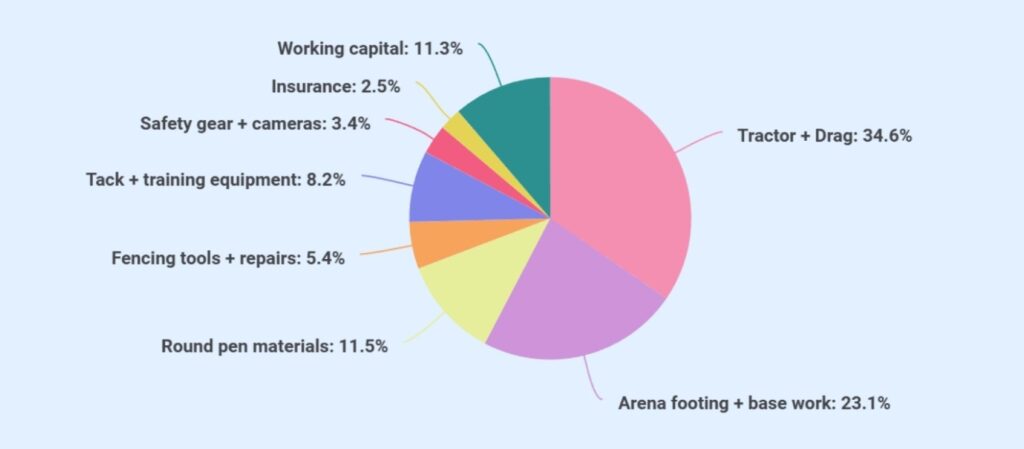
Launching the facility requires a mix of equipment, safety upgrades, and essential working capital. The investment focuses on building a safe, functional training environment from day one. Below is a breakdown of the major startup costs.
| Category | Amount ($) |
|---|---|
| Tractor + Drag (used / partial) | $22,500 |
| Arena footing + base work | $15,000 |
| Round pen materials | $7,500 |
| Fencing tools + repairs | $3,500 |
| Tack + training equipment | $5,300 |
| Safety gear + cameras | $2,200 |
| Insurance | $1,650 |
| Working capital | $7,350 |
| Total Startup Cost | $65,000 |
Short-Term Goals (Years 1–2)
Our short-term objectives will deal with stabilizing operations, developing a reputation with our clients, and achieving financial stability.
- Train 25-30 horses (Year 1) using a regulated training process with a focus on safety and consistency.
- Establish a base of loyal horse owners and young riders by partnering with local businesses in referrals and using current customers.
- Keep the training load small yet manageable so that you can achieve good results and good communication with the owner.
- Develop Ridgeview Equine Training & Performance as a consistent, professional alternative in the local equine market.
Long-Term Goals (Years 3 and Beyond)
Our long-term goals center on sustainable growth, reputation, and continued reinvestment in the business.
- Increase training capacity gradually without compromising safety or horse care standards.
- Add specialized training options as demand grows, including show preparation and behavior-focused programs.
- Build a reputation as one of the region’s most trusted and safety-focused training facilities.
- Strengthen partnerships with boarding barns, youth programs, and regional show circuits.
- Continue upgrading arenas, equipment, and facilities to meet industry standards and client expectations.
Market Analysis
South Carolina’s horse industry is growing fast, and the demand for quality equine services continues to rise. The market offers clear opportunities for businesses that can meet the needs of a rapidly expanding horse-owning population.
Market Overview
The global equestrian training services market was valued at approximately $3,160 million in 2024 and is projected to grow to $4,694 million by 2031, reflecting a 5.9% compound annual growth rate.
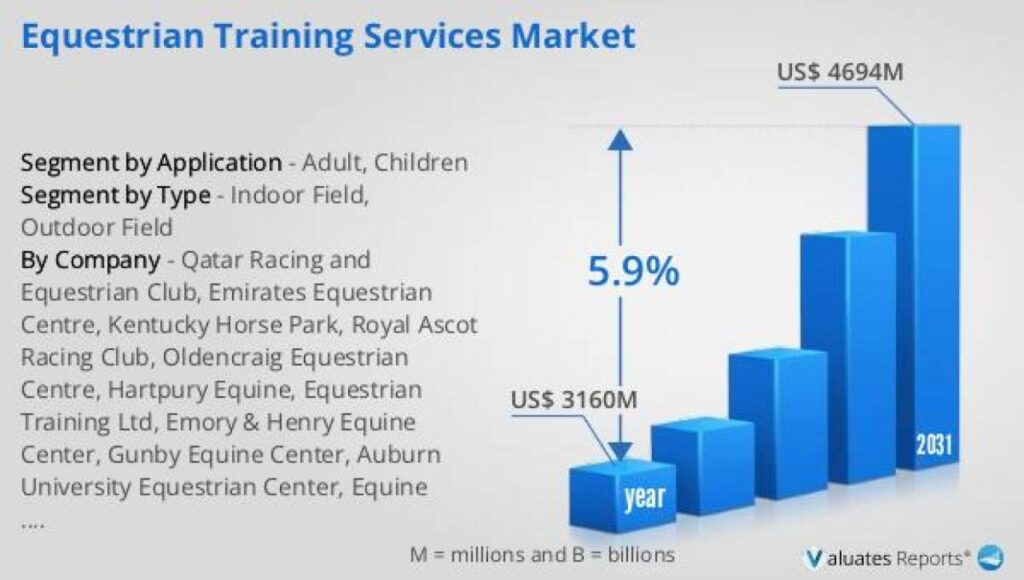
This growth is driven by rising participation in recreational riding, increased spending on professional training, and a stronger focus on horse welfare, behavior, and performance across both competitive and non-competitive segments.
However, South Carolina’s equine industry continues to grow at a strong pace, creating a solid market for training services in Lexington and surrounding counties. The state now supports over 65,100 horses.
Target Clients
Ridgeview Equine Training & Performance serves a focused group of riders and horse owners who need safe, structured training and instruction.
| Target Client Group | Description |
|---|---|
| Horse owners (ages 28–65) | Adult owners seeking reliable training and behavior support for their horses. |
| Youth riders (ages 8–18) | Young riders involved in 4-H or local riding programs who need supervised instruction. |
| Adult amateur riders | Recreational or returning riders looking to build skills and confidence. |
| Owners of young or green horses | Clients needing foundation training for young or inexperienced horses. |
| Show-focused riders | Riders preparing for local hunter, jumper, or western pleasure classes. |
Customer Needs and Buying Behavior
Horse owners in South Carolina—especially in Lexington County—look for reliable, high-quality care and training options, and the local demand reflects that.
- Most boarding barns operate at or near full capacity, which shows that owners are actively seeking more available, well-managed facilities.
- Youth programs and regional riding circuits remain active year-round, so families consistently invest in lessons, coaching, and competition prep.
- Training services repeatedly exceed supply, with several barns maintaining waitlists—an indicator that riders are willing to pay for trusted, results-driven trainers.
Barriers to Entry
Entering the horse training and care market in South Carolina comes with several practical and financial barriers that limit new competitors.
- High startup costs: Quality footing, fencing, tractors, arena equipment, and safe facilities require significant upfront investment.
- Reputation and trust: Horse owners only work with trainers who have proven experience, clear communication, and a track record of safe handling.
- Limited suitable land: Properties with the right acreage, zoning, and layout for equine operations are scarce and expensive in the Lexington area.
- Steady labor needs: Skilled barn help, even part-time, is difficult to find and retain, especially for early-morning and weekend work.
- Operational standards: Managing horse care, safety, scheduling, and emergencies requires professional systems that new operators often lack.
How We Overcome These Barriers
We address these challenges by investing in proper equipment from day one, running a low-volume program that emphasizes safety and results, and using structured software (EC Pro) to manage communication and operations. A clear training philosophy, consistent progress updates, and a calm facility environment help us build trust quickly and differentiate from high-volume or inconsistent programs.
Market Potential
The horse industry in South Carolina is on the path to stable growth that has been enabled by new policies and a strong tourism foundation. Recent 2025 bills, such as the Equine Advancement Act (SB 344), are an indication of a significant change in the support of the state.
However, the state will enhance infrastructure, trails, and incentives, which will make the ownership of horses and horse riding more affordable by developing an Equine Commission and development fund. Such changes support daily riders, training, and youth programs- not only racing.
The other layer of opportunity is tourism. Such big events as the Carolina Cup, which attracts thousands of viewers, and other large events, such as the Aiken Triple Crown, keep coming to gather visitors who take part in riding demonstrations, clinics, and tours of the barns. This crossover traffic brings in new players into the sport and directs more money into the local equine business.
Together, these factors create a market with rising interest, stronger industry backing, and more opportunities for training facilities to grow.
Competitor Analysis
| Competitor | Key Strengths | Key Weaknesses |
|---|---|---|
| Blue Haven Stables | Established reputation, large facility, steady lesson demand | High trainer-to-horse ratio limits individual attention |
| Silver Spur Training Barn | Strong performance record, experienced trainers, and show exposure | Focused mainly on advanced riders, less accessible for beginners |
| Palmetto Equine Center | Multiple disciplines offered, modern amenities, and event hosting | Higher pricing and larger programs reduce personalized training |
Differentiation
In a market where the majority of the barns consider volume or one of the various styles of riding, Ridgeview Equine is unique. The focus of the program is to create responsive horses and calm riders, and with this, the business stands out well in the local training environment.
The facility can be distinguished by:
1) Behavior-based training: Every horse undergoes patient, remedial training that is aimed at achieving trust, alleviating anxiety, and establishing long-term change.
2) Diversity in English and western fields: Riders do not have to change barns to train in hunter, jumper, western pleasure, or general performance.
3) Less training load: The trainers purposefully reduce the size of the program group of horses so that there are always the same number of horses to work with, so that they can handle them better, be safer, and progress faster.
4) Progress updates every week: The owners are updated transparently about the process of training, thus remaining engaged in it and reassured.
5) Live video assessment: With this method, riders can obtain visual feedback during their lessons and correct their problems in the shortest possible time, developing better fundamentals.
Services
Ridgeview Equine Training and Performance offers structured training programs designed to produce well-mannered, responsive, and confident horses. The training center offers comprehensive training, including behavior modification, show preparation, and rider training, all delivered through a well-defined, results-based delivery model. Each service is aimed at safety, predictability, and quantifiable improvement to both the rider and the horse.
Service Packages and Pricing
| Category | Service | Description | Price |
|---|---|---|---|
| Training Programs | Full Training | 5 sessions per week; groundwork + riding | $1,050/month |
| Half Training | 3 sessions per week; mix of groundwork and riding | $690/month | |
| Young Horse Start | 8-week start program for green or unstarted horses | $1,850/program | |
| Behavior Correction | Minimum 4 weeks; manners, loading, confidence work | Starting at $900 | |
| Rider Instruction | Private Lesson | One-on-one coaching | $65/session |
| Semi-Private Lesson | Two riders per session | $45/rider | |
| Ride-and-Learn Package | 4-lesson structured package | $240/package | |
| Clinics & Add-Ons | Weekend Clinic | Small-group sessions (max 6 riders) | $95/rider |
| Trailer Loading Session | Focused groundwork loading training | $85/session | |
| Show Coaching | Coaching at local shows | $55/class | |
| Boarding (Training Horses Only) | Training Board (Stall) | Full care + handling for horses in training | $880/month |
| Short-Term Training Board | For horses in short programs (weekly) | $230/week |
Operational Suppliers
Ridgeview Equine Training & Performance relies on a set of trusted vendors to maintain consistent training operations, safe footing, and reliable equipment. These suppliers support daily training activities, horse care, scheduling, and facility upkeep.
1) Equipment & Facility Support
- Used Kubota L3301 Tractor: Used for arena maintenance and farm operations
- ABI Dragmaster: Primary arena drag for consistent footing
- Carolina Arena Equipment: Provider of footing materials and base work
2) Tack & Gear
- Circle Y
- HDR
- Weaver Leather
To get saddles, bridles, and training tack.
3) Feed & Supplements
- Triple Crown
- Purina Impact
For high-quality supplements used for horses in training
4) Software & Administration
- EC Pro: For scheduling, invoicing, and a client communication platform
These vendors provide reliability, quality, and long-term support, keeping the facility efficient and aligned with professional training standards.
Service Delivery Model
We’ll prioritize training and services that keep training consistent, safe, and easy for clients to follow. Each horse and rider moves through a clear plan designed around their goals and current skill level.
- Training begins with groundwork to build manners, confidence, and clear communication.
- Horses move into riding work only after they show reliability and understanding on the ground.
- Each horse follows a weekly schedule, so progress stays steady and predictable.
- Riders receive lessons that match their horse’s stage of development to keep both aligned.
- Weekly updates are sent through EC Pro, so owners always know what was done and what comes next.
Capacity and Service Limits
The facility operates with controlled capacity to ensure safe handling, consistent training, and individual attention for every horse and rider.
| Category | Capacity/Limit | Purpose |
|---|---|---|
| Full-Time Training Horses | 6 horses | Ensures consistent, hands-on training |
| Short-Term/Behavior Cases | 1–2 horses | Keeps focus during intensive behavior work |
| Weekly Rider Lessons | 20 lessons per week | Prevents rushed sessions; maintains teaching quality |
| Clinic Participants | 6 riders per clinic | Creates a safe, manageable learning group |
| Training Board | Only for active training horses | Reserves space for program clients |
If you’re stuck on what details to include in your plan, use our advanced AI research assistant to research your market, validate assumptions, and write a plan that stands out.
Marketing and Sales Strategy
Ridgeview Equine will build its client base through steady and targeted outreach. The focus stays on reaching horse owners who value safety, consistent handling, and clear communication.
The marketing plan combines local visibility with a strong digital presence—targeted social media ads, partnerships with boarding barns, and involvement in nearby shows. Short training clips, before-and-after updates, and rider progress stories help build trust online and show the program’s results.
The sales strategy relies on relationships. Most new clients come from referrals, so the program emphasizes dependable service, clear pricing, and regular communication. Strong ties with vets, farriers, and youth programs create a steady, long-term referral network while keeping the barn connected to the Lexington equine community.
Marketing Channels
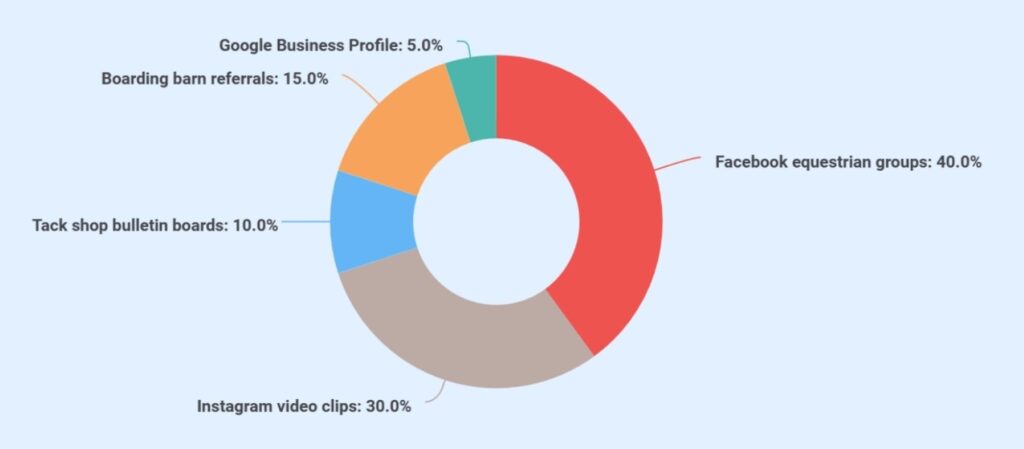
Our monthly marketing budget of $650 will be allocated across the following channels.
| Channel | Percentage |
|---|---|
| Facebook equestrian groups | 40% |
| Instagram video clips | 30% |
| Tack shop bulletin boards | 10% |
| Boarding barn referrals | 15% |
| Google Business Profile | 5% |
Marketing Challenges
Ridgeview Equine Training & Performance operates in a market where trust and reputation drive most buying decisions. Many local barns already rely on long-standing trainers, which makes it harder for new programs to earn visibility. Rural marketing also presents challenges—online ads reach horse owners unevenly, and many clients prefer referrals over digital promotions.
Seasonal slowdowns affect engagement as well. Riders stay less active in winter, reducing lesson inquiries and clinic attendance. Building a consistent flow of training clients requires steady content, regular community presence, and strong relationships with nearby barns.
Sales Strategy
The sales approach focuses on steady relationship-building and consistent visibility within the local equine community. The goal is simple: Show real results, build trust, and give riders and horse owners clear reasons to choose Ridgeview over larger, high-volume barns.
Weekly training progress posts
Share short clips and updates to show real improvement and build credibility. These posts remind local owners that Ridgeview stays active, consistent, and transparent.
Youth camps
Bring new riders into the program early and introduce families to the training style. Camps also help parents see how structured, safe, and well-run the environment is.
Trainer partnerships with local barns
Offer support to barns without full-time trainers, creating reliable referral channels. These partnerships often turn into long-term relationships that keep horses coming in year-round.
Referral discount
Provide returning clients with $50 off their next invoice for every successful referral. It rewards loyal clients while keeping the program front-of-mind in their barn circles.
Free evaluation ride
Allow new clients to experience the training approach before committing. This first session often helps owners understand exactly where their horse stands and what progress they can expect.
A business plan shouldn’t take weeks
Operations and Staffing Plan
Ridgeview Equine Training & Performance runs on a structured daily schedule that keeps horses progressing safely and clients informed. The operation focuses on consistent routines, clear communication, and efficient use of the facility so each horse receives the right level of attention. Every part of the workflow, from morning care to training blocks and client updates, is designed to support steady, measurable results.
Working Hours
Monday–Saturday: 7:30 AM to 6:30 PM
Sunday: By appointment only
Workflow
- Morning feeding and turnout: Horses settle into the day with a calm start, which sets the tone for productive training.
- Training block (8:30 AM–12:30 PM): Young, green, and behavior-focused horses work during the quietest hours, when concentration and safety are highest.
- Lessons (2:00 PM–6:00 PM): Riders train in the afternoon when schedules open up, allowing for consistent after-school and after-work sessions.
- Evening checks and video review: Horses are brought in, inspected, and any training videos are reviewed so adjustments can be made the next day.
- Weekly updates to clients: Owners receive simple, clear summaries that show progress and outline the next week’s goals.
Hiring Plan
| Role | Employment Type | Key Responsibilities | Purpose in Operations |
|---|---|---|---|
| Head Trainer (Harper) | Full-time | Oversees daily training programs, conducts lessons, develops horses and riders, and manages client relationships | Ensures consistent training quality, safety standards, and long-term client retention |
| Stable Hand | Part-time | Feeding, stall cleaning, turnout, facility upkeep, basic horse care support | Keeps daily barn operations running smoothly while controlling labor costs |
| Groom & Show Assistant | Weekends / Show Days | Grooming, tacking, horse prep for lessons and competitions, travel assistance | Supports peak activity periods and maintains professional presentation at events |
| Bookkeeper | Quarterly (Contract) | Financial reconciliation, expense tracking, tax preparation support | Maintains accurate financial records without the cost of full-time staff |
| Farrier & Veterinarian | Outside Vendors | Hoof care, routine health checks, emergency medical services | Provides specialized care while keeping fixed overhead low |
Risk Management & Mitigation
Ridgeview Equine Training & Performance manages risk through consistent routines, clear safety practices, and strong relationships with veterinary and farrier professionals. The goal is to reduce disruptions, protect the horses in training, and maintain steady operations year-round.
Horse injuries delaying training
Mitigated through structured warm-ups, gradual conditioning, and quick access to veterinary care when needed.
Weather disruptions
Managed by adjusting schedules, using alternative groundwork plans, and moving toward a covered training area in Year 2.
Liability exposure
Reduced by maintaining strong insurance coverage, using clear client waivers, and posting approved South Carolina equine liability signage.
Seasonal lesson slowdowns
Balanced with behavior-focused clinics, evaluation specials, and flexible training programs during the winter months.
Regulation and Compliance
We’ll follow all state and local requirements to operate safely and remain fully compliant as an equine facility in South Carolina. These measures protect the business, clients, and horses while ensuring smooth day-to-day operations.
| Compliance Area | Description | Ongoing Management |
|---|---|---|
| Livestock Facility Registration | Registered with South Carolina livestock and agricultural authorities to operate as a compliant equine training facility and meet state animal care and disease control standards. | Registration status reviewed and renewed as required by state regulations. |
| Farm Liability Insurance | Comprehensive farm liability insurance covering accidents, property damage, and injury claims related to training, boarding, and instruction activities. | Policies are reviewed annually and adjusted based on horse count and service scope. |
| Equine Liability Signage | State-required equine liability signs are posted at the arena, barn entrances, and client staging areas to disclose inherent equine risks. | Signage is inspected regularly to ensure visibility and legal compliance. |
| Fire Safety & Emergency Access | Property maintained with clear trailer routes, wide drive lanes, and accessible barn aisles for emergency response and evacuation. | Routine checks of gates, lanes, and parking areas to ensure unobstructed access. |
Financial Plan
The financial plan outlines the startup costs, projected revenues, and expected expenses for Ridgeview Equine Training & Performance. It provides a clear picture of how the business will reach profitability, manage cash flow, and maintain sustainable operations over the first three years. This plan also highlights break-even points and funding requirements to ensure the facility operates efficiently while supporting growth.
Key Financial Assumption
| Item | Assumption |
|---|---|
| Full Training + Board | Avg 4 horses Year 1; 5 Year 2; 6 Year 3 |
| Lessons | 20 lessons per week average |
| Clinics | 2 weekend clinics/month; 6 riders; $95 per rider |
| Variable Cost Ratio | 25% of revenue (feed, bedding, care, consumables) |
| Stable Hand | $14/hr PT (~$1,120/month) |
| Groom / Assistant | $16/hr weekends (~$512/month) |
| Bookkeeper | $300/quarter |
| Insurance | $4,200/year (care, custody, control included) |
| Marketing | $650/month |
| Equipment Depreciation | Straight-line over 5 years |
| Equipment Loan | $38,000 at 8.25% for 60 months |
| Owner Draw | Owner compensation is paid as salary beginning Year 1; no owner draws are taken during the projection period. |
Annual Revenue
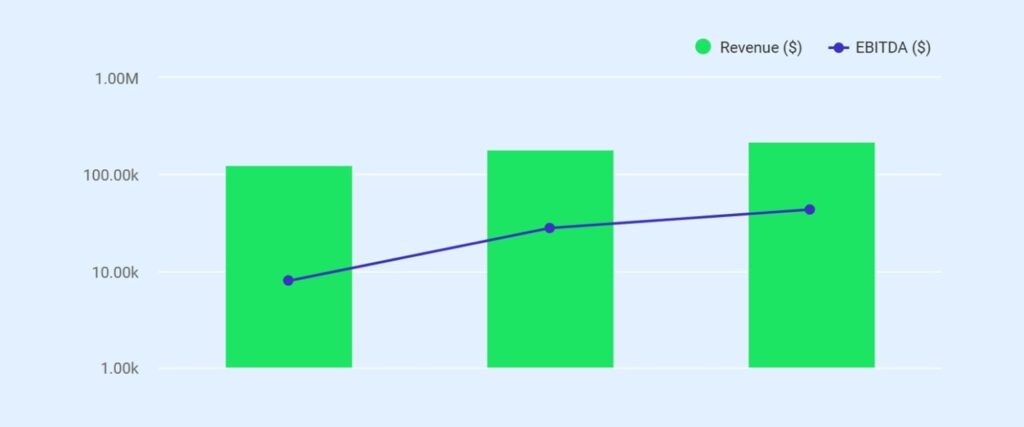
| Metric | Year 1 | Year 2 | Year 3 |
|---|---|---|---|
| Total Revenue | $126,560 | $183,400 | $221,360 |
| EBITDA | $7,900 | $27,800 | $43,200 |
| EBITDA Margin | 6.20% | 15.20% | 19.50% |
Monthly Revenue (Year 1)
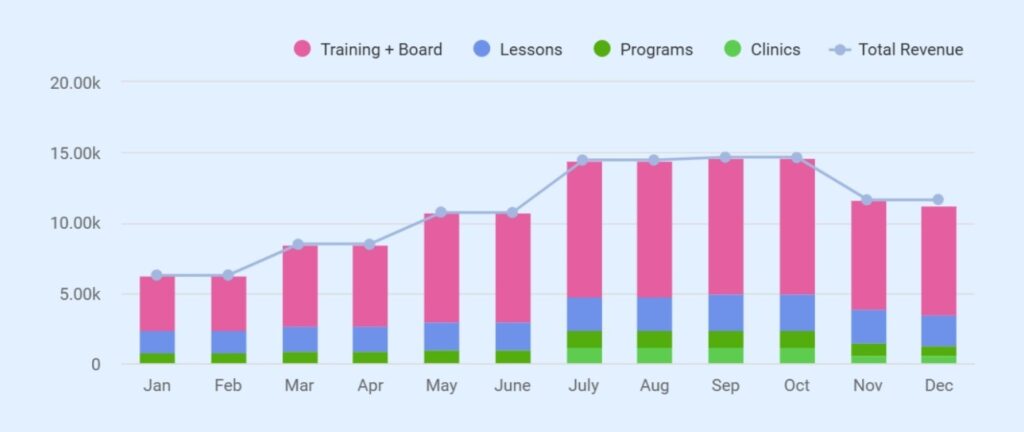
| Month | Training + Board | Lessons | Programs | Clinics | Total Revenue |
|---|---|---|---|---|---|
| Jan | $3,860 | $1,600 | $800 | $0 | $6,260 |
| Feb | $3,860 | $1,600 | $800 | $0 | $6,260 |
| Mar | $5,790 | $1,800 | $900 | $0 | $8,490 |
| Apr | $5,790 | $1,800 | $900 | $0 | $8,490 |
| May | $7,720 | $2,000 | $1,000 | $0 | $10,720 |
| Jun | $7,720 | $2,000 | $1,000 | $0 | $10,720 |
| Jul | $9,650 | $2,400 | $1,200 | $1,200 | $14,450 |
| Aug | $9,650 | $2,400 | $1,200 | $1,200 | $14,450 |
| Sep | $9,650 | $2,600 | $1,200 | $1,200 | $14,650 |
| Oct | $9,650 | $2,600 | $1,200 | $1,200 | $14,650 |
| Nov | $7,720 | $2,400 | $900 | $600 | $11,620 |
| Dec | $7,720 | $2,200 | $700 | $600 | $11,220 |
| Total | $81,060 | $24,000 | $12,000 | $9,500 | $126,560 |
Profit & Loss Statement (3 Years)
| Category | Year 1 | Year 2 | Year 3 |
|---|---|---|---|
| REVENUE | |||
| Full Training & Board | $81,060 | $115,800 | $138,960 |
| Lessons (Private & Semi-Private) | $24,000 | $33,600 | $38,400 |
| Young Horse / Behavior Programs | $12,000 | $18,000 | $22,000 |
| Clinics & Add-Ons | $9,500 | $16,000 | $22,000 |
| Total Revenue | $126,560 | $183,400 | $221,360 |
| COST OF SALES | |||
| Feed, Bedding, Care, Consumables (25%) | $31,640 | $45,850 | $55,340 |
| Total Cost of Sales | $31,640 | $45,850 | $55,340 |
| GROSS PROFIT | $94,920 | $137,550 | $166,020 |
| Gross Margin (%) | 75.00% | 75.00% | 75.00% |
| EXPENSES | |||
| Payroll (Staff + Taxes) | $28,500 | $33,000 | $36,500 |
| Owner Salary | $18,000 | $24,000 | $30,000 |
| Insurance | $4,200 | $4,300 | $4,400 |
| Utilities | $6,200 | $7,400 | $8,200 |
| Repairs & Maintenance | $14,000 | $16,500 | $19,500 |
| Facility / Property Costs | $18,000 | $18,500 | $19,000 |
| Marketing | $7,800 | $8,400 | $9,000 |
| Office & Admin | $3,600 | $4,200 | $4,900 |
| Professional Fees | $2,000 | $2,400 | $2,800 |
| General Operating Overhead | $2,720 | $1,050 | $1,520 |
| Total Expenses | $87,020 | $109,750 | $122,820 |
| EBITDA | $7,900 | $27,800 | $43,200 |
| Depreciation | $7,800 | $7,800 | $7,800 |
| Interest Expense | $3,000 | $2,300 | $1,500 |
| NET INCOME (PRE-TAX) | -$2,900 | $17,700 | $33,900 |
Cash Flow Statement (3 Years)
| Cash Flow Item | Year 1 | Year 2 | Year 3 |
|---|---|---|---|
| CASH FLOW FROM OPERATING ACTIVITIES | |||
| Net Income (Pre-Tax) | -$2,900 | $17,700 | $33,900 |
| Add: Depreciation | $7,800 | $7,800 | $7,800 |
| Operating Cash Flow | $4,900 | $25,500 | $41,700 |
| CASH FLOW FROM INVESTING ACTIVITIES | |||
| Equipment & Facility Improvements | -$65,000 | $0 | $0 |
| Net Investing Cash Flow | -$65,000 | $0 | $0 |
| CASH FLOW FROM FINANCING ACTIVITIES | |||
| Owner Capital Injection | $27,000 | $0 | $0 |
| Equipment Loan Proceeds | $38,000 | $0 | $0 |
| Loan Principal Payments | -$6,480 | -$7,000 | -$7,600 |
| Net Financing Cash Flow | $58,520 | -$7,000 | -$7,600 |
| NET CHANGE IN CASH | -$1,580 | $18,500 | $34,100 |
| Cash at Beginning of Year | $0 | $11,420 | $29,920 |
| Cash at End of Year | $11,420 | $29,920 | $64,020 |
Balance Sheet (3 Years)
| Category | Year 1 | Year 2 | Year 3 |
|---|---|---|---|
| ASSETS | |||
| Cash | $11,420 | $29,920 | $52,020 |
| Equipment & Improvements (at Cost) | $65,000 | $65,000 | $65,000 |
| Less: Accumulated Depreciation | -$7,800 | -$15,600 | -$23,400 |
| Net Equipment & Improvements | $57,200 | $49,400 | $41,600 |
| Total Assets | $68,620 | $79,320 | $93,620 |
| LIABILITIES | |||
| Equipment Loan (Ending Balance) | $31,520 | $24,520 | $16,920 |
| Total Liabilities | $31,520 | $24,520 | $16,920 |
| EQUITY | |||
| Owner Capital | $27,000 | $27,000 | $27,000 |
| Retained Earnings (Cumulative) | -$2,900 | $14,800 | $48,700 |
| Total Equity | $24,100 | $41,800 | $75,700 |
| TOTAL LIABILITIES + EQUITY | $68,620 | $79,320 | $93,620 |
Need to create solid financial projections?
AI forecasting tool to build realistic, visually-appealing financials.
Break-Even Analysis
| Description | Amount (USD) |
|---|---|
| Operating expenses | $87,020 |
| Interest expense | $3,000 |
| Total fixed costs (annual) | $90,020 |
| Monthly Fixed Cost | $7,502 |
| Gross margin | 75% |
| Monthly break-even revenue | $10,003 |
Loan Repayment
The equipment loan for Ridgeview Equine Training & Performance will be repaid over five years with a fixed 8.25% interest rate.
Loan Terms
- Principal: $38,000
- Interest Rate: 8.25% fixed
- Term: 5 years (60 months)
- Monthly Payment: $790
- Annual Payment: $9,480
| Metric | Year 1 | Year 2 | Year 3 | Year 4 | Year 5 |
|---|---|---|---|---|---|
| Beginning Balance | $38,000 | $31,520 | $24,520 | $16,920 | $8,720 |
| Annual Payment | $9,480 | $9,480 | $9,480 | $9,480 | $9,480 |
| Principal Paid | $6,480 | $7,000 | $7,600 | $8,200 | $8,720 |
| Interest Paid | $3,000 | $2,480 | $1,880 | $1,280 | $760 |
| Ending Balance | $31,520 | $24,520 | $16,920 | $8,720 | $0 |
The Quickest Way to turn a Business Idea into a Business Plan
Fill-in-the-blanks and automatic financials make it easy.
