




Your driving record won’t get you a loan. Your business plan will!
Here’s the truth: Most trucking entrepreneurs are great operators but have never written a business plan in their life. That gap between being a skilled driver and a credible borrower is exactly where most loan applications fall apart.
Lenders funding trucking companies want to see net revenue after broker fees, a realistic break-even analysis, compliance details, and a clear repayment plan.
If your business plan doesn’t answer that clearly, the application rarely moves forward.
That’s why we put together this real-world sample plan of SwiftRoute Logistics to help you write the way lenders actually want to read it. Go through it section by section, and use it to build your own plan accordingly.
Logistics Business Plan Sample (SwiftRoute Logistics)
Executive Summary
SwiftRoute Logistics is a small trucking and freight logistics company based in Dallas, TX. The company provides regional freight services using an individual Class 8 tractor with a 53-foot dry van trailer.
It specializes in delivering non-refrigerated consumer goods, retail, and palletized freight in full truckloads (FTL). Our service area spans 500 miles of Texas and neighboring states.
The Opportunity
Texas has the busiest freight corridor in the country. I-30, I-35, and I-20 highways serve major distribution centers in San Antonio, Austin, Dallas, Houston, Fort Worth, Oklahoma City, Little Rock, and beyond. This supports continuous freight movement between warehouses, manufacturers, and retail distribution hubs.
Also, the Dallas–Fort Worth region serves as a major logistics hub, and moves large volumes of freight between nearby cities on a daily basis. Brokers and shippers, therefore, need reliable carriers to deliver the palletized dry van freight.
Many large trucking companies focus mainly on long-distance contract freight. Hence, regional shipments between nearby distribution centers are often handled by smaller carriers.
SwiftRoute targets these local dry van deliveries within a 500-mile radius. This strategy enables us to serve with better response times, regular route coverage, and reliable services where bigger carriers fail.
Ownership & Management
Marcus Hill (60% ownership) handles truck operations and sales procedures. He has over 6 years of experience in local freight transportation. Olivia Hill (40% ownership) manages administration, compliance, and dispatch. She has experience in bookkeeping and small business management. Both owners actively operate the business and provide personal guarantees.

Business Model
SwiftRoute operates on an asset-based model, generating revenue primarily through contracted freight loads. We haul dry van freight and focus on providing reliable regional freight services for brokers and shippers. Revenue is earned based on the number of loaded miles hauled.
Being a single-truck owner-operated business provides a key advantage. Operating costs stay low because we do not maintain a large fleet or additional payroll.
Direct owner involvement improves service reliability and decision-making. This lean structure allows SwiftRoute to stay flexible, control expenses, and protect profit margins while building steady freight relationships.
Target Market
SwiftRoute’s services cater to a variety of businesses that require reliable regional freight transportation. Our target audience includes:
- Freight brokers
- Direct shippers
- Small to medium-sized manufacturers
- Retailers with regional distribution needs
- E-commerce businesses that require consistent delivery solutions
Financial Overview
At SwiftRoute, we’re requesting a $110,000 Wells Fargo small business term loan to finance the purchase of a Class 8 tractor, dry van trailer, and essential operating equipment. Total startup capital is $150,000, along with the contribution of $40,000 owners’ equity.
With the conservative estimates, the business projects to reach $186,750 in gross freight revenue in Year 1, $264,000 in Year 2, and $306,000 in Year 3. Year 1 focuses on establishing operations and covering startup expenses. The company expects to move into stable profitability starting in Year 2, as consistent freight lanes and broker relationships develop. Continued revenue growth and disciplined cost control strengthen profitability further in Year 3.
Company Overview
SwiftRoute Logistics is a small trucking firm that provides regional freight services within a radius of 500 miles and the surrounding neighbourhoods. The company will be established to offer efficient, low-cost solutions to third-party brokers and direct shippers.
Business Legal Structure
SwiftRoute is a multi-member limited liability company (LLC) established in the State of Texas, where Marcus Hill and Olivia Hill are the co-owners. The reason we selected the LLC type of structure was due to the fact that it shields our individual assets against business liabilities and provides us with tax benefits and a leeway in management. This structure also helps the business to become more credible, attract investors, and keep things simple.
Location & Facilities
The office is located at 2124 Industrial Parkway, Suite 104, in the Design District of Dallas, TX, 75207. The locality is significant due to two practical considerations. To begin with, Dallas is the biggest inland freight center in the Southern United States. All interstate highways (such as I-35, I-30, and I-20) run through it, connecting San Antonio, Austin, Houston, Fort Worth, Oklahoma City, Little Rock, and others.
Second, the Industrial Parkway location offers a yard where the tractor and trailer can park on the property without the need to pay to rent a commercial truck to park in a separate location.
The 1,200-square-foot facility has an office area that can be used for dispatch, billing, and compliance documentation. Olivia spends her days in the office. In between the journeys, Marcus looks through the office to review routes, finalize paperwork, file delivery documents, and plan future loads. This space is rented at the rate of $1,800 each month, that is, $21,600 annually.
Owner’s Background
| Name | Total Experience | Previous Companies | Position | |
|---|---|---|---|---|
 |
Marcus Hill | 6 years | Schneider National J.B. Hunt Transport Services |
Lead Driver / Operations |
 |
Olivia Hill | 5 years | Intuit QuickBooks ProAdvisor Network H&R Block Business Services |
Admin / Compliance Manager |
Marcus Hill has 6 years of experience in the trucking industry as a driver, including regional freight and safety. Olivia Hill has 5 years of experience in administration and bookkeeping, having operated a small business.
Marcus and Olivia started SwiftRoute after noticing a clear gap in reliable regional freight services across Texas lanes. Marcus spent years on the road and saw how inconsistent carriers caused delays for brokers and shippers.
Olivia understood the operational side of running a small business and knew how to keep paperwork, compliance, and finances organized. They combined that experience to build a lean trucking company focused on reliable regional hauling and disciplined cost control.
Our Mission
We will offer reliable regional dry van freight transportation within Texas and other neighboring states. We specialize in secure operations, regular localized routes, and dependable services to brokers and shippers requiring reliable trucking between mainstream distribution centers.
Startup Costs Summary
The following table outlines the key startup costs required to launch SwiftRoute’s trucking operations and begin hauling freight.
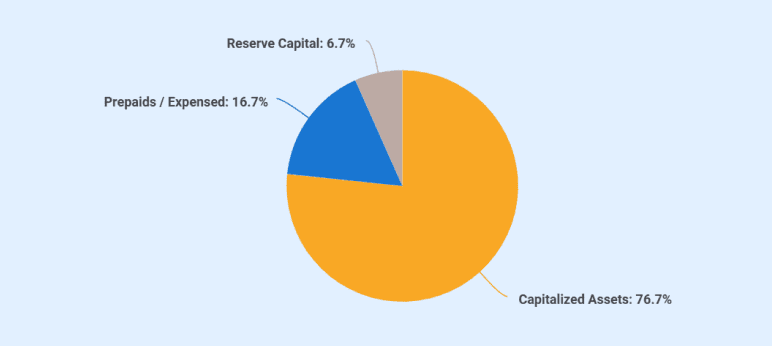
| Category | Cost |
| CAPITALIZED ASSETS | |
| Used Class 8 tractor (sleeper cab) | $75,000 |
| Used 53-ft dry van trailer | $25,000 |
| Vehicle taxes, registration (capitalized) | $10,000 |
| ELD device & GPS tracking | $3,000 |
| Office equipment | $2,000 |
| Subtotal Capitalized Assets | $115,000 |
| PREPAID EXPENSES | |
| Insurance down payment | $15,000 |
| Licensing & filings | $5,000 |
| Registration filing fees | $2,000 |
| Office setup supplies & consumables | $3,000 |
| Subtotal Prepaids / Expenses | $25,000 |
| CASH RESERVE | |
| Working capital reserve | $10,000 |
| Subtotal Cash Reserve | $10,000 |
| TOTAL STARTUP COSTS | $150,000 |
Market Analysis
In 2025, the Texas Freight and Logistics Market was estimated to be $139.19 billion. It is projected to reach $172.24 billion in 2031, with a compound annual growth rate (CAGR) of 3.62% over the 2026 to 2031 forecast period.
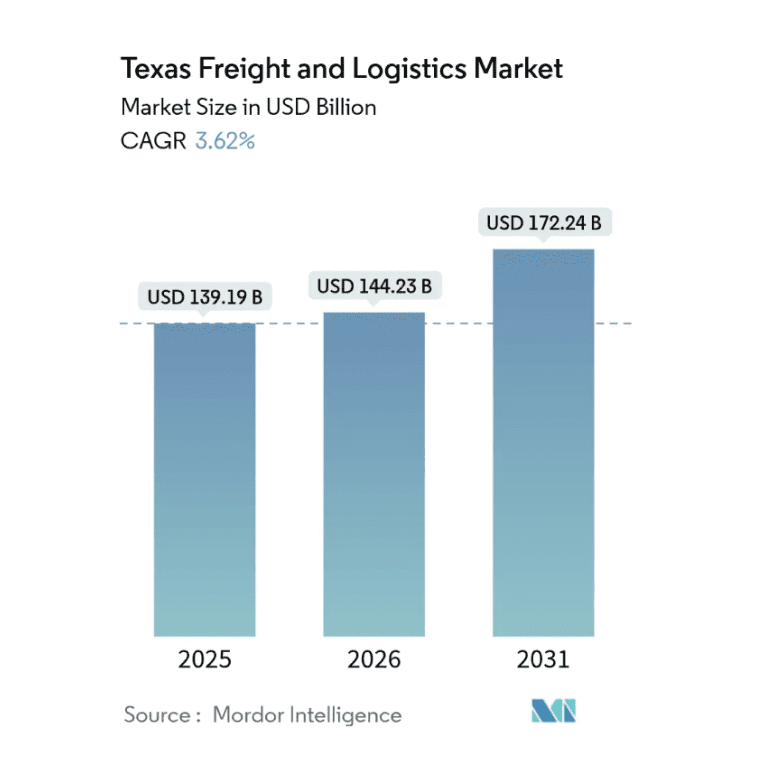
The constant growth presents a significant opportunity for SwiftRoute to tap into the expanding demand for regional freight services.
As the freight market grows, more goods move across distribution hubs. Brokers and shippers need reliable carriers to handle this rising volume. SwiftRoute can capture more loads by providing consistent and cost-efficient regional freight service.
Regional Dry Van Freight Brokerage Market
SwiftRoute operates in the specific regional dry van freight transportation segment of the trucking industry. It runs specifically through the broker-driven spot freight platforms.
Most freight in this segment doesn’t move through direct shipper contracts. It moves through freight brokers. Freight brokers connect shippers that need transportation with available trucking carriers.
For small carriers like SwiftRoute, these broker platforms are the primary way to find and secure loads, especially in the early stages of building a business.
Here are a few things that drive consistent demand right now:
- The Dallas–Fort Worth region has become one of the fastest-growing warehouse and distribution hubs in the country.
- Retail and e-commerce supply chains constantly need goods moved between warehouses and stores.
- Manufacturing and industrial operations require steady, reliable freight movement to keep production running.
- Texas’s population growth means more consumer goods moving through the region every single day.
For SwiftRoute, these market conditions translate into consistent freight opportunities across the region’s most active corridors, such as Dallas to Houston, Dallas to San Antonio, Dallas to Austin, and Dallas to Oklahoma City.
These aren’t random routes. They’re high-volume, well-established lanes with consistent freight demand that a regional carrier can build a reliable business around.
Dallas Market Insights
The Dallas-Fort Worth metroplex stands as a titan of logistics, transportation, and distribution. It plays a critical role in supporting commerce across the Southern United States.
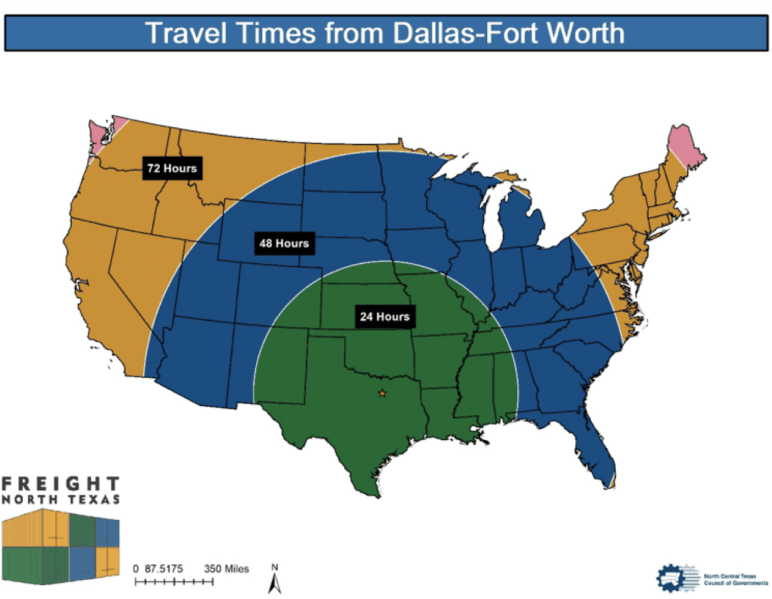
Moreover, CBRE reports that Dallas-Fort Worth added more than 70 million square feet of warehouse space between 2022 and 2024. This growth makes it the fastest-growing logistics market in North America.
Why Does Southern Dallas Inland Port Create a Freight Opportunity?
The Southern Dallas Inland Port is one of the largest logistics hubs in the United States. It links highways, rail systems, warehouses, and distribution centers together in a single location. This infrastructure provides a stream of freight movement and high demand for trucking services.
- The Southern Dallas Inland Port covers 5 cities and is on a 7,500-acre area.
- The region is directly linked to the interstate highways I-20, I-35E, and I-45.
- The area has massive industrial locations of production and distribution.
The zone is registered under the Foreign Trade Zone (FTZ No. 39) and Triple Freeport schemes, which contribute to the development of import and distribution activity.
The rising demand for freight services in the area offers more business opportunities for SwiftRoute. Moreover, it increases the mean number of shipments, which creates more contracts for carriers and steady work for the company.
According to a report, truck drivers and tractor-trailer operators in Dallas earn a median hourly wage of $26.94, showing strong demand for freight transportation.
Our Primary Target Market
SwiftRoute focuses on businesses that move dry van freight regularly within Texas and nearby states. These customers require dependable carriers that can handle regional shipments on time and with proper documentation.
Our primary target customers include:
- Freight brokers and regional shippers who move palletized dry goods between distribution hubs.
- Regional manufacturers and distribution centers that want to move finished goods from factories to warehouses or retail hubs.
- E-commerce businesses require dry van shipments to move products from the warehouse to the distribution center.
SwiftRoute focuses on these customers because they generate consistent dry van freight demand. Their shipments usually move on predictable regional routes, which fit our 500-mile operating strategy.
Competitors
J.B. Hunt, Schneider, Werner
| Attribute | Details |
|---|---|
| Competitor Type | Large National Carrier |
| Experience | 60+ years |
| Pricing Approach | Contract-based pricing with large shipper agreements |
| Market Presence | Nationwide logistics and trucking network |
| Location | Lowell, Arkansas (serves Texas freight lanes) |
| Fleet | 12,000+ trucks |
J.B. Hunt focuses on large enterprise shipping contracts and nationwide freight movement. Their large fleet and corporate structure allow them to handle high freight volumes across long-distance lanes.
However, large carriers often prioritize high-volume contracts rather than smaller regional loads. Their size also slows operational flexibility. SwiftRoute can compete by accepting smaller regional shipments, responding faster to brokers, and maintaining closer communication with freight coordinators.
Schneider National
| Attribute | Details |
|---|---|
| Competitor Type | Large National Carrier |
| Experience | 85+ years |
| Pricing Approach | Mix of contract freight and spot market pricing |
| Market Presence | Nationwide presence across major freight corridors |
| Location | Green Bay, Wisconsin (large operations in Texas) |
| Fleet | 10,000+ trucks |
Schneider operates a large national fleet and serves major distribution networks across the United States. The company moves freight for large retailers, manufacturers, and logistics companies.
Because Schneider manages a large fleet and structured scheduling systems, smaller regional loads may receive lower priority. SwiftRoute can compete by focusing on consistent regional routes and offering dependable service for brokers who need flexible carriers for Texas lanes.
Werner Enterprises
| Attribute | Details |
|---|---|
| Competitor Type | Large National Carrier |
| Experience | 65+ years |
| Pricing Approach | Contract freight and brokered spot market loads |
| Market Presence | Nationwide freight network, including Texas distribution hubs |
| Location | Omaha, Nebraska (serves Texas freight lanes) |
| Fleet | 8,000+ trucks |
Werner Enterprises has a countrywide trucking network, which offers distribution centers and big logistics customers. They have a high emphasis on long-haul freight and large freight routes.
Big operations usually generate slower response times on smaller shipments. SwiftRoute can help address this gap by operating on regional freight routes, accepting loads more quickly, and keeping a regular channel of communication with brokers that demand reliable regional carriers.
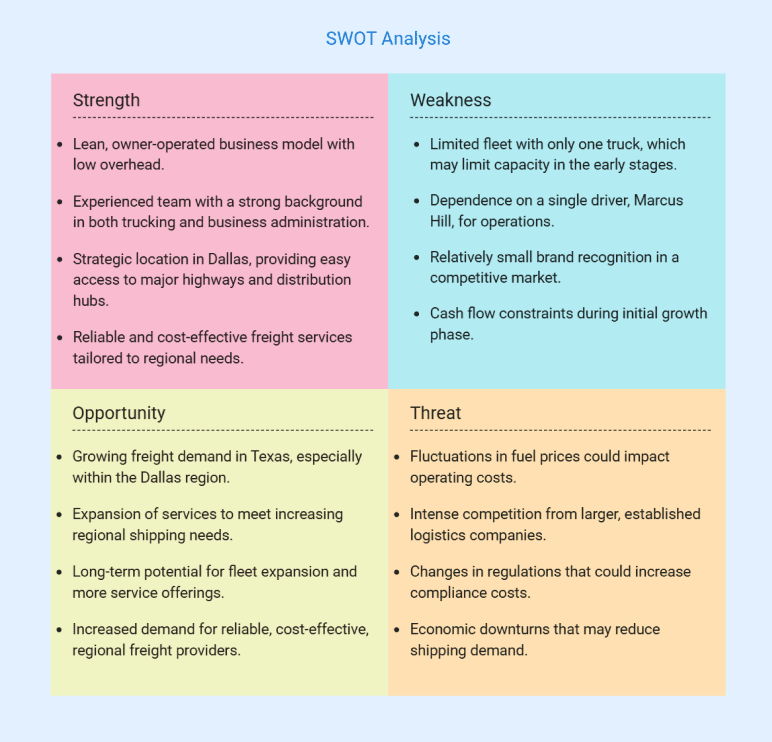
SWOT Analysis
Key Differentiators
SwiftRoute differentiates itself through disciplined operations, a lean structure, and a strong focus on regional freight reliability. Here’s how:
- The owner-operated model ensures direct accountability and better service control.
- We operate within a fixed 500-mile regional radius, allowing the truck to complete most loads in one day or one overnight cycle.
- We run a single-truck owner-operated structure, which eliminates payroll overhead, fleet management costs, and large administrative expenses.
- Strategic Dallas location provides immediate access to major freight corridors and distribution hubs.
Our Services
SwiftRoute provides focused freight transportation services within a defined regional radius. We concentrate on controlled, repeatable operations that protect margins and ensure reliability.
Our Freight Types
- Consumer goods — We transport boxed retail products, household items, and packaged merchandise from distribution centers to stores and warehouses.
- Palletized dry goods — We haul industrial supplies, paper products, and building materials stacked on standard 48×40 pallets. Our 53-foot trailer fits 26 pallets in a single row or up to 52 when double-stacked within weight limits.
- Packaged food (non-refrigerated) — We move canned goods, bottled drinks, snacks, pasta, and cereal that do not require temperature control. These loads often move between food manufacturers and grocery distribution centers.
- Retail merchandise — We carry clothing, electronics, seasonal items, and general merchandise from distribution hubs to regional retail stores.
Our Core Services and Pricing
| Service Type | Freight Description | Pricing Structure | Service Area |
|---|---|---|---|
| Full Truckload (FTL) Dry Van | Palletized consumer goods, packaged food (non-refrigerated), retail freight | Average $2.25 per loaded mile (before broker fee) | Texas and neighboring states within a 500-mile radius |
| Contracted Regional Freight | Dedicated or repeat broker/shipper loads | Rate per mile based on lane agreement | Dallas-based regional corridors |
| Spot Market Loads | One-time broker freight based on availability | Market-based rate per mile | Within approved regional routes |
What SwiftRoute Doesn’t Haul?
We don’t transport high-risk, non-compliant, or permit-restricted freight. Our excluded services include:
- Hazardous materials that require special permits or endorsements
- Oversized or overweight loads that need special routing approval
- Refrigerated or temperature-controlled freight
- Cross-border international freight operations
These exclusions are not permanent. They are practical limits for a two-person startup. If revenue and cash reserves reach a level where adding capabilities makes financial sense, the owners will revisit each one individually.
Service-Level Agreements (SLAs)
SwiftRoute follows clear service standards to ensure reliable freight transportation and maintain strong broker relationships. Our service commitments include the following:
- Arrive at pickup locations before the scheduled appointment window to avoid shipper delays.
- Plan routes carefully to meet delivery deadlines and prevent missed receiver appointments.
- Communicate load status with brokers during transit when required.
- Submit proof of delivery and invoices immediately after the load is delivered.
- Inspect and secure freight before departure to prevent cargo damage.
- Maintain active permits, insurance coverage, and ELD compliance at all times.
Operational Plan
SwiftRoute runs simple, reliable operations. One truck driver picks up freight, and one office manager keeps the paperwork clean. Every part of the daily workflow serves a single goal: Keep the truck loaded, moving, and compliant.
Operating Schedule
| Category | Details |
|---|---|
| Driving Days | 5–6 days per week |
| Standard Week | Monday–Friday hauling loads |
| Optional Day | Saturday is planned for high-paying overflow loads |
| Weekly Off Day | Sunday |
| Annual Operating Weeks | 50 weeks per year |
| Planned Downtime | 2 weeks for maintenance, tires, holidays, and rest |
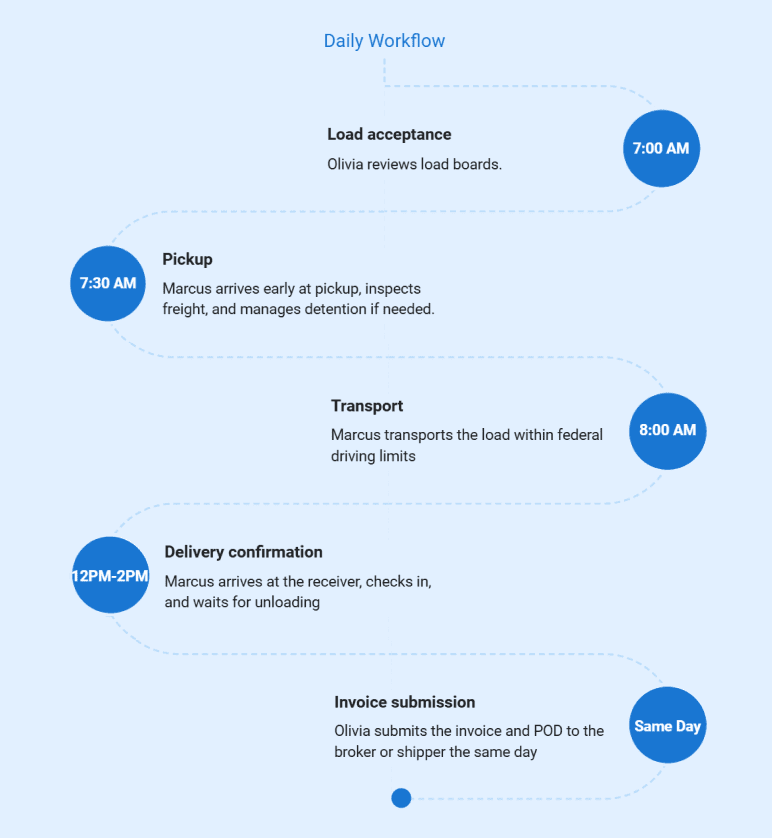
Our Daily Workflow
Marcus follows the same sequence every working day. The steps do not change. Consistency is what makes a single-truck operation reliable.
Load and Route Planning Strategy
SwiftRoute focuses on regional freight lanes within a 500-mile radius of Dallas. Regional lanes allow faster turnaround and reduce empty miles.
Typical freight lanes include:
- Dallas – Houston
- Dallas – San Antonio
- Dallas – Austin
- Dallas – Oklahoma City
Load selection follows clear criteria:
- Minimum profitable rate per mile
- Pickup location within a reasonable distance
- Delivery within our regional operating zone
- Reliable brokers with good payment records
Driver Structure and Backup Plan
Marcus drives the truck and handles daily freight operations. Olivia manages dispatch, billing, and compliance from the office.
If Marcus becomes sick, injured, or temporarily unavailable, the truck pauses operations until he returns. During this period, Olivia continues dispatch coordination, broker communication, and administrative work. This approach protects safety and prevents rushed decisions that could cause violations or accidents.
As the company grows and a second truck is added, SwiftRoute plans to hire an additional CDL driver. This will create operational backup and allow the business to continue running even if one driver becomes unavailable.
Fleet and Maintenance Management
SwiftRoute operates one used Class 8 tractor and one 53-foot dry van trailer. Marcus inspects the truck before and after every trip. We schedule preventive maintenance every 10,000 to 15,000 miles, and the maintenance schedule includes the following things:
- Oil change
- Brake inspection
- Rotate tires
- Fleet washing
- Fix small issues before they become major problems
To be consistent, we track all maintenance records and avoid delayed repairs. We understand that a small repair today costs less than a major breakdown tomorrow.
Marcus keeps the truck clean and road-ready at all times. A well-maintained truck reduces downtime, improves safety, and protects revenue.
Fuel Management Strategy
Fuel represents the largest operating expense in trucking. SwiftRoute controls fuel costs through disciplined planning.
Marcus plans fuel stops along major truck stop chains that offer competitive diesel prices. Route planning software helps identify efficient routes and avoid unnecessary mileage.
We also track fuel usage and cost per mile. Monitoring fuel data helps us adjust routes and protect profit margins.
We even use a commercial fuel card to purchase diesel at major truck stop networks. Fuel cards help track fuel usage, monitor cost per mile, and access discounted diesel pricing, helping control overall fuel expenses.
Technology and Equipment
SwiftRoute uses practical tools to run the business smoothly and stay compliant. Here’s the list of technology and equipment we use for our daily operations:
- An ELD (Electronic Logging Devices) system to track driving hours
- GPS to track the truck location in real time and route optimization
- Accounting software to track invoices, expenses, and payments
- Load Boards (DAT, Truckstop) to book loads through online platforms
Marketing and Sales Strategy
SwiftRoute believes in relationship-based sales rather than traditional advertising. Freight moves through trusted broker networks and shipper partnerships. We concentrate on consistent lanes, reliable service, and repeat business.
Our Marketing Channels
| Channel | Strategy |
|---|---|
| Load Boards | We use DAT and Truckstop to find daily freight opportunities. |
| Broker Networks | SwiftRoute registers with established brokers such as C.H. Robinson and TQL (Total Quality Logistics) and completes their carrier onboarding packets. |
| Word-of-Mouth | Reliable service and on-time deliveries encourage brokers and shippers to recommend SwiftRoute to other freight coordinators. |
| Direct Shipper Outreach | We contact warehouses, manufacturers, and distribution centers in Dallas. |
| Industry Networking | Marcus built relationships with logistics professionals and freight coordinators. |
| Online Presence | SwiftRoute will have a basic website and a Google Business listing for credibility checks. |
We’ll focus on traditional marketing rather than digital marketing. We believe freight contracts usually come through broker networks, industry contacts, and direct shipper relationships.
Most brokers do not search for carriers through social media or online ads. They select carriers based on safety records, reliability, and existing industry networks.
Sales Plan
SwiftRoute focuses on building repeat freight relationships instead of chasing one-time loads. Many small carriers depend only on daily load boards. SwiftRoute takes a different approach by concentrating on consistent brokers and regional lanes.
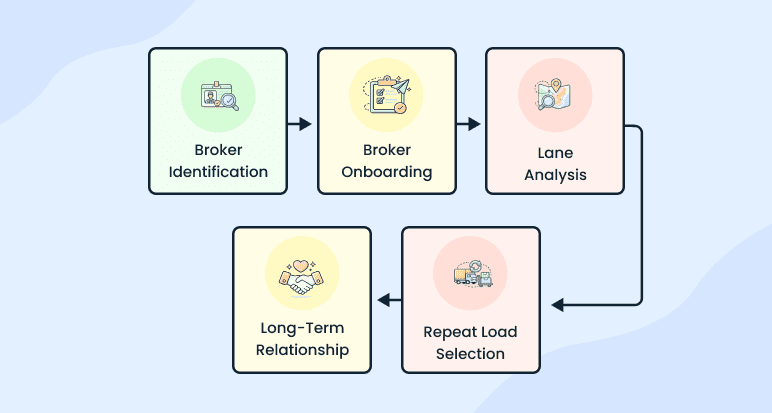
First, we identify brokers that regularly move dry van freight in Texas corridors. Instead of working with dozens of brokers, we focus on a smaller group that moves freight between Dallas and nearby distribution hubs. This approach increases familiarity with lanes and delivery schedules.
After onboarding with selected brokers, we track their frequent shipping lanes and rate patterns. We prioritize loads that repeat weekly or monthly. This allows SwiftRoute to become a dependable carrier for specific routes rather than a random spot-market option.
Marcus maintains reliable pickup and delivery performance, while Olivia communicates with brokers during transit and after delivery. Clear communication, fast paperwork submission, and professional service help SwiftRoute stand out among many small carriers competing on load boards.
Customer Retention Strategy
Our customer retention strategy is as follows:
- Deliver every load on time to build broker confidence.
- Submit proof of delivery and invoices immediately after delivery.
- Maintain regular communication with brokers who offer consistent freight lanes.
- Focus on repeat lanes to become a dependable carrier for those routes.
- Track broker shipping patterns and prioritize frequent freight partners.
- Provide consistent service quality so brokers prefer SwiftRoute for future loads.
Customer Acquisition Strategy
SwiftRoute focuses on building a steady flow of freight through reliable broker and shipper relationships. Instead of chasing random spot loads, we target repeat freight within our regional lanes. Repeat freight creates stable weekly revenue and reduces empty miles.
Our acquisition approach focuses on the following:
| Strategy | How SwiftRoute Applies It |
|---|---|
| Broker Targeting | Identify freight brokers that regularly move dry van loads within Texas and nearby states. |
| Lane Focus | Prioritize consistent regional lanes between major distribution hubs. |
| Service Reliability | Deliver on time, transport freight safely, and submit paperwork quickly to build broker trust. |
| Safety Performance | Maintain a clean safety record since brokers review safety scores before assigning loads. |
Consistent service turns one-time loads into repeat freight. Over time, repeat freight builds stronger broker relationships and predictable revenue.
Growth Strategy
We secure dedicated lanes from brokers and shippers as relationships grow. Dedicated lanes reduce load search time and stabilize weekly revenue. Long-term relationships also support future fleet expansion when additional trucks are added.
Our growth strategy focuses on steady and controlled expansion:
- Add a second truck once weekly freight demand consistently reaches about 2,000 loaded miles and operations generate stable cash flow.
- Hire one additional CDL driver when the second truck becomes operational to maintain continuous freight movement.
- Secure 2–3 consistent broker lanes that move freight regularly between major Texas distribution hubs.
- Expand into high-volume routes such as Dallas–Houston, Dallas–San Antonio, and Dallas–Oklahoma City once the second truck is running.
- Build long-term shipping relationships with at least two regional manufacturers or distribution centers to stabilize monthly freight volume.
Safety & Compliance Strategy
SwiftRoute treats safety and compliance as non-negotiable. We understand that one violation can shut down operations and one major accident can destroy the business. Hence, we have built strict systems from day one to prevent such unfortunate circumstances.
Regulatory Registration & Authority
We operate with a valid United States Department of Transportation number (USDOT) and active Motor Carrier authority (MC Authority). The USDOT number allows the government to track our safety record and inspections. The MC Authority gives us legal permission to haul freight across state lines.
We file a Blanket of Coverage form (BOC-3), which designates a legal process agent in every state where we operate. Moreover, SwiftRoute completes Unified Carrier Registration (UCR) each year, which allows us to operate legally in interstate commerce.
Driver Qualification
Marcus holds a valid Commercial Driver’s License – Class A (CDL-A), which allows him to operate heavy commercial vehicles across state lines. He maintains an active Department of Transportation medical certificate (DOT Medical Card) to confirm he meets federal health standards for commercial drivers.
Importantly, he follows Federal Motor Carrier Safety Administration (FMCSA) safety rules at all times. Hence, he always practices:
- Defensive driving
- Maintains safe following distances
- Adjusts speed based on weather and traffic conditions
Moreover, to keep this driving record clean, Marcus completes required safety inspections during roadside checks and maintains copies of license, medical certificate, and driving history in organized files.
Load Safety
Marcus performs a full load check before departure. The quantity of the pallets should correspond to the bill of lading (BOL), and the packaging should demonstrate that there is no open damage or instability. Pallets that have been broken, loose shrink wrap, or tilted stacks are addressed prior to the trailer being moved.
The weight load within the 53-foot trailer should be balanced. Proper axle weight prevents violations and reduces rollover risk. The total load must stay within legal gross vehicle weight limits.
Freight must sit tight to prevent shifting during transit. Load bars or straps secure cargo when required. Trailer doors must seal properly before leaving the dock.
Unsafe, overweight, or poorly loaded freight does not move. Strong cargo securement protects the shipment, prevents claims, and reduces accident risk.
Insurance Coverage
SwiftRoute maintains the required insurance to operate legally and protect freight during transportation.
1) Commercial auto liability insurance ($1,000,000) covers damage or injuries if an accident occurs during trucking operations. Brokers usually require this coverage before assigning loads.
2) Cargo insurance protects the freight being transported in case of damage, loss, or theft during transit.
3) We keep active insurance certificates & documents updated and ready for broker verification before booking loads.
Drug and Alcohol Testing Compliance
SwiftRoute follows federal drug and alcohol testing requirements for commercial drivers. Marcus participates in required pre-employment, random, and post-incident testing programs as required by federal regulations.
These programs ensure drivers remain free from substance use that could affect safe driving. Compliance with these rules protects public safety and keeps the company in good standing with regulators and brokers.
Hours of Service (HOS) Compliance
SwiftRoute follows Hours of Service (HOS) rules set by the Federal Motor Carrier Safety Administration (FMCSA). These rules limit driving time to prevent driver fatigue and improve road safety.
- Drivers can operate the truck for a maximum of 11 driving hours after taking the required rest.
- The total on-duty window cannot exceed 14 hours in a single work period.
- Drivers must take mandatory rest breaks as required by federal regulations.
SwiftRoute uses an Electronic Logging Device (ELD) to record driving activity automatically.
- The ELD tracks duty status, driving hours, and rest periods.
- Electronic logs create accurate records for roadside inspections and audits.
- Automated tracking helps prevent violations and maintain compliance with federal safety rules.
Accident and Incident Reporting
SwiftRoute follows a clear reporting process for any accident or safety incident. Drivers report incidents immediately and document details such as location, time, and conditions.
We notify insurance providers and required authorities when necessary. Proper reporting helps resolve claims quickly and improves safety monitoring.
SwiftRoute reviews every incident carefully. We use that information to improve safety procedures and prevent similar events in the future.
Financial Plan
SwiftRoute builds its financial plan on disciplined cost control and steady revenue generation. We focus on maintaining positive cash flow, protecting margins, and meeting all loan and operating obligations on time.
Key Financial Assumptions
| Category | Assumption |
| Forecast Period | 3 years (Year 1–Year 3) |
| Revenue Months | Year 1: 10 months; Years 2–3: 12 months |
| Revenue Model | Full truckload (FTL) dry van freight |
| Gross Rate per Mile | $2.25 (Year 1) |
| Net Rate per Mile | $2.03 after 10% broker fee |
| Operating Weeks | 50 weeks per year |
| Weekly Mileage | 2,000 miles per week |
| Deadhead Miles | 15% of loaded miles |
| Fuel Cost | $0.62 per loaded mile |
| Office/Yard Rent | $1,800 per month |
| Commercial Insurance | $1,200 per month |
| Startup Funding | $150,000 total ($110,000 loan + $40,000 equity) |
Source of Funds
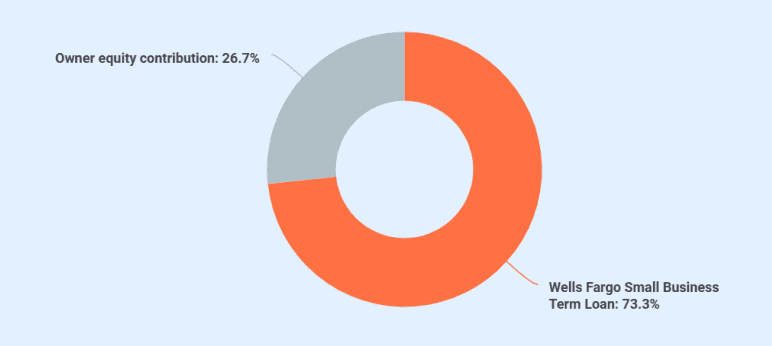
SwiftRoute’s startup capital is secured through a combination of a Wells Fargo small business term loan and owner equity contributions. Here’s how startup capital splits:
| Sources of Funds | Amount |
| Wells Fargo Small Business Term Loan | $110,000 |
| Owner equity contribution | $40,000 |
| Total Funding | $150,000 |
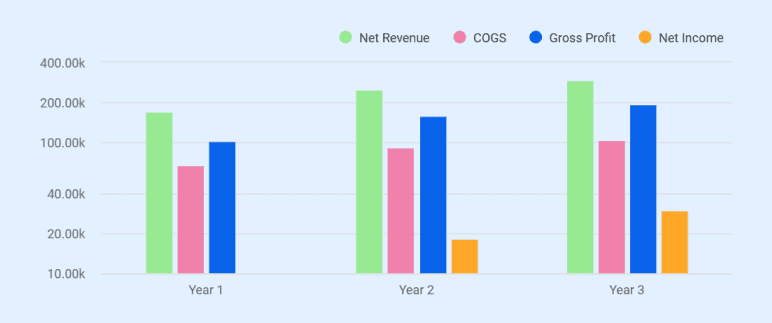
Profit & Loss Statement (3 Years)
| Line Item | Year 1 | Year 2 | Year 3 |
| REVENUE | |||
| Gross freight revenue | $186,750 | $264,000 | $306,000 |
| Less: Broker fees | ($18,675) | ($15,840) | ($12,240) |
| Net Revenue | $168,075 | $248,160 | $293,760 |
| COST OF GOODS SOLD | |||
| Fuel | $51,460 | $68,200 | $75,600 |
| Maintenance & repairs | $9,960 | $15,400 | $19,200 |
| Tires | $2,490 | $3,300 | $3,600 |
| Tolls & variable permits | $2,500 | $3,600 | $3,600 |
| Total COGS | $66,410 | $90,500 | $102,000 |
| GROSS PROFIT | $101,665 | $157,660 | $191,760 |
| Gross margin % | 60.5% | 63.5% | 65.3% |
| OPERATING EXPENSES | |||
| Owner compensation — Marcus Hill | $12,000 | $42,000 | $55,000 |
| Owner compensation — Olivia Hill | $0 | $15,000 | $22,000 |
| Payroll taxes (15.3% SE tax) | $1,836 | $8,721 | $11,781 |
| Office/yard rent | $21,600 | $21,600 | $21,600 |
| Commercial auto insurance | $14,400 | $14,400 | $15,120 |
| General liability insurance | $1,200 | $1,200 | $1,260 |
| ELD subscription & software | $1,800 | $1,800 | $1,800 |
| Dispatch/load board subscription | $1,200 | $1,200 | $1,200 |
| Phone & internet | $2,400 | $2,400 | $2,400 |
| Accounting & bookkeeping | $3,000 | $3,000 | $3,000 |
| UCR, IFTA, compliance filings | $1,500 | $1,500 | $1,500 |
| Office supplies & miscellaneous | $1,200 | $1,200 | $1,200 |
| Marketing | $1,000 | $1,800 | $2,400 |
| Startup expenses expensed | $25,000 | $0 | $0 |
| Total Operating Expenses | $88,136 | $115,821 | $140,261 |
| EBITDA | $13,529 | $41,839 | $51,499 |
| Depreciation | $13,369 | $16,043 | $16,043 |
| EBIT | $160 | $25,796 | $35,456 |
| Interest expense | $9,185 | $7,499 | $5,647 |
| Net Income (Pre-Tax) | ($9,025) | $18,297 | $29,809 |
Cash Flow Statement (3 Years)
| Line Item | Year 1 | Year 2 | Year 3 |
| CASH FROM OPERATIONS | |||
| Net income | ($9,025) | $18,297 | $29,809 |
| Add back: Depreciation | $13,369 | $16,043 | $16,043 |
| (Increase)/decrease in accounts receivable | ($14,006) | ($6,674) | ($3,800) |
| (Increase)/decrease in prepaid expenses | $25,000 | $0 | $0 |
| Increase/(decrease) in accounts payable | $3,321 | $450 | $479 |
| Cash from Operations | $18,659 | $28,116 | $42,531 |
| CASH FROM INVESTING | |||
| Capitalized assets | ($115,000) | $0 | $0 |
| Prepaid expenses (startup) | ($25,000) | $0 | $0 |
| Cash from Investing | ($140,000) | $0 | $0 |
| CASH FROM FINANCING | |||
| Loan proceeds | $110,000 | $0 | $0 |
| Owner equity contributions | $40,000 | $0 | $0 |
| Loan principal repayments | ($17,995) | ($19,681) | ($21,533) |
| Cash from Financing | $132,005 | ($19,681) | ($21,533) |
| NET CHANGE IN CASH | $10,664 | $8,435 | $20,998 |
| Beginning cash | $0 | $10,664 | $19,099 |
| Ending Cash | $10,664 | $19,099 | $40,097 |
Balance Sheet (3 Years)
| Line Item | Day 0 | Year 1 | Year 2 | Year 3 |
| ASSETS | ||||
| Current Assets | ||||
| Cash | $10,000 | $10,664 | $19,099 | $40,097 |
| Accounts receivable | $0 | $14,006 | $20,680 | $24,480 |
| Prepaid expenses | $25,000 | $0 | $0 | $0 |
| Total Current Assets | $35,000 | $24,670 | $39,779 | $64,577 |
| Fixed Assets | ||||
| Gross fixed assets | $115,000 | $115,000 | $115,000 | $115,000 |
| Less: Accumulated depreciation | $0 | -$13,369 | -$29,412 | -$45,455 |
| Net Fixed Assets | $115,000 | $101,631 | $85,588 | $69,545 |
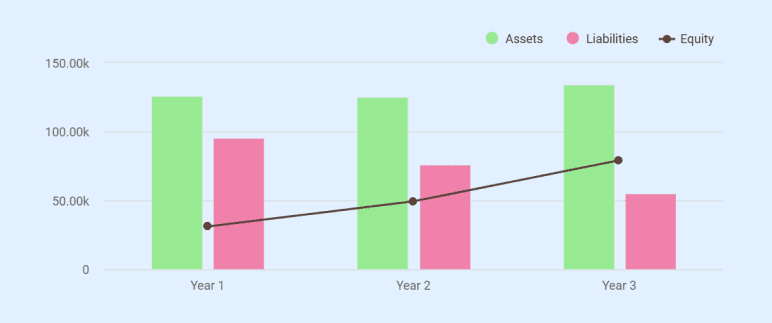
| TOTAL ASSETS | $150,000 | $126,301 | $125,367 | $134,122 |
| LIABILITIES | ||||
| Current Liabilities | ||||
| Accounts payable | $0 | $3,321 | $3,771 | $4,250 |
| Current portion of loan | $17,995 | $19,681 | $21,533 | $23,563 |
| Total Current Liabilities | $17,995 | $23,002 | $25,304 | $27,813 |
| Long-Term Liabilities | ||||
| Long-term loan | $92,005 | $72,324 | $50,791 | $27,228 |
| Total Long-Term Liabilities | $92,005 | $72,324 | $50,791 | $27,228 |
| TOTAL LIABILITIES | $110,000 | $95,326 | $76,095 | $55,041 |
| EQUITY | ||||
| Contributed capital | $40,000.00 | $40,000 | $40,000 | $40,000 |
| Retained earnings | $0.00 | -$9,025 | $9,272 | $39,081 |
| Total Equity | $40,000 | $30,975 | $49,272 | $79,081 |
| TOTAL LIABILITIES & EQUITY | $150,000 | $126,301 | $125,367 | $134,122 |
Break-Even Summary
| Item | Value |
| Monthly fixed costs (Year 2 basis, incl. depreciation & interest) | $11,614 |
| Variable cost ratio (COGS + broker fees as % of gross revenue) | 40.3% |
| Contribution margin % | 59.7% |
| Monthly break-even gross revenue | $19,454 |
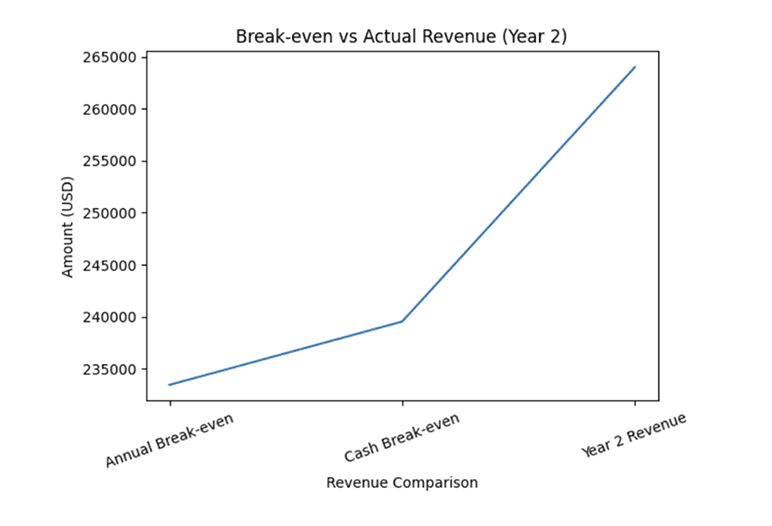
| Annual break-even gross revenue | $233,451 |
| Break-even loaded miles per year (at $2.40/mi) | 97,271 |
| Break-even loaded miles per week (50 weeks) | 1,945 |
| Year 2 actual gross revenue | $264,000 |
| Headroom above break-even | $30,549 (13.1%) |
| Cash break-even (incl. principal, excl. depreciation) | $239,539/year |
| Year 2 exceeds cash break-even by | $24,461 (10.2%) |
Loan Repayment Plan
| Item | Details |
| Loan Amount | $110,000 |
| Lender | Wells Fargo Bank, N.A. |
| Loan Type | Small Business Term Loan |
| Interest Rate | 8.75% Fixed |
| Loan Term | 5 Years |
| Monthly Payment | 2,265 |
| Annual Payment | $27,180 |
| Total Interest Paid | $28,331 |
| Total Amount Repaid | $138,331 |
| Item | Year 1 | Year 2 | Year 3 | Year 4 | Year 5 |
| Opening Balance | $110,000 | $92,005 | $72,324 | $50,791 | $27,228 |
| Principal Paid | $17,995 | $19,681 | $21,533 | $23,563 | $27,228 |
| Interest Paid | $9,185 | $7,499 | $5,647 | $3,617 | $2,383 |
| Total Payment | $27,180 | $27,180 | $27,180 | $27,180 | $29,611 |
| Closing Balance | $92,005 | $72,324 | $50,791 | $27,228 | $0 |
Risk Analysis
The logistics business operates in a fast-changing environment. Freight demand, operating costs, and regulations can change quickly. These changes can affect revenue, schedules, and profit margins. SwiftRoute understands these risks and prepares clear operating practices to manage them.
| Risk | Impact | Our Response |
|---|---|---|
| Freight rate changes | Lower freight rates reduce margins. | We accept loads that meet our minimum rate per mile. |
| Fuel price increases | Diesel cost raises operating expenses. | We plan efficient routes and track fuel usage. |
| Mechanical breakdowns | Truck downtime stops revenue. | We follow preventive maintenance every 10,000–15,000 miles. |
| Broker payment delays | Late payments affect cash flow. | We work with reliable brokers and invoice immediately. |
| Driver fatigue regulations | Driving limits restrict trip planning. | We plan loads within HOS limits and use ELD tracking. |
| Freight seasonality | Freight demand may drop in slow months. | We build multiple broker relationships to secure steady loads. |
SwiftRoute manages these risks through careful planning, strict compliance, and consistent operating discipline.
The Quickest Way to turn a Business Idea into a Business Plan
Fill-in-the-blanks and automatic financials make it easy.
