




Executive Summary
Iron Path Martial Arts is a startup martial arts school led by founder Jason Miller, who has more than 12 years of martial arts experience. He teaches the majority of classes in Year 1, alongside a part-time assistant instructor.
Iron Path’s affordable, high-quality martial arts classes for kids, teens, and adults provide a safe and fun place to learn and grow.
The total revenue of the martial arts industry in the U.S. was estimated at $21.0 billion in 2025. Iron Path benefits from this growth by offering a range of classes focused on fitness and personal development for students of all ages.
The majority of Iron Path’s revenue comes from monthly membership. Iron Path does not plan to host tournaments or specialty camps in the base model. Private lessons are offered as an additional service but are not a primary focus.
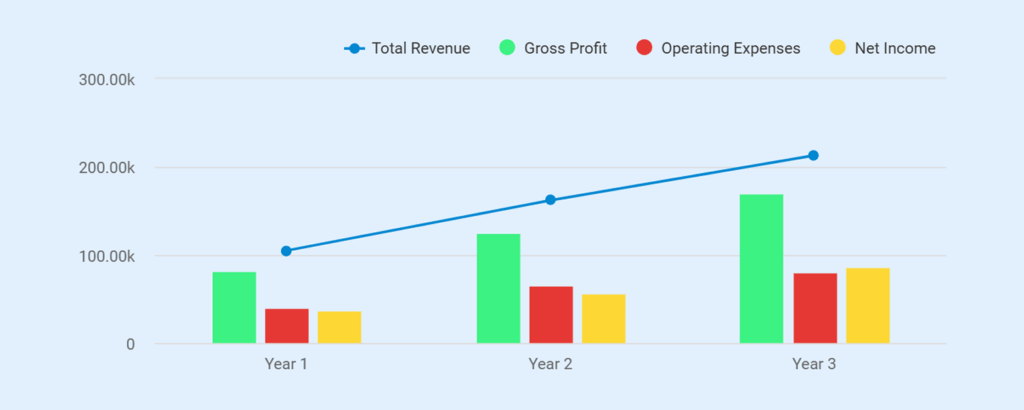
In Year 1, Iron Path anticipates total revenue of $105,000, and projections for Years 2 and 3 are estimated at $162,000 and $213,000, respectively. In Year 1, the school is projected to have 80–90 students, and future growth is anticipated in subsequent years.
The startup costs of Iron Path are $33,000. This includes the building, furniture/equipment, and other start-up costs. Jason contributes $8,000 personally and seeks a $25,000 loan for the rest. The school generates cash flow from early sales to pay back the loan. By Year 3, the school expects a loan repayment ratio of at least 2.5x compared to total revenue for that year.
| Metric | Year 1 | Year 2 | Year 3 |
|---|---|---|---|
| Total Revenue | $105,000 | $162,000 | $213,000 |
| Gross Profit | $82,500 | $126,000 | $169,500 |
| Operating Expenses | $40,200 | $66,200 | $80,200 |
| Net Income (Pre-Tax) | $37,800 | $55,700 | $85,600 |
Company Description
Legal Structure and Location
Iron Path Martial Arts is a single-member LLC in Ohio. This setup protects the owner and keeps management and taxes simple.
The business operates from a rented studio at 7842 Ridgeway Plaza, Suite B, Columbus, Ohio 43235. The studio is used for training classes and managing daily business operations. It has one main training area and a small waiting area for students and parents.
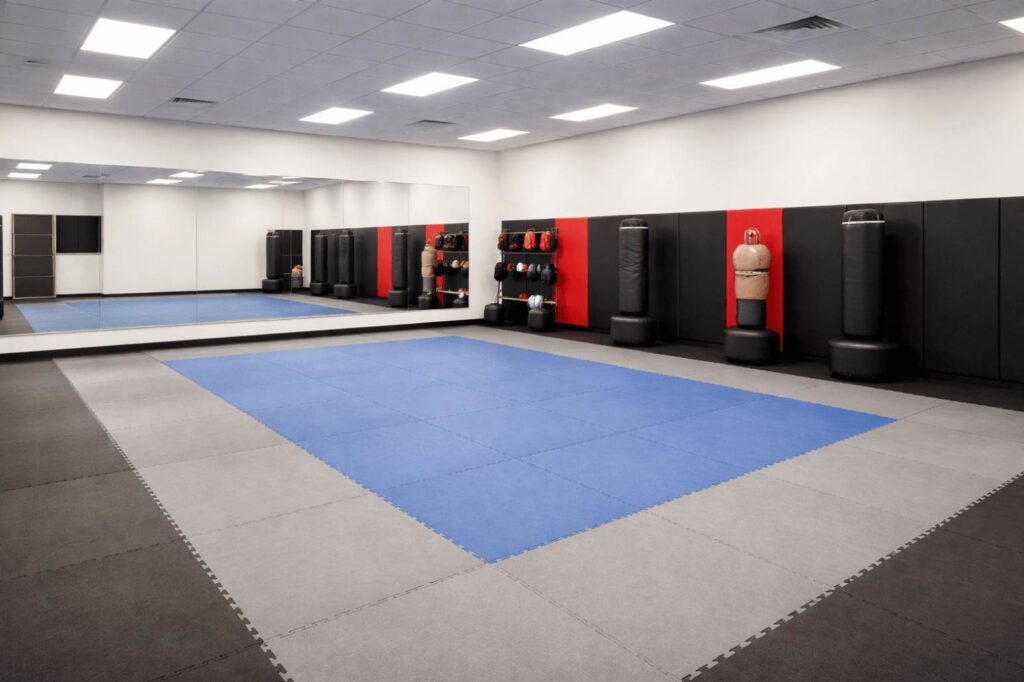
The business will stay at this location for the next three years. There are no plans to open more locations or expand the space. The current studio can support growth while allowing the business to focus on teaching and managing costs.
Business Goals
The goal of Iron Path Martial Arts is to build a steady and stable martial arts school in one location.
Short-Term Goals (Year 1)
- Start with about 40–45 active members
- Reach 80–90 active members by the end of Year 1
- Keep monthly member loss around 3–4%
- Reach monthly break-even at about $4,200–$4,500 in revenue
Long-Term Goals (Years 2–3)
- Grow to 115–130 active members in Year 2
- Reach 150–165 active members by the end of Year 3
- Maintain steady and stable profit by Year 3
Ownership
Iron Path Martial Arts is owned by Jason Miller. He has trained in martial arts for 12 years and has a black belt in his main style. Jason has taught both kids and adults, including:
- Teaching beginner classes
- Helping with belt testing
Jason will take care of all classes, enrollment, scheduling, billing, and daily tasks. A part-time assistant will also help with select classes from the start. As the student base grows, Jason will continue overseeing teaching and class quality while managing other responsibilities.
Business Model
The primary source of revenue comes from recurring monthly membership fees. Additional income is generated from selective enrollment fees and limited private lessons.
No tournament hosting, specialty camps, retail expansion, or multi-location growth is assumed in the base model.
Market Overview
Local Market Size
Columbus, Ohio, is a growing city with a strong demand for local services, including martial arts training. The population and income levels support steady growth in the martial arts market.
- 2026 projected population: 946,661
- Median age: 33.2 years
- Median household income: $66,082
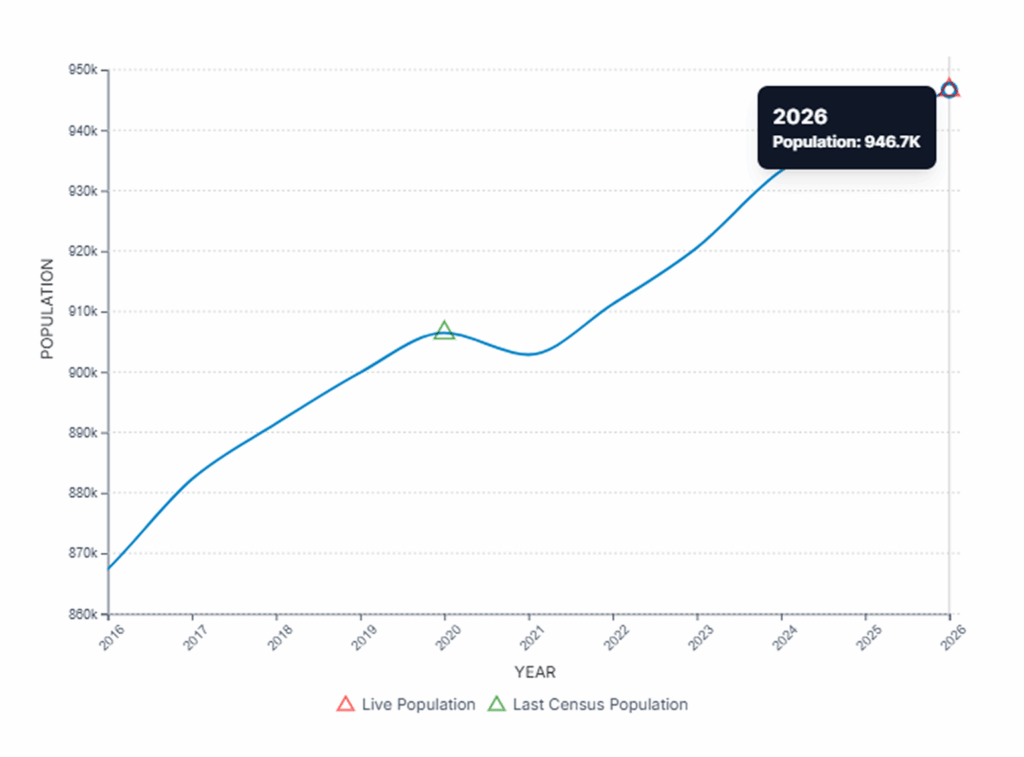
With many young people and families living in the area, there is a strong demand for martial arts classes for both youth and adults. Many families with a median household income can afford a $120 monthly subscription. As the population grows, the need for local martial arts services is expected to increase.
U.S. Martial Arts Industry Overview
The Martial Arts Studios industry in the United States has shown consistent growth, driven by increased participation and the popularity of fitness and self-defense programs. Key industry figures include:
- $21.0 billion in market size (2026)
- 72,029 martial arts studios across the country (2026)
- The industry has been growing at a 6.3% annual rate from 2021 to 2026
These figures demonstrate strong and sustained demand for martial arts instruction across various disciplines.
Target Customers
The target market for Iron Path Martial Arts includes families with kids, teens, and adults who are looking for a long-term solution to improve their fitness, self-defense skills, and personal growth.
- Commitment: The school focuses on members who stay long-term and pay monthly, rather than relying on short trials or drop-ins.
Competitive Landscape
Iron Path Martial Arts operates in Columbus, Ohio, where several established martial arts schools serve a similar target audience:
| Competitor | Type | Strengths | Weaknesses |
|---|---|---|---|
| Ronin Training Center | Brazilian Jiu-Jitsu and martial arts academy | Strong youth and adult programs, experienced instructors, structured belt system | Greater focus on competitive training may not match families seeking general fitness and discipline |
| Immortal Martial Arts | Traditional martial arts school | Offers structured youth and adult classes, clear advancement levels | Broader class offerings may increase pricing compared to a smaller studio model |
| Columbus Martial Arts Academy | Mixed martial arts and youth training center | Established local presence, youth-focused programs | May emphasize Mixed Martial Arts (MMA) or competitive training over general structured instruction |
| Grove City Brazilian Jiu-Jitsu | Specialized Brazilian Jiu-Jitsu school | Technical instruction, defined progression system | Limited discipline variety compared to broader martial arts programs |
These schools compete directly for families with children, teens, and adults seeking structured martial arts training on a recurring membership basis.
Indirect Competitors
Local trainers, children’s sports, and web-based training are indirect competitors. Many gyms attract adults seeking fitness but don’t offer martial arts or class evaluations (e.g., belt tests). Children’s sports such as soccer and basketball, although expensive and stretching after-school hours, are only seasonal. Online training methods, including video tutorials and programs, are more affordable but lack live instructors for feedback, making them less effective for martial arts.
Differentiation Strategy
Iron Path Martial Arts is different from other schools in Columbus for a few clear reasons:
Simple Training: Iron Path focuses on the basics. They don’t offer a lot of different styles or extra programs. Students learn strong core skills without feeling confused or overwhelmed.
Strong Local Community: The school focuses on people in the local area. It feels personal. Students and families feel welcome and connected.
No Extras, Just Training: Some schools focus on tournaments or selling equipment. Iron Path keeps it simple. The main focus is good martial arts classes.
Owner Teaches the Classes: Jason Miller, the owner, teaches most classes himself. Students learn directly from him, so the instruction stays consistent and high quality.
Steady Growth: The school is not trying to grow too fast. Classes stay small, and each student gets attention.
Iron Path keeps things simple, stays connected to the community, and focuses on quality training.
Programs offered
Iron Path Martial Arts offers group classes for children, teens, and adults. The school runs about 22 to 26 group classes each week. Each class can hold 18 to 22 students. In the first two years, classes are not filled to full size, so training can stay controlled and focused.
Classes follow a fixed weekly schedule. Students attend the same class time each week. Groups are divided by age and belt level. The base plan does not include tournaments, seasonal camps, or special programs.
1) Youth Classes
Youth classes teach basic techniques, simple drills, coordination, discipline, and beginner self-defense skills. Students move through a clear belt system. Promotion depends on attendance and skill progress.
2) Teen Classes
Teen classes build on basic skills. Training includes technique practice, strength exercises, controlled sparring, and practical self-defense. Students advance through set belt levels as they improve.
3) Adult Classes
Adult classes focus on practical self-defense, improving technique, fitness drills, and controlled sparring. Adults follow the same belt progression system.
4) Private Lessons
A limited number of private lessons are offered for students who need extra instruction. These sessions are scheduled outside regular group classes. Private lessons are not the main source of revenue.
This program setup supports steady enrollment growth within the existing studio space.
Enrollment Capacity
Iron Path Martial Arts offers 22–26 group classes each week. Each class holds 18–22 students, depending on age, skill level, and space. The studio can grow without needing more space for the first three years. Enrollment will stay below full capacity to ensure teaching quality. The enrollment growth plan is:
- Launch: 40–45 active members
- End of Year 1: 80–90 members
- End of Year 2: 115–130 members
- End of Year 3: 150–165 members
This plan allows the business to grow within existing class availability before considering schedule changes.
Marketing and Enrollment Strategy
Iron Path Martial Arts operates with a monthly marketing budget of approximately $400 in Year 1. The goal is to grow from 40–45 members at launch to 80–90 members by the end of the year. This requires an average net increase of 3–5 members per month while managing a projected monthly churn rate of 3–4%.
Marketing Channels
Local Promotion
Printed flyers will be distributed within a 3–5 mile radius of the studio, focusing on nearby residential neighborhoods and community bulletin boards. Distribution will occur twice per month during the first six months after launch.
Flyers will include:
- Class schedule
- $120 monthly membership price
- $75 enrollment fee
- Contact information
No temporary pricing or misleading promotions will be advertised.
Social Media Posts and Paid Ads
A portion of the $400 monthly budget will be allocated to paid social media ads targeting parents and adults located within the 43235 zip code and surrounding areas.
Ads will:
- Promote structured youth, teen, and adult classes
- Display fixed monthly pricing
- Include direct contact information

Organic posts will be made 2–3 times per week, showing:
- Class activities
- Belt promotions
- Schedule reminders
Google Business Profile and Local Directories Listings
The Google Business profile will be updated weekly with:
- Class schedule
- Photos of the training area
- Student belt promotions
The business will be listed in relevant local directories serving Columbus, Ohio. Profile information will match the website and include accurate hours, address, and contact details.
Since the business depends on recurring membership revenue, local search visibility is prioritized over broad online traffic.
Referrals
As membership grows toward 80–90 students in Year 1, referrals are expected to support steady net growth.
Members who refer a new student who completes enrollment and pays the $75 registration fee will receive a one-time credit toward their next monthly payment.
This supports gradual growth without increasing the marketing budget.
Enrollment Strategy
All inquiries are handled directly by Jason Miller.
| Stage | Process Details |
|---|---|
| Lead Handling | All inquiries are handled directly by Jason Miller. |
| Lead Response | Prospective members receive the weekly class schedule, monthly membership details ($120 per month), and a clear explanation of the enrollment process. |
| Class Placement | New students are assigned to age-based and belt-level groups based on prior experience and instructor review. |
| Membership Activation | Enrollment requires completion of the registration form, payment of the $75 enrollment fee, and setup of the $120 monthly recurring payment. |
| Contract Structure | The base model does not assume long-term contracts. |
No long-term contracts are assumed in the base model.
Enrollment Acquisition Approach
At Iron Path Martial Arts, most new students become members through referrals or after seeing a school in their neighborhood. Paid ads are used, but the main focus is not just on getting students to sign up but on building long-term relationships, setting up regular classes, and having the same instructors
Launch Promotions
Iron Path Martial Arts will provide free classes to early enrollees to entice new membership at its grand opening. Early enrollees will have the opportunity to sample the classes before committing to a complete membership. New members will also receive discounts at the time of the school’s opening, making the membership more accessible for new members.
To help current members, Iron Path will offer referral discounts for those members who refer their friends and family. This will aid in developing the school culture by rewarding members who assist in bringing new students into the community, thus creating a core group of members who will support the growth of the school.
Student Retention Plan
Iron Path Martial Arts keeps students by creating a positive, engaging environment. The following steps are taken to ensure students stay:
- Regular Classes: Students have set class times based on age and skill level, which helps them stay committed and consistent.
- Clear Progression: Students move through a clear belt system, with regular check-ins and promotions to keep them motivated.
- Communication: Jason checks in with students and parents if attendance drops, addressing any concerns early.
- Referral Program: Current students who refer others get a discount or credit, which helps bring in new members and builds a stronger community.
- Gradual Growth: By keeping class sizes manageable, Iron Path ensures each student gets personal attention, which helps improve satisfaction and reduce drop-outs.
These steps create a supportive environment that encourages students to stick with their training.
Operations Plan
The studio operates 6 days a week with a fixed schedule, offering 24 group classes each week. Classes are organized to suit different age groups and skill levels.
Classes are organized by age group and belt level, including:
- Youth classes
- Teen classes
- Adult classes
This setup makes sure each class is suited to the right age group and skill level, creating a better learning experience for all students.
Class Timing Structure
Youth and teen classes are held after school from 3:30 p.m. to 4:30 p.m., while adult classes are scheduled in the evening from 6:00 p.m. to 8:00 p.m. Sessions last 60-90 minutes and are taught directly by the owner to ensure quality and consistency.
Facility and Training Equipment
Iron Path Martial Arts rents a studio with a main area for students to train and a waiting area for parents. The room is used solely for pre-scheduled group classes, with no retail space, food, or tournaments.
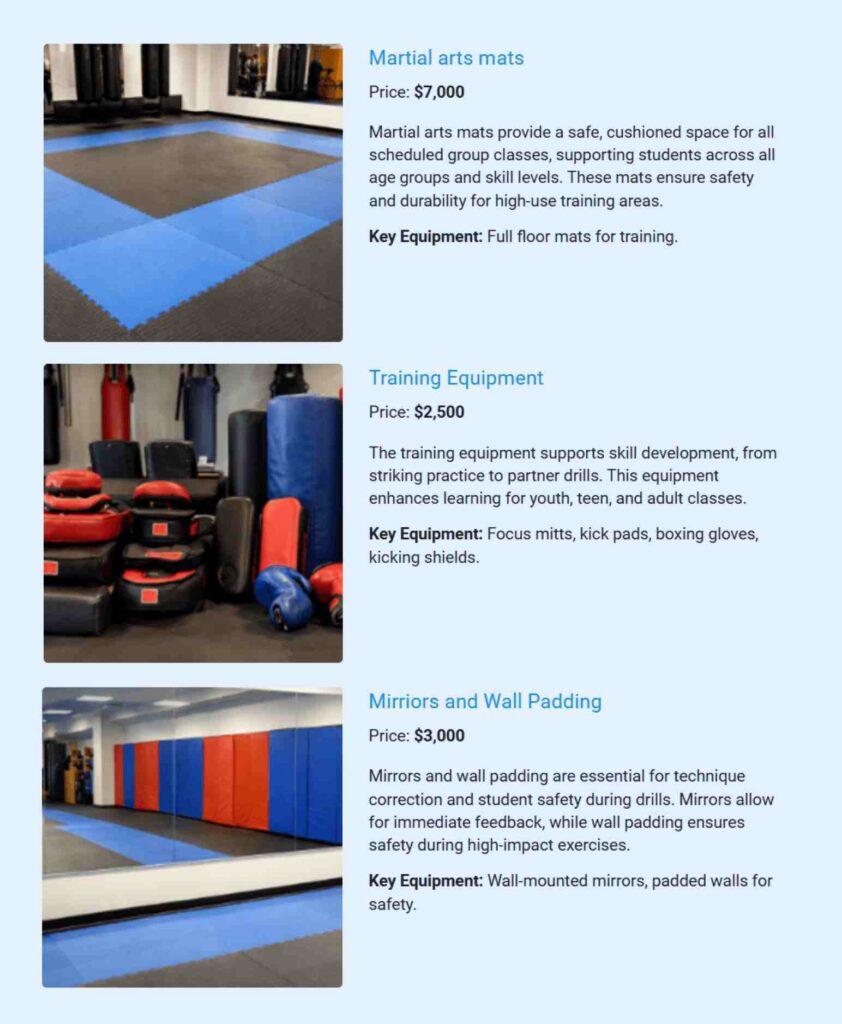
The necessary equipment (mats, mirrors, wall padding, and basic training equipment) allows Iron Path to train approximately 22-26 students per class, with a total equipment value of $12,500.
Technology and Administrative Systems
Iron Path Martial Arts keeps administration simple in the first year. A basic website is used for class details and enrollment questions. Monthly payments are processed through standard payment software.
The owner handles class scheduling, attendance, and parent communication using simple digital tools. Accounting is done with basic bookkeeping software and help from an accountant if needed.
The business does not use custom software, a mobile app, or a complex management system.
Insurance and Compliance
Iron Path Martial Arts has general liability insurance for the training facility, along with required local business coverage. These policies are in place before opening and renewed every year.
The business follows local zoning rules, permits, and safety requirements for training facilities. Standard safety procedures are followed in every class.
Staffing Plan
Iron Path Martial Arts operates with a small staff to match the expected number of students. Below are the key roles and responsibilities:
| Role | Responsibility | Compensation |
|---|---|---|
| Owner-Instructor (Jason Miller) | Handles all teaching, scheduling, billing, enrollment, and communication with students. | $0 (Year 1 – no owner salary) |
| Part-Time Assistant Instructor | Helps with classes as enrollment grows; covers and supervises classes when needed. | ~$25-$30 per hour or per class equivalent |
| Contract Accountant | Takes care of bookkeeping and tax filings. | Included in monthly administrative expenses |
Risk Management and Contingency Planning
Iron Path Martial Arts depends on Jason Miller for all teaching, scheduling, billing, and daily operations. If Jason is unavailable due to illness, injury, or an emergency, the business would be disrupted.
To manage this risk:
- Class Structure: Classes are organized by age and skill level, making it easier to adjust the schedule if needed.
- Assistant Instructor: A part-time assistant instructor can cover some classes if Jason is unavailable.
- Reduced Operations: If Jason is absent for a longer period, the business will reduce the number of classes and bring in a qualified substitute instructor.
This plan helps the business keep running smoothly in case of unexpected events.
Financial Plan
Iron Path Martial Arts is a low-margin membership business under single ownership. The financial projections are based on fixed monthly membership rates, recurring billing, and controlled class sizes. The financial success will be driven by consistent growth in membership, not rapid growth in size.
Startup Costs
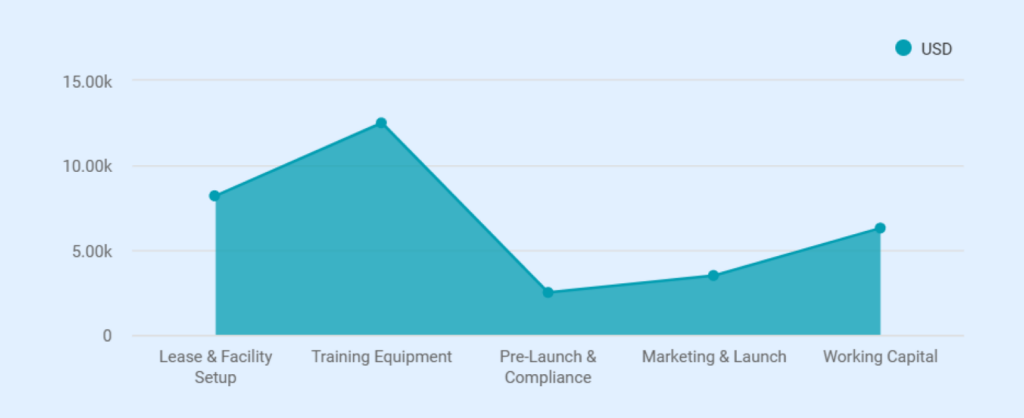
Total startup costs for Iron Path Martial Arts are $33,000.
| Category | Cost ($) |
|---|---|
| Lease & Facility Setup | |
| Lease security deposit (2 months) | 4,800 |
| First month’s rent | 2,400 |
| Minor buildout & paint | 1,000 |
| Subtotal | 8,200 |
| Training Equipment (Capitalized) | |
| Martial arts mats | 7,000 |
| Mirrors & wall padding | 3,000 |
| Training equipment (bags, pads, shields) | 2,500 |
| Subtotal | 12,500 |
| Pre-Launch & Compliance | |
| Business registration & permits | 800 |
| Insurance deposits | 1,200 |
| Legal & accounting setup | 500 |
| Subtotal | 2,500 |
| Marketing & Launch | |
| Website setup & branding | 1,500 |
| Initial promotions & local ads | 2,000 |
| Subtotal | 3,500 |
| Working Capital (Opening Cash) | 6,300 |
| Total Startup Costs | 33,000 |
Source of Startup Funding
Startup funding totals $33,000 and is structured as follows:
| Source | Amount | Type |
|---|---|---|
| Bank Term Loan | $25,000 | Debt financing |
| Owner Cash Contribution | $8,000 | Equity contribution |
| Total Startup Funding | $33,000 | — |
There are no outside investors, no secondary financing, and no additional funding sources assumed in the base model.
Operating Assumptions
| Item | Assumption |
|---|---|
| Classes per Week | 22–26 group classes |
| Average Class Capacity | 18–22 students |
| Utilization Target Year 1 | 45–55% |
| Utilization Target Year 2 | 60–65% |
| Utilization Target Year 3 | ~70% (not full) |
| Members at Launch | 40–45 |
| Active members (end of Year 1) | 80–90 |
| Active members (end of Year 2) | 115–130 |
| Active members (end of Year 3) | 150–165 |
| Monthly Membership Fee | $120 |
| Enrollment Fee | $75 one-time |
| Monthly Marketing Budget | ~$400 |
| Assistant Instructor Pay | $25–30 per hour |
Income Statement
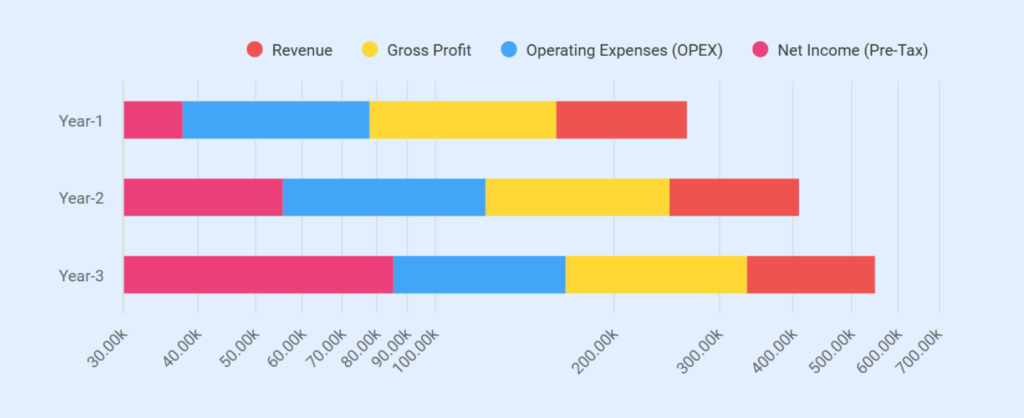
| Income Statement | Year 1 ($) | Year 2 ($) | Year 3 ($) |
|---|---|---|---|
| Revenue | |||
| Membership Dues | 96,000 | 150,000 | 198,000 |
| Enrollment / Registration Fees | 6,000 | 7,500 | 9,000 |
| Private Lessons & Misc. | 3,000 | 4,500 | 6,000 |
| Total Revenue | 105,000 | 162,000 | 213,000 |
| Cost of Goods Sold (COGS) (assistant instructor wages, belt/testing materials, class supplies) |
|||
| Assistant Instructor Wages | 18,000 | 30,000 | 36,000 |
| Belt Testing & Class Materials | 4,500 | 6,000 | 7,500 |
| Total COGS | 22,500 | 36,000 | 43,500 |
| Gross Profit | 82,500 | 126,000 | 169,500 |
| Gross Margin | 78.6% | 77.8% | 79.6% |
| Operating Expenses (OPEX) | |||
| Rent | 28,800 | 29,700 | 30,600 |
| Utilities | 3,600 | 3,900 | 4,200 |
| Insurance | 1,800 | 1,900 | 2,000 |
| Marketing & Advertising | 4,800 | 5,400 | 6,000 |
| Software & Admin | 1,200 | 1,300 | 1,400 |
| Owner Compensation | 0 | 24,000 | 36,000 |
| Total Operating Expenses | 40,200 | 66,200 | 80,200 |
| EBITDA | 42,300 | 59,800 | 89,300 |
| Depreciation | 2,500 | 2,500 | 2,500 |
| EBIT | 39,800 | 57,300 | 86,800 |
| Interest Expense | 2,000 | 1,600 | 1,200 |
| Net Income (Pre-Tax) | 37,800 | 55,700 | 85,600 |
Cash Flow Statement
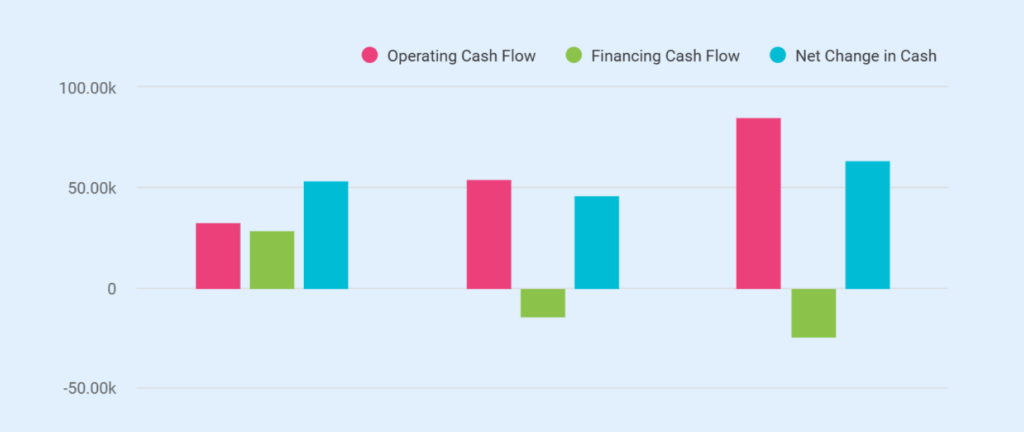
| Cash Flow | Year 1 | Year 2 | Year 3 |
|---|---|---|---|
| Net Income | 37,800 | 55,700 | 85,600 |
| Depreciation | 2,500 | 2,500 | 2,500 |
| Change in Working Capital | (2,800) | 2,300 | (100) |
| Operating Cash Flow | 37,500 | 60,500 | 88,000 |
| Capital Expenditure | (12,500) | 0 | 0 |
| Investing Cash Flow | (12,500) | 0 | 0 |
| Loan Proceeds | 25,000 | 0 | 0 |
| Owner Contribution | 8,000 | 0 | 0 |
| Loan Principal | (4,500) | (4,500) | (4,500) |
| Owner Distributions | 0 | (10,000) | (20,000) |
| Financing Cash Flow | 28,500 | (14,500) | (24,500) |
| Net Change in Cash | 53,500 | 46,000 | 63,500 |
Balance Sheet
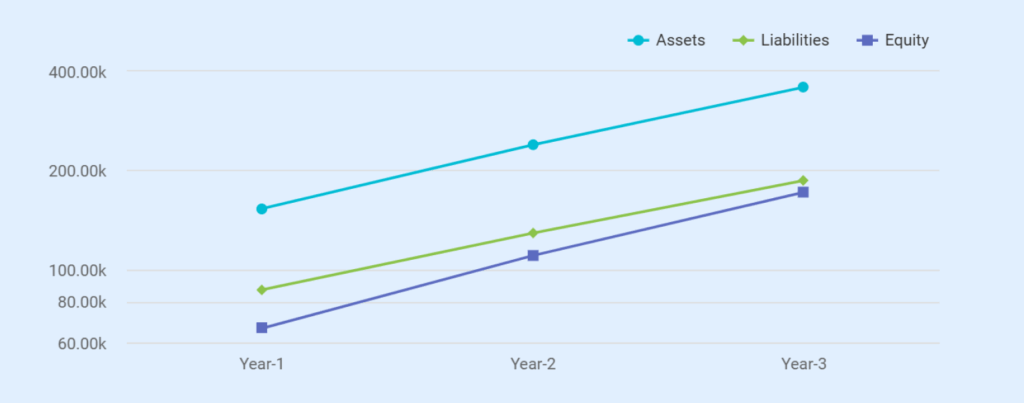
| Balance Sheet | Year 1 | Year 2 | Year 3 |
|---|---|---|---|
| ASSETS | |||
| Cash | 53,500 | 99,500 | 163,000 |
| Accounts Receivable | 1,200 | 1,500 | 1,800 |
| Prepaid Expenses | 1,600 | 1,800 | 2,000 |
| Total Current Assets | 56,300 | 102,800 | 166,800 |
| Equipment (Gross) | 12,500 | 12,500 | 12,500 |
| Accumulated Depreciation | (2,500) | (5,000) | (7,500) |
| Net Fixed Assets | 10,000 | 7,500 | 5,000 |
| Total Assets | 66,300 | 110,300 | 171,800 |
| LIABILITIES | |||
| Accounts Payable | 0 | 2,800 | 3,200 |
| Current Loan | 4,500 | 4,500 | 4,500 |
| Long-Term Loan | 16,000 | 11,500 | 7,000 |
| Total Liabilities | 20,500 | 18,800 | 14,700 |
| EQUITY | |||
| Owner Capital | 8,000 | 8,000 | 8,000 |
| Retained Earnings | 37,800 | 83,500 | 149,100 |
| Total Equity | 45,800 | 91,500 | 157,100 |
| Liabilities + Equity | 66,300 | 110,300 | 171,800 |
Spreadsheets are exhausting & time-consuming
Build accurate financial projections w/ AI-assisted features

Break-Even Outlook
The studio breaks even at about $4,200 to $4,500 in monthly revenue. Fixed costs are around $3,350 per month. Full classes are not required to reach this level.
| Metric | Value / Range($) |
|---|---|
| Monthly Fixed Operating Costs (OPEX) | $3,200 – $3,500 |
| Rent | ~$2,400 |
| Utilities | ~$300 |
| Insurance | ~$150 |
| Marketing | ~$400 |
| Software & Admin | ~$100 |
| Average Fixed Costs Used | ~$3,350 / month |
| Variable Cost Ratio (COGS % of Revenue) | ~20–22% |
| Assistant instructor wages (per class/hour) | ~16–18% |
| Belt/testing materials & class supplies | ~3–4% |
| Contribution Margin | ~78–80% |
| Base Monthly Break-Even Revenue | ~$4,200 – $4,500 |
| Conservative break-even point | ~$4,500 |
| Optimistic low-end break-even | ~$4,200 |
| Annualized break-even revenue | $50,400 – $54,000 |
| Avg. Monthly Revenue – Year 1 | ~$8,750 |
| Avg. Monthly Revenue – Year 2 | ~$13,500 |
| Avg. Monthly Revenue – Year 3 | ~$17,750 |
The Quickest Way to turn a Business Idea into a Business Plan
Fill-in-the-blanks and automatic financials make it easy.
