




Building a project management business takes more than a task list and a Gantt chart. It takes a plan. A real one.
A well-written project management business plan helps you define exactly what services you offer, who you’re best suited to help, and how you’ll have a competitive advantage.
Wondering how to draft one?
This project management business plan template will walk you through exactly how to build a solid plan that works best for you. Let’s start with some basics!
Why a project management business plan is important?
A project management business plan is essential because it provides structure, direction, and accountability. Without one, projects often run into delays, budget issues, or miscommunication.
Here are a few key reasons why it matters:
It turns ideas into actionable strategy
You might have a brilliant idea. But unless it’s broken down into clear objectives, timelines, deliverables, and budgets, it’s just a dream. A business plan transforms your concept into a structured, trackable execution plan.
It wins trust and funding
Whether you’re presenting to investors, clients, or internal stakeholders, a business plan shows that you’re serious, credible, and in control. It’s your pitch deck, roadmap, and proof of viability—all rolled into one.
It prevents costly mistakes
Without a business plan, you risk scope creep, budget overruns, team confusion, and missed deadlines. A business plan helps you forecast risks, set priorities, and make decisions based on logic—not last-minute pressure.
It aligns teams and resources
Projects fail when people don’t know what they’re doing or why they’re doing it. A business plan aligns the team around who does what, by when, and how, making collaboration smoother and accountability clearer.
How to draft a solid project management business plan?
In this step-by-step guide, you’ll learn what a project management business plan includes and how to structure all the key sections.
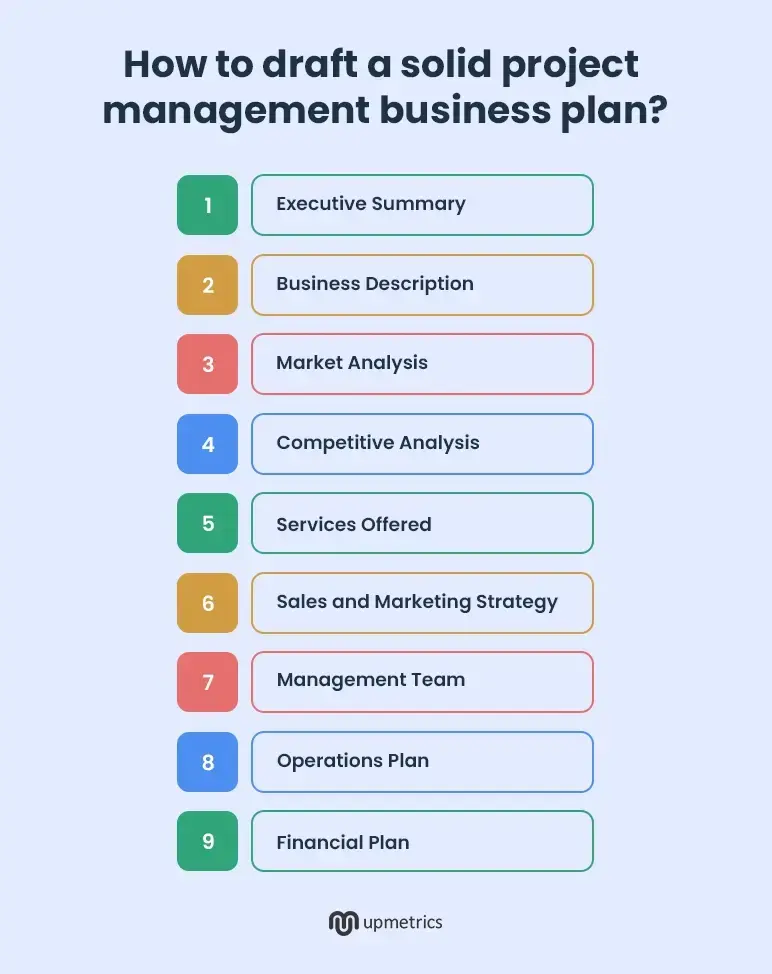
1. Executive Summary
The executive summary is a quick overview of what your project management company is all about—what you do, who you help, how you’re different, and where you want to go.
It’s the first section of the business plan that the stakeholders will read, so it needs to make a strong impression.
Even though this part goes at the top of your plan, it’s best to write it last. That way, you’ll know exactly what key elements to include once the rest is done.
Here’s what to include in this section:
- Business name and location
- Brief description of your services (e.g., Agile project delivery, PMO setup, project rescue)
- Vision and mission statements
- Target market (e.g., mid-sized IT firms, construction companies, healthcare institutions)
- Financial snapshot (first-year revenue goal, funding needs, ROI expectations)
- Business goals (e.g., onboard 10 new clients in the first year, expand to three cities by year two)
Keep it short—ideally one page or less. It doesn’t need to say everything—the goal of this business plan section is to get potential investors interested enough to want to read the rest.
Say goodbye to boring templates
Build your business plan faster and easier with AI
Plans starting from $14/month

2. Business Description
The business overview section explains what kind of project management company you’re building, its legal structure, what services you offer, who you serve, and how your business is positioned in the market.
Also, mention whether it’s full-service project delivery, consulting agency, agile transformations, or industry-specific project solutions.
To plan this section, try answering the following questions:
- Who owns the project management business? What’s their background in project delivery?
- What’s the legal structure of the business? (sole proprietorship, partnership, LLC, etc.)
- Where is the business based? Are you operating remotely, from a physical office, or in a hybrid setup?
- What’s your core business model—hourly billing, milestone-based pricing, or monthly retainers?
- What are your short-term priorities and long-term goals for growth?
As you write, aim for a tone that’s clear and confident. You want to sound like someone who knows the project management space well.
3. Market Analysis
Before you launch your project management business, you need a solid understanding of your ideal clients, how they currently manage projects, and what gaps exist in their delivery process.
Conducting a thorough market analysis helps you position your services effectively and make smart, well-informed business decisions.
This section will also give you insight into your potential clients, competitors, and industry trends so that you can offer services that solve real problems.
Here’s what to include in this section and how to approach it:
Market Size and Growth Potential
How big is the demand for external project management support in your region or industry? Is the consulting market growing? What’s driving that growth—remote work, digital transformation, or a shift toward Agile?
Target Audience
Who are you targeting—startups without in-house delivery teams? Mid-sized businesses scaling operations?
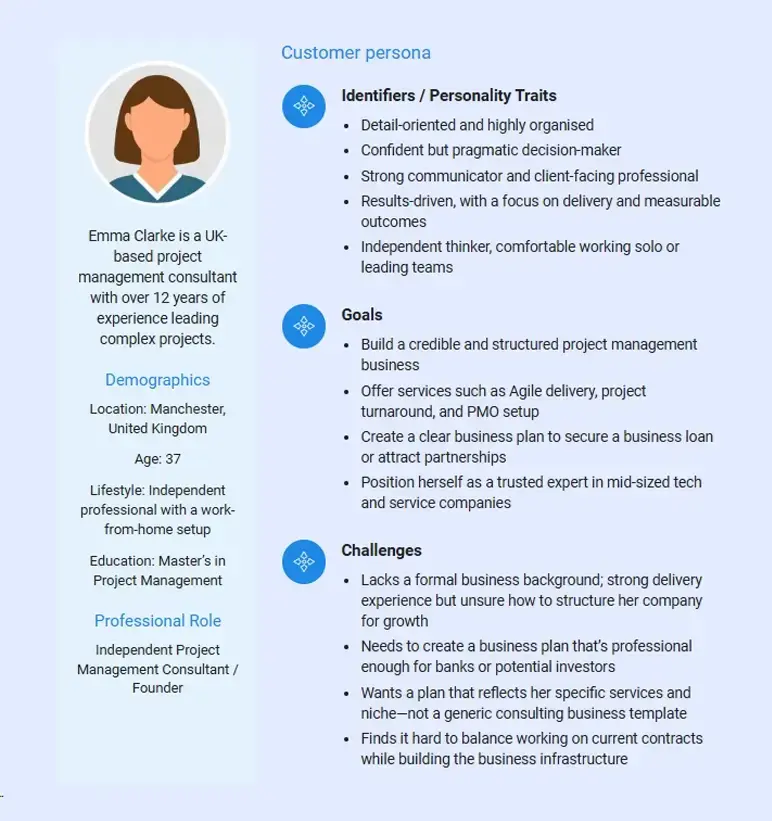
Understanding your ideal audience remains crucial. You can also create a customer persona to identify your target audience better. For instance:
Industry Trends
What’s changing, and how are businesses approaching delivery? Are companies leaning more toward external agencies? Are hybrid models and virtual teams becoming more common?
4. Competitive Analysis
This section of your business plan identifies your key competitors, compares their service models, and explains how your project management business positions itself strategically within the market.
The goal is to understand where your business fits in and what makes your services better or different—this is where you show how you fill the gap.
Consider answering these questions to plan this section effectively:
- Who else is offering project management services in your space? Independent consultants? Boutique firms? Large corporate entities?
- What kind of clients are they targeting? Startups? Mid-sized businesses? Enterprise-level companies?
- How are they positioned? Do they focus on Agile delivery, PMO setup, or project recovery?
- What are they doing well? Strong frameworks? Industry experience? Established client base?
- Where do they fall short? Too expensive? Slow onboarding?
- What makes your business different? More flexible? More specialized?
- How will you stand out in the market? Through pricing, speed, niche focus, or a better client experience?
Taking time to reflect on these questions helps you build a clearer competitive edge and shows potential clients or investors that you understand the market.
Overall, competitive analysis lets you highlight a gap that’s too big to ignore and then point to your business as the one built to close it.
5. Services Offered
Here’s where you get specific about what you actually provide. “Project management” can mean a lot of things, so be clear.
Do you manage full projects from start to finish? Do you coach teams on Agile? Do you offer a PMO setup for larger companies?
Here are a few key elements that you may consider including in this section:
- Your core services
- Value-added services
- Types of project management methodologies
- Pricing strategies
- Customized service packages (if any)
This section of your business plan should read like a clear, confident explanation of what your company delivers. The more grounded and detailed you are, the easier it is for clients, partners, or investors to see how your business turns strategy into real, measurable progress.
6. Sales and Marketing Strategy
The sales and marketing strategy outlines how you plan to attract the right clients, communicate with them, and convert them into long-term relationships.
Unlike product-based businesses, project management services are bought based on trust, credibility, and a proven ability to deliver under pressure.
So, this section of your business plan needs to show how you’ll consistently earn that trust, even before the first conversation.
The following are some tactics and strategies you might consider including in your plan:
- Building a website that clearly explains your services & process
- Using LinkedIn to share delivery insights and thought leadership content
- Creating SEO-friendly blogs around common pain points
- Offering free consultations, delivery audits, or roadmap sessions
- Reaching out to decision-makers through warm referrals
- Running targeted LinkedIn ads focused on department leads
- Speaking at industry events, webinars, or local business panels
Also, don’t forget the power of word-of-mouth—great delivery leads to repeat business and referrals. Impressing just a few clients early on can be your strongest marketing asset.
7. Management Team
A strong management team is key to running a successful project management business. This section introduces the people responsible for delivering services and keeping operations on track.
Even if you’re starting as a solo founder, this is where you highlight your project management background and how you’ll handle different areas of the business—like client work, sales, and operations.
If you’re working with a small team, include their roles and what they bring to the table. For example:
Who handles delivery for multiple clients? Who oversees client onboarding, reporting, or business development?
To give your investors more clarity, you can add a simple organization chart like the one below, showing who’s doing what and how responsibilities are divided across the team.
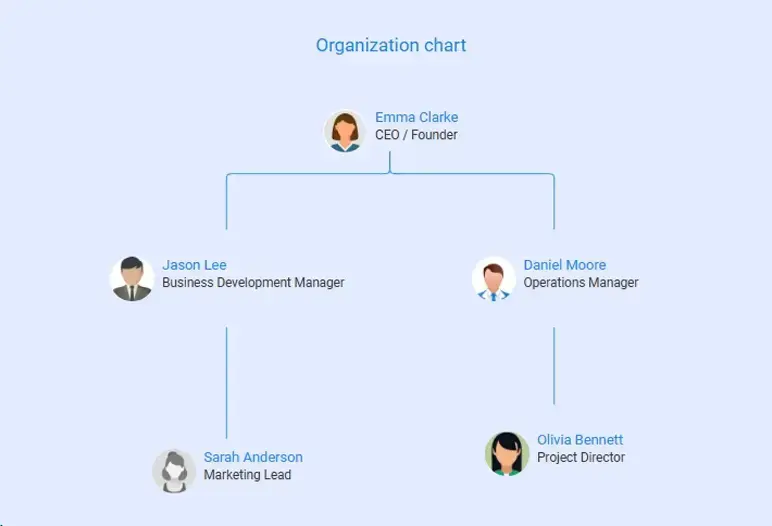
You can also mention trusted contractors, agile coaches, or freelance PMs you may rely on as your workload grows.
If you have any external advisors or industry mentors helping shape your approach, briefly include them too—they can add credibility.
8. Operations Plan
In this section, walk the reader through how your business operates behind the scenes.
It should reflect how your team manages projects from start to finish—covering everything from client onboarding and kickoff meetings to project closure and final reviews.
The goal is to explain to your readers how work gets allocated and how communication flows during sprints, status updates, and escalations.
To help you structure this clearly, we have listed a few elements that you must consider while building a detailed and well-thought-out operations plan:
- Team setup: Will you work solo or hire support? Who will manage delivery, admin, and client communication?
- Project workflow: How will projects run—from onboarding to delivery? Will you use sprints, milestones, or standard phases?
- Tools and systems: What software will you use for project tracking, communication, and invoicing?
- Time and task tracking: How will you monitor progress, budgets, and deadlines? What systems will flag delays?
- Quality assurance: How will you gather feedback and ensure project standards? Will you hold check-ins or post-mortems?
Including these details shows that your business isn’t just built for day-to-day tasks—it’s set up to handle bulk projects.
9. Financial Plan
Building a practical financial plan is one of the most important parts of your business plan—especially if you’re looking to secure funding or show long-term sustainability.
This section outlines the financial health and viability of your project management business. It should present a clear picture of your revenue potential, expense structure, and how you plan to stay financially stable as you grow.
The plan’s goal should explain how these models contribute to overall revenue and cash flow over time.
So, while writing, be sure to include the following key reports and forecasts:
- Startup costs
- Projected income statements
- Projected cash flow statements
- Projected balance sheets
- Break-even analysis
- Funding needs and use of funds
If you want to make your plan more compelling to investors, try to add easy-to-understand tables, charts, and graphs for clarity.
Here’s an example of a few financial projections that you may refer to in formulating yours:
Projected Income Statement
| Category | Year 1 | Year 2 | Year 3 |
|---|---|---|---|
| Revenue | $100,000 | $117,000 | $140,000 |
| Cost of Goods Sold | $21,000 | $24,700 | $27,500 |
| Gross Profit | $79,000 | $92,300 | $112,500 |
| Operating Expenses | |||
| Marketing & Advertising | $8,000 | $9,000 | $10,000 |
| Salaries & Support Staff | $30,000 | $35,000 | $40,000 |
| Office/Admin Expenses | $2,000 | $2,200 | $2,500 |
| Professional Services | $2,500 | $2,700 | $3,000 |
| Training & Certifications | $1,000 | $1,200 | $1,500 |
| Total Operating Expenses | $43,500 | $50,100 | $57,000 |
| Operating Profit | $35,500 | $43,200 | $55,500 |
| Loan Interest | $500 | $500 | $500 |
| Net Profit Before Tax | $35,000 | $42,700 | $55,000 |
| Taxes (15%) | $5,250 | $6,405 | $8,250 |
| Net Profit After Tax | $29,750 | $36,295 | $46,750 |
Projected Balance Sheet
| Category | Year 1 | Year 2 | Year 3 |
|---|---|---|---|
| Assets | |||
| Cash & Bank | $15,000 | $30,000 | $50,000 |
| Accounts Receivable | $5,000 | $7,000 | $8,000 |
| Office Equipment | $3,000 | $3,000 | $3,500 |
| Software & Tools (Licenses) | $2,000 | $2,500 | $3,500 |
| Total Assets | $25,000 | $42,500 | $64,500 |
| Liabilities | |||
| Accounts Payable | $2,500 | $3,000 | $3,500 |
| Short-Term Loan | $5,000 | $4,000 | $2,000 |
| Taxes Payable | $5,250 | $6,405 | $8,750 |
| Total Liabilities | $12,750 | $13,405 | $14,250 |
| Equity | |||
| Owner’s Equity | $10,000 | $10,000 | $10,000 |
| Retained Earnings | $2,250 | $19,095 | $40,250 |
| Total Equity | $12,250 | $29,095 | $50,250 |
| Total Liabilities + Equity | $25,000 | $42,500 | $64,500 |
Use of Funds
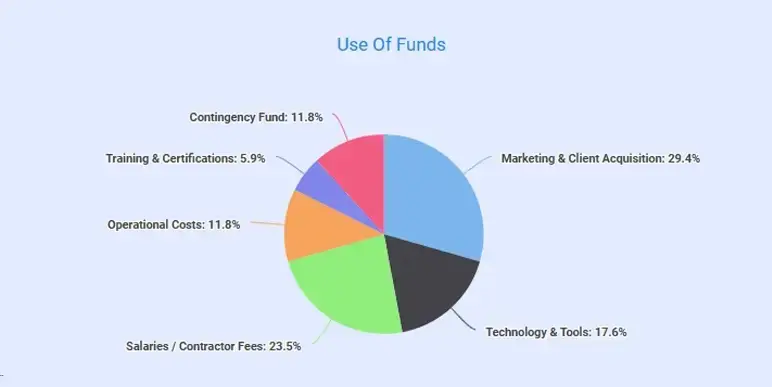
| Category | Amount ($) |
|---|---|
| Marketing & Client Acquisition | $58,000 |
| Salaries / Contractor Fees | $45,000 |
| Technology & Tools | $30,000 |
| Operational Costs | $24,000 |
| Contingency Fund | $24,000 |
| Training & Certifications | $19,000 |
| Total | $200,000 |
Anyone reading your business plan—whether it’s a potential investor, a lender, or even yourself six months down the line—should come away with a clear sense of how your business will stay financially healthy.
Download a free project management business plan template
Struggling to put together a business plan for your project management company? Don’t worry. You can download this free project management business plan pdf and start using it right now.
Use this project management business plan example as a reference while drafting your own plan, and feel free to customize it to suit your services, goals, and client focus. Just plug in your details, tweak it for your niche, and you’re good to go.

Conclusion
We’ve walked through every section of a solid project management business plan. You’ve even got a free template to help you get started, so you’re not left staring at a blank page.
So, by now, creating your own business plan should feel a lot more manageable.
But if you’re still looking for a faster, smarter way to build a polished, investor-ready project management business plan, Upmetrics is worth checking out.
It’s an AI-powered business planning software that eases the entire planning process and helps you generate an actionable business plan in just a few minutes!


